- Cleaning | procedures, devices, agents, media (Wipers, Swaps,...)
- Translated with AI
Gerhard Koblenzer
This is how the component arrives cleanly in the cleanroom
New requirements demand a new process understanding
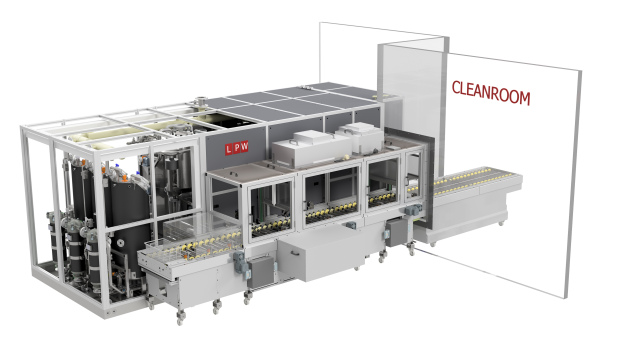
The requirements for the process chain have changed significantly due to increased cleanliness standards. Among other things, this also affects the interface between industrial cleaning technology and the cleanroom. (Photo/Graphic: LPW)
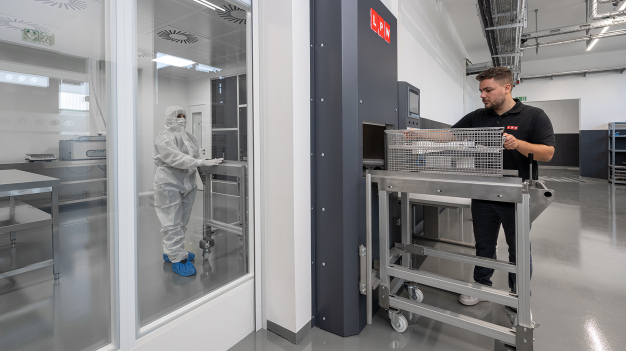
View into the cleanroom of the LPW Test and Service Center. The new requirements demand ultra-clean environmental conditions. (Photo/Graphic: LPW)
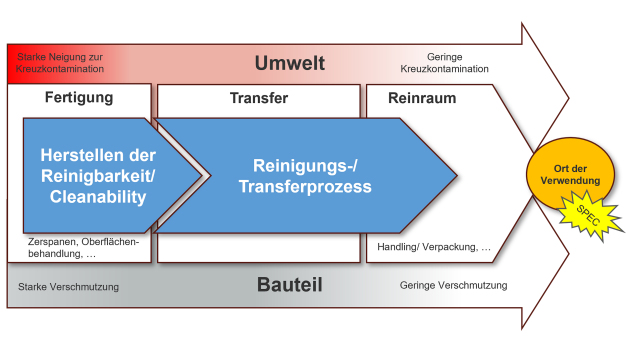
Ultimately, the Quality Gate cleaning system, in addition to producing a defined level of component cleanliness, must ensure a transfer process from a manufacturing/assembly environment into a clean environment (e.g., a cleanroom). (Photo/Graphic: LPW)
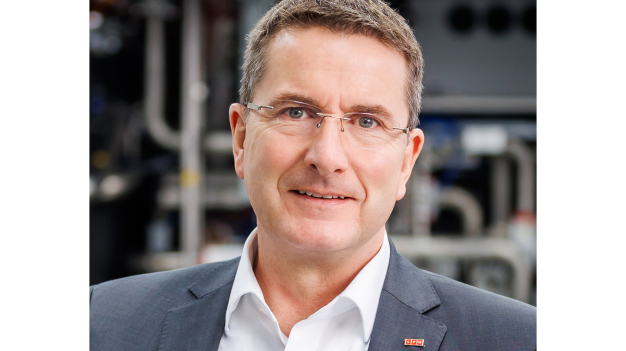
Gerhard Koblenzer is CEO of LPW Reinigungssysteme GmbH in Riederich. (Photo/Graphic: LPW)
New products, complex geometries, highest cleanliness requirements – industrial cleaning technology is facing broad and profound as well as rapid changes in all segments. What works today may be completely different tomorrow. So where and how can safety, the guiding thread, be found when it comes to the required level of technical cleanliness? Or additionally, ensuring smooth transfer from a production environment into the cleanroom? "The solution initially does not lie in the design of the cleaning process or the transition into a cleanroom itself," says Gerhard Koblenzer, CEO of LPW Cleaning Systems GmbH in Riederich, Swabia. Rather, it is about evaluating a process chain upstream of the cleanroom, whose foundation ultimately is the cleanliness required at the point of use. In an interview with REINRAUM ONLINE, Gerhard Koblenzer explains among other things which factors influence this and how the quality of pre-processes must be reevaluated and realigned to even meet the higher purity requirements.
1. Mr. Koblenzer, before we go deeper into the topic – what has changed compared to the past?
Gerhard Koblenzer: "In the fine and ultra-fine cleaning segment, it used to be mainly about particulate and film contamination affecting heat treatment suitability or paint and coating ability. Today, the focus is on molecules and atoms, toxic and biological residues – essentially minimal contaminants. As a direct consequence, process requirements are increasing. And new influencing factors come into play. For example, potential contamination from upstream processes such as machining, surface treatment, coating, as well as assembly and handling must now be considered much more than before, along with the question of whether these can be avoided or at least kept stable. Additionally, the quality of the media used and influences from environmental conditions must be reevaluated, as they are crucial for achieving the target. Yes, and all of this is uncharted territory in many industrial sectors."
2. What challenges does the industry, especially in the cleanroom segment, face specifically?
Gerhard Koblenzer: "Cleaning itself is already a challenge in terms of suitable procedures, chemistry, and requirement-specific media preparation systems. Added to this is the increased importance of preventing back- and cross-contamination. At least as important are three other aspects: How do I ensure a clean transfer from a production environment through cleaning into a cleanroom environment? How can these processes be validated? And what are the implications for process monitoring and batch-related data collection? Many approaches fail, especially regarding the first point. Reasons include an outdated mindset and a lack of communication between equipment manufacturers, cleanroom builders, and customers. They need to openly and purposefully discuss topics such as the cleanliness of the interface to the cleanroom or the placement of cleaning technology to exclude all risk factors of recontamination."
3. What does the solution look like to get the component clean into the cleanroom? Is there a kind of roadmap?
Gerhard Koblenzer: "High cleanliness requirements demand aligning all processes toward the prevention and removal of unwanted contaminants up to the final point of use. The goal is to comply with the relevant cleanliness specifications until the point of application. Sticking with the analogy of a roadmap, the process starts with the upstream processes. These must be aligned as an indispensable prerequisite for cleaning and accompanying transfer tasks, ensuring the cleanability, i.e., the ease of cleaning, of the components. Throughout this 'journey,' it is about consistently avoiding back- and cross-contaminations, for example due to environmental conditions, media used, or handling and automation influences. Similarly, during the cleaning process itself, no new contaminants should be introduced through mechanics, processes, or chemicals. It is about evaluating each intermediate step to determine whether it directly or indirectly supports or hinders the path to the goal."
4. How does LPW handle these tasks and changes?
Gerhard Koblenzer: "We anticipated these changes and therefore have been intensively dealing with the upcoming restructuring in the relevant industries worldwide for over ten years. As a result, we gradually adapted our structures, products, and services accordingly. Initially, the transformation of machinery and process engineering was prioritized, along with the qualification of our staff. Furthermore, we expanded our infrastructure with the development of highly clean testing and trial areas to significantly enhance our service offerings. This includes, among other things, our application engineering to support our customers in planning and optimizing highly clean manufacturing processes. Additionally, we have a cleanroom-based contract cleaning service, specifically for the new tasks. Last year, we also developed standard system concepts that allow our smaller and medium-sized industrial customers to gradually invest, with our technical support."
5. What advice do you give to companies that are not yet confident in this area or are in the midst of change? And how can you support them?
Gerhard Koblenzer: "From my experience, it makes sense for companies to first focus on topics that concern their core competencies and are directly influenceable and responsible for. These include, among others, clearly defined cleanliness requirements, knowledge of their own processes, including the auxiliary and operating materials used. Also, clarity about the initial contamination on the component before cleaning. Based on this, an adapted plan can be implemented, ideally involving responsible persons from upstream and downstream processes. This plan also includes defining critical interfaces, such as between cleaning technology and a downstream cleanroom."
Mr. Koblenzer, thank you very much for the conversation.
Information box:
Clean into the cleanroom – here’s how
If new designs or process adjustments to a higher level of technical cleanliness are necessary, the following checklist can help with implementation:
1. Define the specific cleanliness requirement and clarify when and where it is actually needed.
2. Qualify personnel for the new tasks and processes.
3. Clarify the influences of upstream processes on the feasibility of these requirements.
4. Check whether the existing cleaning system can reliably perform the required cleaning task.
5. Ensure environmental parameters to prevent unwanted cross-contamination, even in the cleanroom.
6. Conduct quality checks regarding the supplied media (e.g., water, air, compressed air).
7. Clearly describe and delineate interfaces between upstream processes and cleaning, as well as between cleaning and the downstream process (possibly within the cleanroom).
Furthermore, it must be ensured that the achieved cleanliness is maintained until the final point of use, that negative influences are detected early, and that all quality-relevant individual steps are traceably monitored.
LPW Reinigungssysteme GmbH
Industriestraße 19
72585 Riederich
Germany
Phone: +49 7123 38040
email: info@lpw-cleaning.de
Internet: http://www.lpw-cleaning.de