




- Translated with AI
Thinkers, problem-solvers, and energy savers – thoughtful technology in action for the people
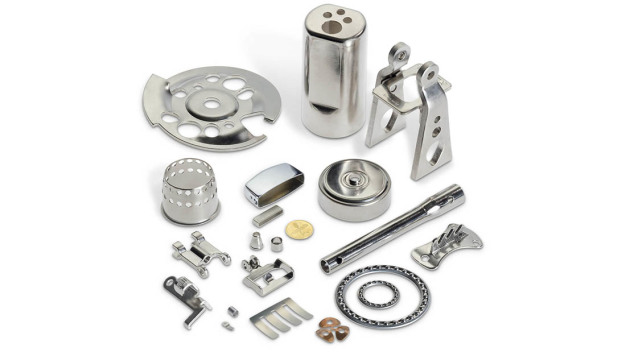
The family business founded in 1941 by Ernst Nägeli as a stamping company has developed into Nägeli Swiss AG, a think tank for complex tasks and processes in the development and manufacture of seamless metal parts. (© Image source: Nägeli Swiss AG)
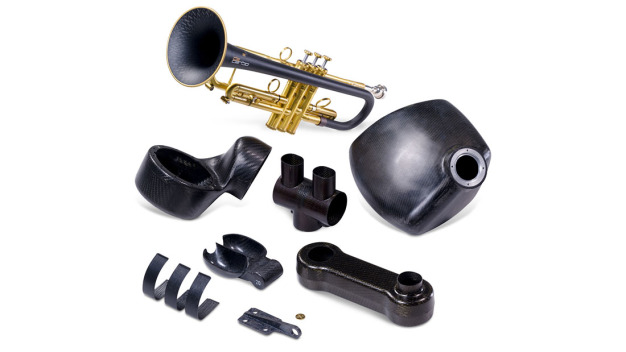
Since 1987, Nägeli Swiss AG has continuously expanded its expertise in fiber composite technology and has implemented projects across a variety of different industries, including aerospace, as well as mechanical engineering and musical instruments. (© Image source: Nägeli Swiss AG)
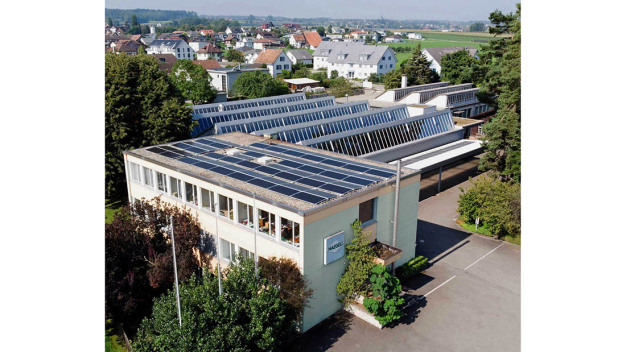
The management of Nägeli Swiss AG is curious and does not shy away from venturing into previously unknown regions. (© Image source: Nägeli Swiss AG)
How does a company specializing in stamping technology become a specialist provider for composite materials processing and successfully manage both areas? One thing is certain: if a company is founded in the midst of the turmoil of World War II, it is trusted to handle this balancing act. Recently, Nägeli Swiss AG introduced a world innovation in carbon processing and simultaneously stamps highly complex housings for electric motors from band steel. If you now think this is about a large corporation, you are mistaken. The Swiss family business pursues a strategy with a special philosophy that would drive classical business economists to madness.
“We do not want to grow at all costs,” emphasizes Christoph Nägeli, member of the management of Nägeli Swiss AG. What at first glance contradicts any common business doctrine, upon closer inspection, is quite appealing – and cannot be fundamentally wrong. After all, Nägeli celebrates its 80th anniversary in 2021.
Winning with ideas and their implementation
The family business, founded in 1941 by Ernst Nägeli as a stamping shop, develops and produces products made of metal and fiber-reinforced plastics. What began with the manufacture of ball bearing cages and toothed washers as screw security devices has evolved into a think tank for tricky tasks and processes in the development and production of parts from metals and fiber composites.
The company starts quite growth-oriented. As early as 1948, a new building is occupied in Göttingen. With the four key processes stamping, bending, deep drawing, and embossing, the company performs excellent work, so that in 1950, a major player knocks on the door: IBM. Nägeli produces functional cams for electric typewriters for the American office machine manufacturer.
Solution competence becomes part of Nägeli’s DNA
The company Wild Heerbrugg AG also catches the Swiss’s attention. Today called Leica, the company orders components for microscopes, theodolites, and other surveying instruments. Both orders place high demands on toolmaking and stamping. “We were probably already guided by the DNA of our company back then. Because the more difficult the task, the greater our interest in solving it,” describes Christoph Nägeli, what has distinguished his company for many years.
This solution competence is also evident in the 1960s with a product Nägeli manufactures for the ski boot manufacturer Raichle. With a buckle, the ski boots, still made of leather at the time, can be quickly and securely closed for the first time. The combination of corrosion-resistant steel and leather is just one of the challenges to be solved. And again, in 1970, production of large series begins. For an American manufacturer, Nägeli supplies parts for a windshield cleaning device. About 80 tons of metal are processed annually.
Ergonomic and economical products for fruit cultivation
When, in the mid-1970s, the economy weakens following the oil crisis, suddenly very different solution skills are in demand. How can declining orders and sales be compensated? Here, the advantages of not having grown too large become apparent. The solution at Nägeli is right on the doorstep. For fruit growers in eastern Switzerland, the inventive engineers develop pruning shears, vine shears, and garden scissors, and the employees stay on board. Since they are entering an already existing and occupied market, the products must be better than those already available. As a result, the scissors stand out through more ergonomic and economical use. The user needs significantly less force for a cut. Quickly, these sophisticated products conquer their market across the region and beyond Switzerland. Today, they are distributed internationally.
This principle of operating with less force runs like a red thread through the company philosophy and appears repeatedly. Additionally, in the mid-1970s, a fundamental decision is made by those responsible: Nägeli will in future deliberately produce items with a low procurement share and a high engineering or know-how share. Solutions and products should contain a high proportion of in-house value creation in the future.
Launching into aerospace with fiber composites
This, in addition to further developing competencies in stamping technology, also leads to expanding expertise through entry into fiber composite technology. A first and well-known customer in this field is located almost within sight across the German side of Lake Constance. For the aircraft manufacturer Dornier, Nägeli produces the approximately two-meter-long wing edge from fiber composite for the modern regional jet Dornier DO 328. At that time, collaboration begins with ETH Zurich, which continues to this day and has expanded to include other universities in Switzerland and Germany. From this Dornier order also results a special quality seal: Nägeli receives the certificate as an approved supplier of German aerospace.
However, Christoph Nägeli considers another characteristic equally important in connection with the entry into fiber composite technology: “We are curious and not afraid to venture into previously unknown regions. We do not always know in advance whether it will be worthwhile.” The company has therefore set itself a period of ten years for the fiber composite sector until a permanently successful foothold is established.
Balancing metal and fiber composite
Another milestone is the start of serial production in 1995 of the Arrow Spyce bicycle frame for Villiger, which enjoys an excellent reputation among bicycle manufacturers. The frame is characterized by very low weight and an integrated, spring-loaded rear swing arm. The combination of stiff carbon fibers and elastic glass fibers creates a unique solution for enjoyable biking. Nägeli manufactures an impressive 6,000 frames for Villiger. Another series product, which enters the composite field in 2001, is springs made from oriented endless glass fibers for the Swiss manufacturer Bico’s underframe. The component, produced in millions, is distinguished by high fatigue strength and a particularly large spring travel.
Significant developments also occur in metal processing. Demanding materials such as titanium are processed, highly precise components for the watch industry are manufactured, or a fill level monitoring system for ship tanks is produced. By developing tools for manufacturing stamping and forming parts for the knitting machine industry and for an electric motor manufacturer, new customers are acquired. Through clever development and reliable manufacturing, long-standing business relationships are built that continue to this day.
A new feeling for trumpet, trombone, and others
However, those who believe that the Swiss engineers are settling into their successful industries are mistaken. On the contrary, a very special success story begins in 2011, in an industry unlikely to be associated with fiber composites at first glance. For daCarbo AG, Nägeli Swiss AG manufactures the sound chambers for trumpets, trombones, and flugelhorns, as well as S-bows for saxophones. The fiber composite materials leverage several of their strengths. The components can be designed with great freedom. The carbon optimizes the vibration behavior of the instruments by preventing energy-consuming vibrations from occurring in the first place. Again, it’s about saving effort. Jazz and concert musicians worldwide swear by the wind instruments with the black-golden look. “Once you’ve played them, you won’t want to put them down,” reports Christoph Nägeli.
Revolutionary process earns an award
But the traditional market also continues to benefit from experts in handling fiber-reinforced composites, because Nägeli Swiss AG industrialized the revolutionary aCC manufacturing process (automated-Composite-Compression). This process presses fiber chips into complex 3D-shaped parts with almost any desired geometry, in series production. It opens up unprecedented possibilities for lightweight construction. A newly developed series part produced with this process received the audience award as the most popular product showcase at Swiss Plastics Expo 2020 in Lucerne. The award went to the “Chock MAX” underlay wedge made of carbon fibers for aircraft up to 350 tons. The product, manufactured by Nägeli for ALPHACHOCKS, is very lightweight, absolutely robust, and can be folded under the wheel for easy removal with minimal effort. Nägeli produces this patented series product using the new aCC process. And thus, the company is proud of the diverse expertise it has acquired over the past decades.
Nägeli Swiss AG
8594 Güttingen
Switzerland



