



- R+D & Community of Interest
- Translated with AI
Barbara Fischer-Reineke
The OR will be flown in by helicopter
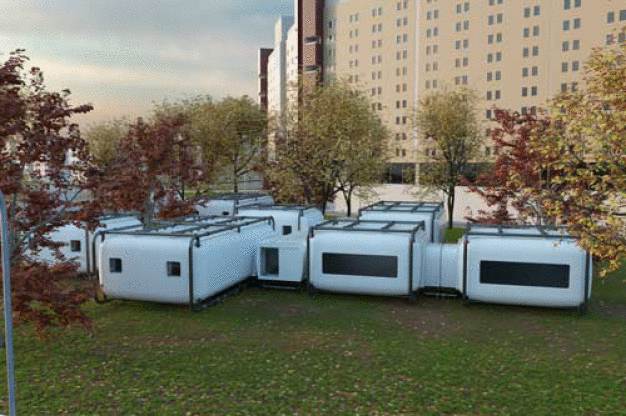
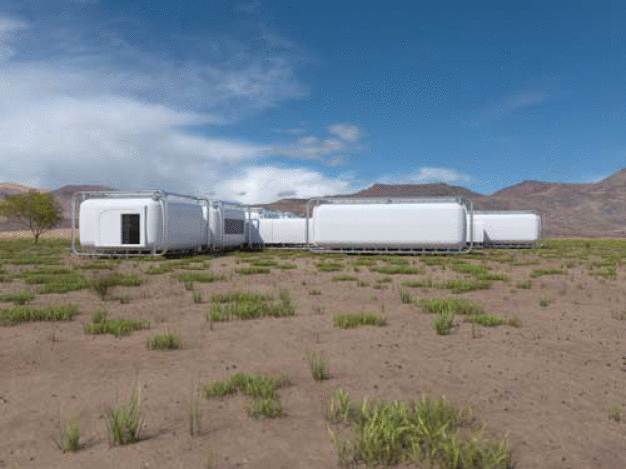
A mobile and modular cleanroom system is intended to serve as a hospital in war and crisis zones, thereby enabling better healthcare for people. What initially sounds like utopia is set to become a reality soon.
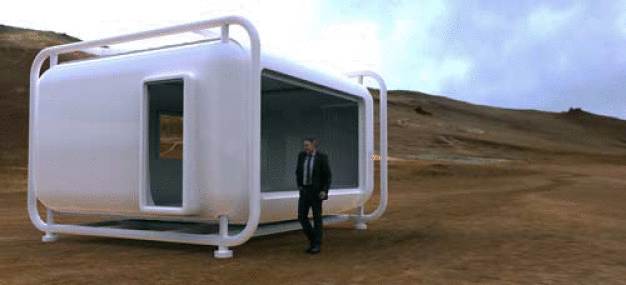
At the Cleanzone in Frankfurt in October 2016, the futuristic-looking prototype of the new "hospital" was constantly surrounded by fascinated visitors. However, most lacked the imagination to picture the bright modular unit in actual use as an ambulance in an earthquake zone or as an operating room in war regions. But according to the developers of the Adriatic Institute of Technology (AIT), based in Ancona, which was founded by Professor Gernod Dittel of Dittel Engineering from Kochel am See, the so-called "Shellbe" system is expected to soon fill significant gaps in healthcare provision in structurally weak regions.
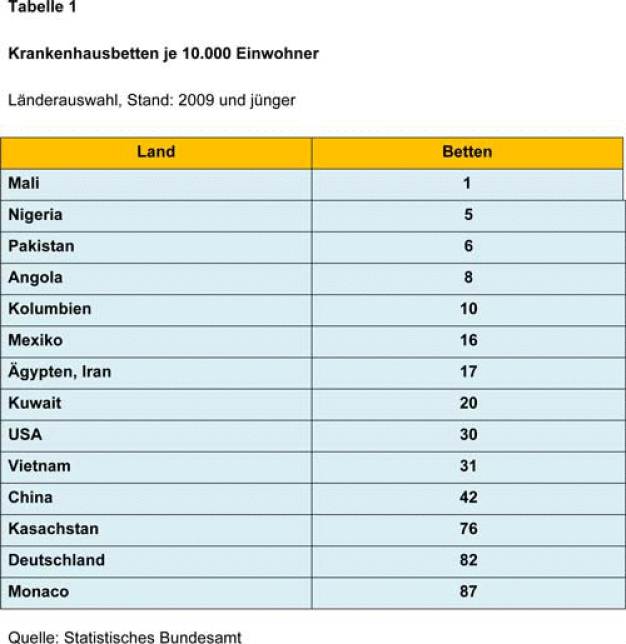
It is now a fact that healthcare in large parts of the world is unstable to poor. While the lack of clinics, ambulances, doctors, and medications in many rural areas of Africa, Latin America, and Southeast Asia is already glaring, this deficit worsens to unbearable levels in cases of war, crises, or natural disasters. The "Shellbe" system aims to provide relief here. The basic idea is to bring a mobile hospital directly to the sick and needy, rather than transporting them over rough terrain to a distant clinic. With "Shellbe," solutions that are currently rather makeshift—such as operating in tents, mobile clinics on trucks, and transportable field hospitals—could be replaced, especially since these "solutions" often only meet basic hygiene requirements in terms of germ and particle protection, not to mention controlling climatic conditions.
Mobile, flexible, modular, and bulletproof
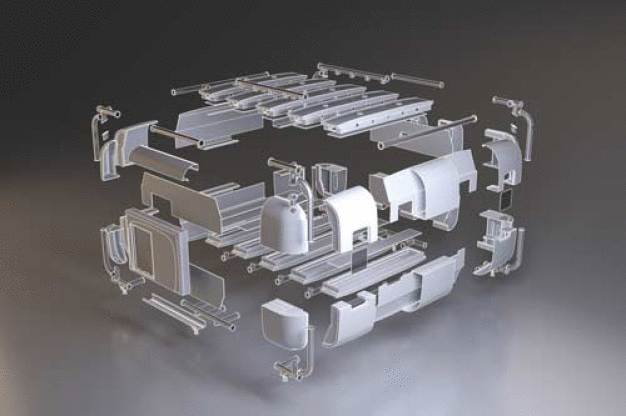
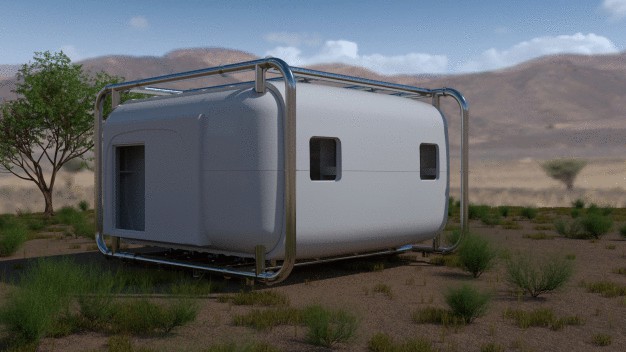
The "Shellbe" system consists of transportable modules, is easy to assemble and disassemble, and can be expanded with any number of modules as needed. The core of the concept is a base module measuring 6 by 6 meters with a height of 3.4 meters, built in shell construction. According to the developers, the name "Shellbe" derives from the English words "shelter" for protection and "shell" for shell. This protective shell base module is made up of a few components: connectable aluminum tubes and the floor and ceiling plates form a supporting frame. Shells are attached as side walls, which include openings for doors and windows. One of the side walls also houses all technical equipment necessary for power supply, climate control, and air purification. The module is designed to meet very high standards of autonomous supply, so that its use is possible even in uncharted areas of the world. Photovoltaic modules, solar cells, and wind turbines could provide power for medical devices, lighting, and air conditioning, just as diesel generators do. Rainwater collectors and water treatment systems are also included.
Once placed somewhere, the interior is intended to maintain uniform and controlled temperatures—whether in the desert, jungle, or eternal ice. Initially, a safe operational temperature range of minus 30 to plus 50 degrees Celsius is planned. Next, the developers are considering a range from minus 50 to plus 80 degrees, for which they are testing a special insulation material and a composite plastic with carbon fiber, which is supposed to be bulletproof even on the outside.
An integral part of the module's technical equipment is a newly developed air purification system (HVAC). It is designed to filter out particles and germs from the air and ensure high-purity working and living conditions inside the station. Thanks to these exceptionally high standards in mobile deployment, the developers see many potential uses for "Shellbe." Depending on the variant and interior configuration, it could serve as a cleanroom, operating theater, ambulance, pharmacy, nursing station, biological laboratory, or research station. The module meets the standards for germ-free environments, climate, and particle control, which are usually only achievable in (better) stationary hospitals and in technical and aseptic cleanroom facilities. The system offers integrated and comprehensive monitoring technology to ensure compliance with DIN EN ISO-14644 and GMP requirements (Class A-B-C-D).
Size adaptable as needed
Depending on the deployment area, mobile healthcare can be needed in very different capacities. While in one case it might be about widespread basic medical care through many scattered small stations, in another situation, a large healthcare complex for many people might be required, such as in a refugee camp where several hundred beds along with infrastructure are needed. According to AIT, "Shellbe" can serve both purposes: as a small, standalone station in rural areas or as part of a larger complex. The modules can be linked together. Access is via airlocks, allowing staff and patients to reach individual modules through corridors resembling passenger bridges that connect terminals and aircraft. These corridor systems can also be used to integrate the systems into existing infrastructure.
This scalability offers various advantages, as it makes it possible to establish a fully equipped hospital with all its treatment and care departments even in the middle of infrastructural wilderness. While one module might contain an operating room, another could house beds for up to six patients, and yet another might serve as a consultation room— and so on. The developers' computer simulations already include plans for facilities with up to 1,000 beds. Another benefit of scalability is the ability to plan according to actual needs, thus keeping costs in check. The healthcare station only needs to be as large as required at any given time. When needs change, modules can be expanded, reduced, or even relocated to another site.
Earthquake-resistant construction
To ensure this mobility, the developers at AIC pay special attention to the transportability of "Shellbe." A single base module can be transported anywhere by car trailer once disassembled. Three units fit into a standard 40 ft container, which can be shipped worldwide and transported into difficult terrain with a suitable vehicle. Upon arrival, the modules are unpacked and assembled. The heaviest individual part weighs 50 kilograms, making manual assembly possible without cranes or similar equipment. If necessary, a module can even be helicopter-lifted to the deployment site, as stated at the Cleanzone. The earthquake-resistant frame structure compensates for uneven ground up to a height of 1.60 meters. This allows "Shellbe" to be installed on rubble fields and even in hillside locations—and all within just a few months of preparation. In contrast, a conventional hospital built on site takes several years of planning and construction.
According to Professor Dittel, "Shellbe" can significantly increase access to medical treatment and improve its quality in many countries. This is increasingly important due to the rising number of crises in more and more regions. Natural disasters or wars often lead to a sharp rise in the need for medical care in underserved areas.
The goal of the Adriatic Institute of Technology (AIT) and its suppliers is to develop modular, mobile, and multifunctional shelter systems that meet the high standards of cleanroom technology and stationary hospitals. The German-Italian company was founded in 2014 by engineers Gernod Dittel and Matteo Filippi. Dittel is managing director of the cleanroom planning firm Dittel Engineering in Kochel am See and serves as President and Chief Technical Officer (CTO) at AIT. The experienced civil engineer Filippi, specializing in special constructions, is managing director of CTSA S.R.L in Ancona and functions as Chief Execution Officer (CEO) at AIT.

reinraum online
W.A. Schuster GmbH
Mozartstraße 45
70180 Stuttgart
Germany
Phone: +49 711 9640350
Fax: +49 711 9640366
email: info@reinraum.de
Internet: http://www.reinraum.de