
- Translated with AI
Harald Martin
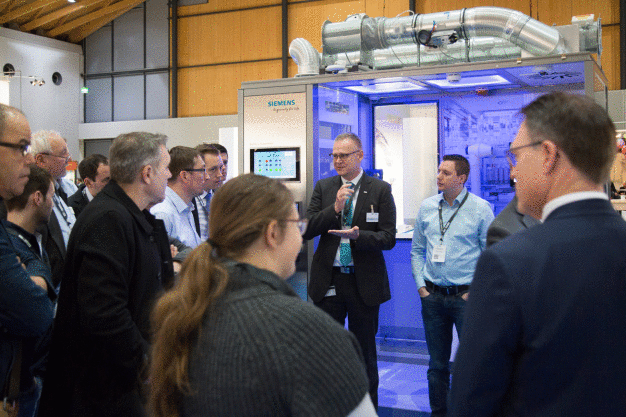
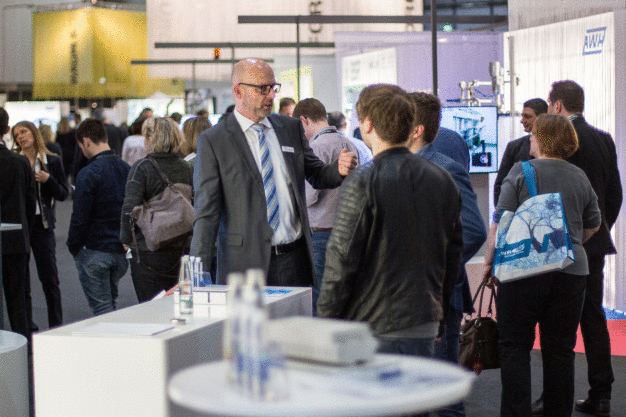
The LOUNGES on Tour are stopping in Vienna and Berlin
Mark appointments and register as a visitor for free starting May 2018. Your code: LOT2018
08_Lounges2018web
13_Lounges2018web
25th and 26th September 2018, Vienna, Eventhotel Pyramide
9th and 10th October 2018, Berlin, Motorwerk
Precisely targeted and needs-based for the cleanroom and pharmaceutical process industry, the Lounges 2018 go on tour, to Vienna and Berlin.
An TOP program: - Planning – Realizing – Operating
Two days full of technical expertise, divided into three thematic areas, will comprehensively inform visitors with both theoretical content and practical presentations. The Lounges on Tour are precisely tailored to the needs of users and cover topics from the initial planning idea, through project realization, to qualified operation.
An interesting and innovative program awaits visitors
The program is divided into lectures, actions, and product shows and takes place on both event days in different areas of the hall and at the company exhibition stands.
Below is an initial excerpt from the program:
Requirements as a basis
Sterile production reconsidered: The new Annex 1 sets the tone again
The recently published revision of Annex 1 is the re-manifestation of one of the most important European GMP guidelines. Due to the broad involvement in this document (PIC/S, including the US FDA), consensus-building and thus the draft creation was particularly time-consuming. This, long-anticipated document, is a modern adaptation of the old guideline, incorporating technical and regulatory innovations in sterile process management (single-use technology, etc.). Additionally, the significantly increased scope is also due to new requirements, such as a contamination control strategy or the "pre-use post-sterilization filter integrity test." The published draft was in public consultation until March 2018 and is currently being prepared for final publication behind closed doors. Experience shows that the final publication will not differ significantly from the draft, making it important to engage with this guideline now. Furthermore, the final publication is not expected before autumn 2018, so the presentation will cover the published draft and the new features contained therein in an illustrative overview.
Medicinal product falsification directive in the EU
February 9, 2019 – the deadline when serialization becomes mandatory for all prescription medicines sold in the EU. This presentation will briefly outline why this directive is necessary and important, and how the requirements look worldwide. The more detailed part will include requirements from EU Directive 2011/62 and Delegated Regulation 2016/161, clarifying the sometimes synonymous terms serialization, aggregation, and track & trace, and showing their differences, as well as how the organizational and technical structure of the European system is designed to centrally store serialization data and verify the authenticity of medicines upon delivery to the end customer. It will also examine the current coding via barcode and the 2D matrix to be used from February onwards. It will show what data was previously contained in the barcode and what needs to be included in the new matrix code. Various options for "Tamper Evident" features, along with their advantages and disadvantages, will also be discussed.
Cleanroom technology in assisted reproduction techniques
Cleanroom technology in the ART sector is a controversial topic. Depending on the federal state, authorities interpret the regulatory requirements differently; legal requirements and guidelines leave much room for interpretation. Many IVF practices and centers suddenly come into focus of authorities and face complex GMP-related requirements. Cleanroom technology also plays a central role here. Many experts oppose it, citing negative effects on germ cells and referring to compliance with Good Practice (GFP). Others support the use of cleanroom technology in ART and see a clear added value in conjunction with GFP. In this context, the following questions inevitably arise: Is cleanroom technology in ART helpful or even harmful? What exactly is GFP? How should the quality management system look? And how can a good consensus be reached with the responsible authority? Using a practical example, the complex and sometimes unclear issues are presented, the impact on daily practice is described, and a two-year balance is drawn.
Project success, core processes, and implementation
9 factors for project success
Development and planning partners of large and/or complex investment projects with production facilities often ask why a contractor does not implement what the client has ordered. The well-known "Magic Triangle" with the interactions of time, cost, and quality is familiar. This is extended by soft influencing factors that are crucial for a successful project course. For example, the people involved, with their experience, training, and upbringing. But also the different roles and motives of the actors or the influence of specific, discipline-dependent ways of thinking, value systems, and cultures.
The digital transformation process
The possibilities of digital media will dramatically change companies – their strategies, processes, structures, products, and cultures. People, machines, and resources will communicate directly and in real-time in the future. Rigid value chains will become dynamic value networks. Because value creation no longer occurs sequentially and delayed in time, but in a web of constantly communicating and flexibly reacting units that largely organize themselves. Technologies enabling digital transformation in industry include the Internet of Things, high-quality broadband, and increasing automation and autonomy in manufacturing. They enable new market positions and value propositions such as intelligent textiles, independent logistics management, or predictive maintenance. But it is not just each of these technologies and propositions alone that pave the way for disruptive developments and make their occurrence more likely, but rather their combination. Because the added value often results from networking previously independent systems and connecting previously separate spheres. In the DARWIN research project, four companies collaborated. The goal was to develop suitable methods, real-time capable interfaces, and reliable services for comprehensive planning of automotive manufacturing processes, integrating production, assembly, logistics, building, and plant infrastructure for highly heterogeneous systems and processes. The results will be presented during the session.
Novartis Business Services: New collaboration models in pharmaceutical production
Production facilities and processes in the pharmaceutical industry require highly complex infrastructures and operational processes. The location, building, utilities, as well as planning, construction, and maintenance services, demand a wide range of skills, capabilities, and expertise that must be maintained within an organization. Through targeted use of one or more facility or site service providers, synergies can be leveraged, costs sustainably reduced, and staff better utilized. The presentation is given jointly with Mr. Georg Fuchs from Novartis.
Selection and operation
Optimization of personnel access points – site improvement in practice. Personnel access points serve as entry to pharmaceutical productions and cleanrooms or as transitions between two cleanroom classes and are crucial for preventing particulate and microbiological contamination in cleanrooms, thus ensuring product safety. The contamination risk from improper entry due to poorly designed procedures poses a significant hazard to cleanroom safety. At the same time, changing room processes within a personnel access point are a considerable cost factor. Only with proper planning and setup can dressing be both cleanroom-compliant and efficient. In addition to personnel pathways, the supply of clothing items and their disposal must be considered. Based on numerous practical examples of designed and implemented personnel access points for pharmaceutical clients, which optimize throughput and consider future requirements and guidelines, corresponding recommendations are presented.
The right flooring for the cleanroom project
Choosing the appropriate cleanroom flooring often presents users with a major challenge. The requirements that must be met are very diverse. Conversely, the market offers a multitude of systems from which the best solution should be found. Using simple but targeted questions, it will be illustrated how to approach the answer for the right material.
Maintenance and Reliability Engineering
The overarching goal of Reliability Engineering is to maximize availability. It aims to find the optimum between planned downtime and unplanned downtime. The MMP (maintenance master plan) describes the overarching strategy in maintenance. It serves as a template and supports the assessment of equipment and systems during data collection and evaluation. The maintenance strategy is developed based on standards, regulations, data, plans, schematics, and documentation.
Participation is free for visitors upon prior registration via a registration code.
Registered visitors can use the entire range of the Experience Expo / LOUNGES on Tour. Visitors decide for themselves how they want to structure their day, either as a pure trade fair visit or as a continuing education forum. Important: Registration as a participant is a prerequisite for attendance.
Registration has been possible since the end of May 2018 at www.experience.expo.de
Exhibiting companies (excerpt as of May 30, 2018)
Allgemeine Bau Chemie GmbH, Alsico High Tech N.V., bardusch GmbH & Co. KG, Briem Steuerungstechnik GmbH, BRUCHA Gesellschaft m.b.H., BWT Pharma & Biotech GmbH, CCI - von Kahlden GmbH, Chemgineering Group, Cleanroom Technology Austria, CLS Ingenieur GmbH, compre Reinraum-Handel- und Schulungs GmbH, CWS-boco Deutschland GmbH, Dastex Reinraumzubehör GmbH & Co. KG, Dec Deutschland GmbH, decontam GmbH, Dockweiler AG, Drees & Sommer SE, Elaflex - Gummi Ehlers GmbH, elva-tec Radeberger Reinraumsysteme GmbH, FISCHER Mess- und Regeltechnik GmbH, Friedrich Sailer GmbH, gempex GmbH, Gerflor GmbH, HENKEL Beiz- und Elektropoliertechnik Betriebs GmbH, Hydroflex OHG, Ing. W. Häusler GmbH Industrie Automation Graz, KEMMLIT-Bauelemente GmbH, Letzner Pharmawasseraufbereitung GmbH, Lorenz Consult ZT GmbH, M+W Central Europe GmbH, MIKROCLEAN GmbH. Niotronic GmbH, nora systems GmbH, ÖRRG - Austrian Cleanroom Society, Ortner Reinraumtechnik GmbH, Particle Measuring Systems, Pfennig Reinigungstechnik GmbH, PMT Partikel-Messtechnik GmbH, rotronic Messgeräte GmbH, Rud. Otto Meyer Technik Ltd. & Co. KG, SCHMIDT Technology GmbH, Schülke & Mayr GesmbH, SHIELD Scientific B.V., Siemens AG, Sommer & Strassburger Edelstahlanlagenbau GmbH & Co. KG, Trespa International BV, TROX GmbH, USF Water Purification GmbH, VALTEC GmbH, Viessmann Technologies GmbH, VIP 3000 e.V., VTU Engineering Deutschland GmbH, VWR International GmbH, Wozabal Miettex GmbH, ZAUNER AnlagenTechnik GmbH, Zimmer & Häbbig GmbH

LOUNGES ON TOUR
Inspire GmbH
Am Falltor 35
64625 Bensheim
Germany
Phone: +49 6251 706068
email: harald.martin@i-ec.de
Internet: https://cleanroom-processes.de/