


- Furnishing & equipment
- Translated with AI
"Should be free of fusels!"
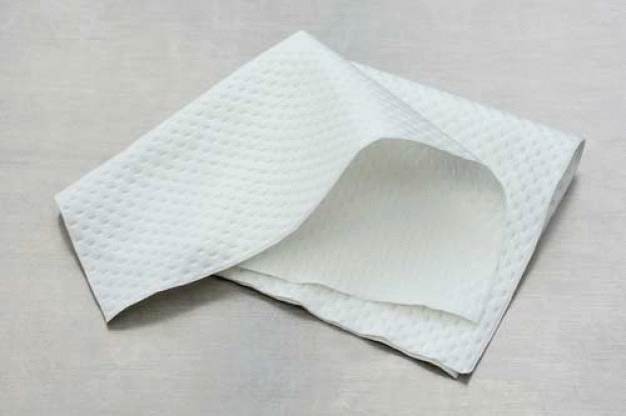
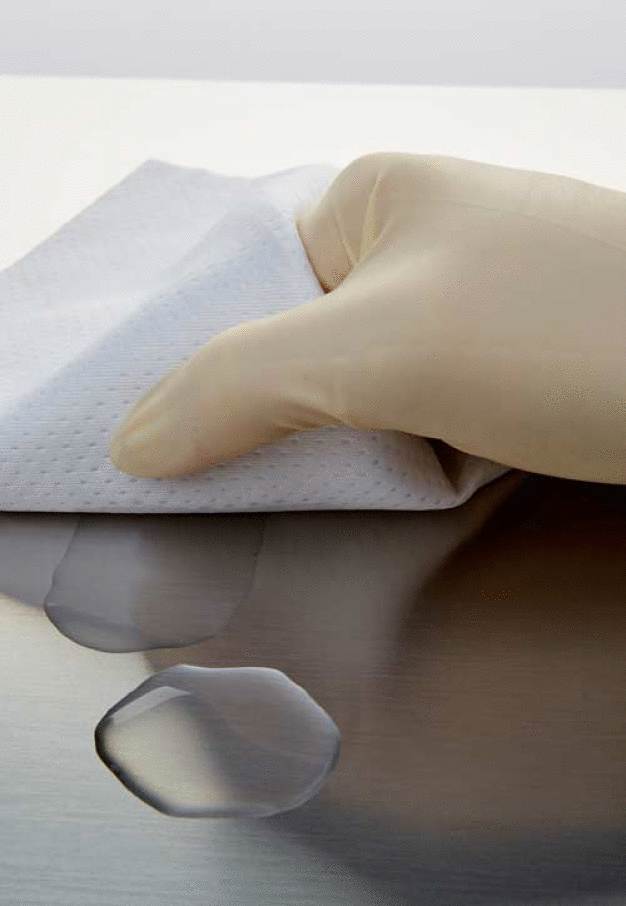
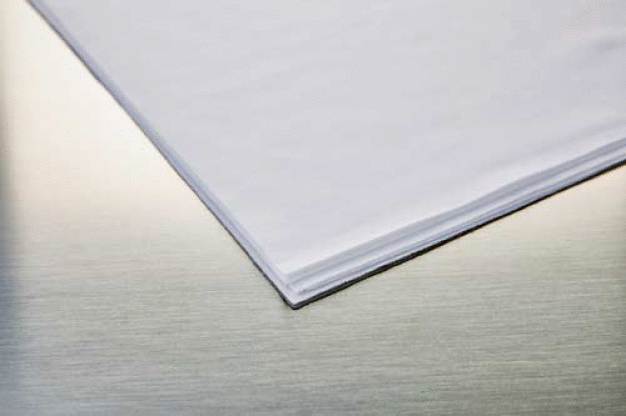
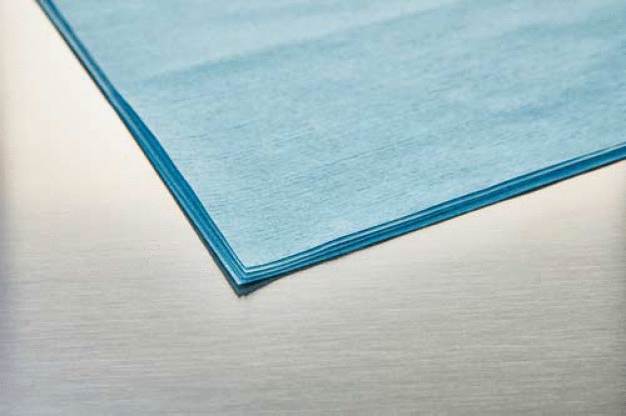
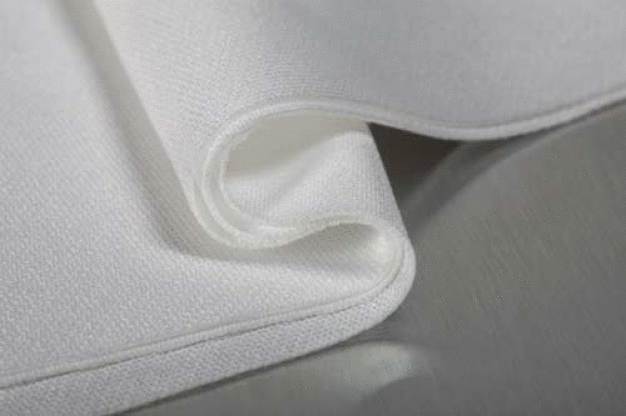
"Lint-free" - this is still by far the most common answer to the question: "What should the cleanroom cloth be able to do?" A completely understandable answer, because the user naturally expects that such a cloth itself will not become a source of contamination. On the other hand, cleanroom cloths are textile surface structures made of fibers, knitted, woven, or bonded as nonwoven fabric through pressing, from which fibers can naturally loosen, whether due to quality defects or because the surface to be cleaned has been mechanically damaged, affecting the structure of the cloth.
In most applications, the requirements profile for a cleanroom-compatible wiping cloth goes well beyond the property "lint-free." This often initially includes a high absorption capacity, not only to absorb liquids but also to store or, if necessary, selectively release them. Other desired properties, depending on the application, include softness to prevent damage to the surface being cleaned, chemical resistance mainly against disinfectants and cleaning agents, or antistatic properties to prevent uncontrolled discharges.
These listed characteristics of the cloth are by no means necessarily linked to a so-called cleanroom cloth — from the user's perspective, however, they are often very important. The typical cleanroom requirements are, depending on the respective processes, to minimize particle/fiber shedding during use and to have high abrasion resistance. Additional purity requirements may include, for example, minimal organic and/or inorganic contamination, or sterility and endotoxin-free status from a microbiological standpoint, or low outgassing behavior.
This rather extensive list of possible properties of a cleanroom wiping cloth illustrates how complex the definition of such a cloth can become. Relying solely on the product claim "this is a cloth for cleanroom class XY" clearly does not do justice to this complexity.
Cleanroom cleaning cloths are demonstrably among the most important consumables in daily use in controlled environments. Their main task is to remove particulate, film-like, and/or microbiological contaminants from surfaces and machinery. They also serve as a base or are used to absorb spilled liquids. Often, these cloths are used in close proximity to the product, or surfaces that come into contact with the product are cleaned with them. Therefore, the user is initially required to describe the requirements profile for the respective cleanroom cleaning cloth as precisely as possible and to incorporate the above criteria and process requirements into this consideration. The new VDI Guideline 2083 Sheet 9.2 offers some support here. However, it does not exempt the user from defining their own process-dependent requirements for the respective cloth and, if necessary, verifying them within their own process environment.
The specific properties of a cleanroom cleaning cloth, such as particle emission, cleaning efficiency, possibly antistatic behavior, etc., must fundamentally be viewed in direct relation to the following framework conditions:
- with the surfaces with which the cloth comes into contact,
- with the contaminants to be removed,
- with the cleaning chemicals used
because they have a direct impact on the cleaning result.
Ultimately, the crucial question is: "How clean is the surface that should be decontaminated by wiping after the cleaning process?" Was the contamination removed to the extent required by the process? Are there any residues left, perhaps from the cloth itself? These questions are very difficult to measure precisely and are probably impossible to answer exactly in many cases. The quality of your own product — for example, demonstrable through rejection rates — only shows at the end of the production chain whether the use of a particular cloth has had the desired effect or not.
Not least due to the general competitive and cost pressures, so-called cleanroom consumables, such as cleanroom cloths, are repeatedly scrutinized commercially. It would certainly be helpful for decision-makers to have access to information about the technical properties of a cleanroom cloth that are comparable and determined under the same test conditions. The data sheets often provided by manufacturers frequently include specifications without clearly defining the test methods or use proprietary methods, which are difficult or impossible to compare with those of other manufacturers. Another particularly critical point is the practical applicability of some measurement methods used. Users should often inquire more frequently about how certain values were obtained. Naturally, the catchy product claim "this is a cloth for cleanroom class XY" can easily tempt users not to delve deeper into the above points.
To nonetheless provide users and decision-makers with solid information, Dastex has commissioned a very comprehensive study at a neutral and internationally recognized research institute. A variety of different cleanroom cleaning cloths were analyzed not only regarding particle emission in the dry state but also for outgassing behavior, particle emission in the wet state, absorption capacity, abrasion resistance against defined surfaces, and cleaning efficiency. Great importance was placed on testing each cloth under as similar and practical conditions as possible.
The results of these investigations demonstrate fundamental differences between various base materials and processing methods. A more detailed look also reveals significant differences between manufacturers, even with the same base materials, although product descriptions from producers might suggest similar properties. Based on the findings of this study, it is now possible to rely on independent measurement results when advising on the topic of "cleanroom cleaning cloths." Furthermore, the more precisely your own process requirements and the derived minimum requirements for the cleanroom cloth are defined, the more opportunities there are to optimize. In addition to traditional cost optimization, efficiency improvements and handling can potentially be enhanced.

Dastex Group GmbH
Draisstraße 23
76461 Muggensturm
Germany
Phone: +49 7222 9696 60
Fax: +49 7222 9696 88
email: info@dastex.com
Internet: https://dastex-group.com/