



- R+D & Community of Interest
- Translated with AI
Dipl.-Biol. (technisch orientiert) Markus Keller
Qualification test of a pipetting robot for sterile production
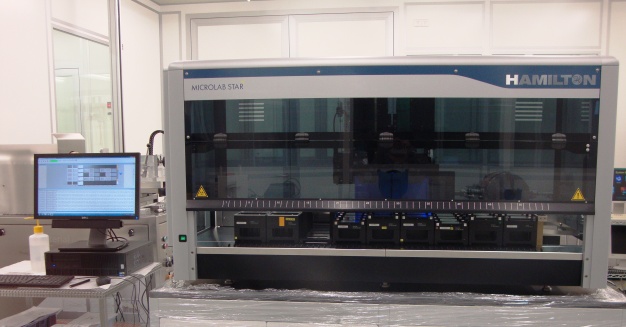
Hamilton Microlab Star in ISO 1 cleanroom at Fraunhofer IPA
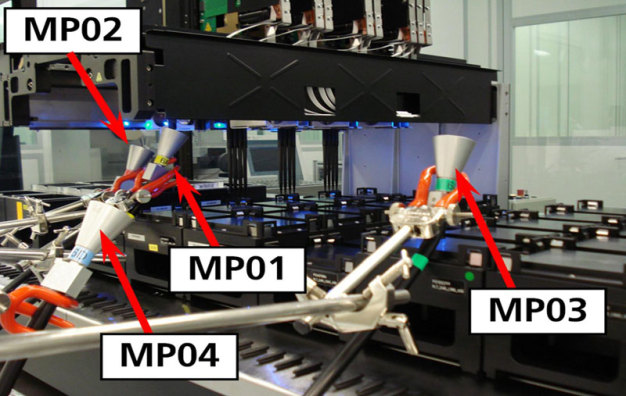
Hamilton Microlab Star in ISO 1 cleanroom at Fraunhofer IPA. Image source: Fraunhofer IPA
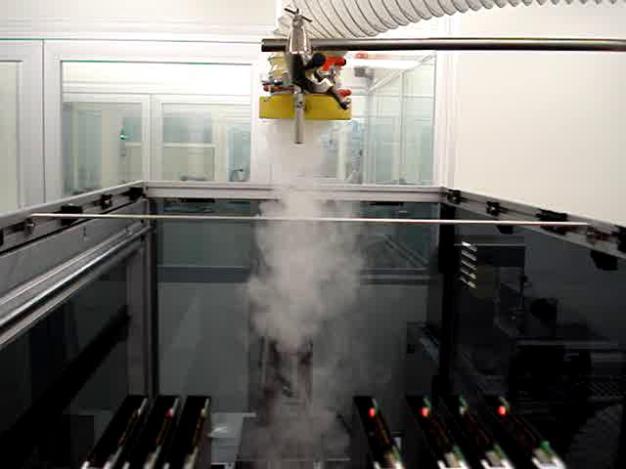
Hamilton Microlab Star in ISO 1 cleanroom of Fraunhofer IPA during a flow visualization. Image source: Fraunhofer IPA
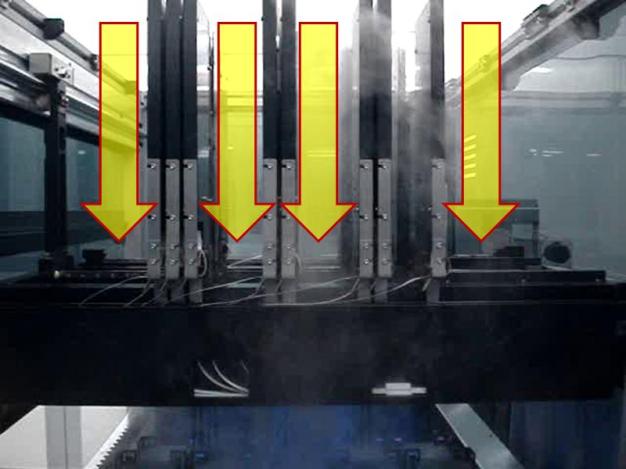
Hamilton Microlab Star in the ISO 1 cleanroom of Fraunhofer IPA during a flow visualization. Image source: Fraunhofer IPA
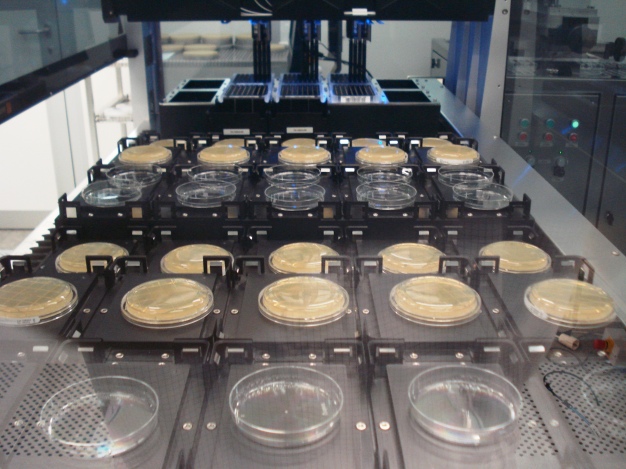
Deployed PCA sedimentation plates for measuring sedimented microorganisms in a Hamilton Microlab Star. Image source: Fraunhofer IPA
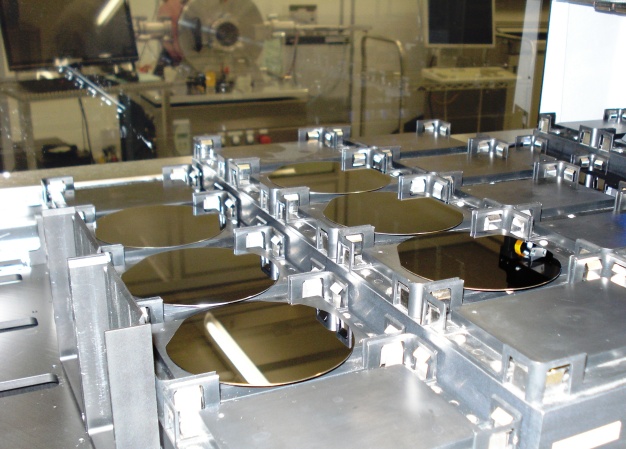
Laid-out silicon wafers for measuring sedimented particles in a Hamilton Microlab Star. Image source: Fraunhofer IPA
Contents:
1 Introduction
2 Derivation of necessary tests
3 Conducted Tests
3.1 Measurement of particulate air cleanliness at critical control points
3.2 Flow visualization
3.3 Media Fill simulation
3.4 Measurement of contamination risk at product level
3.4.1 Microbiological contamination risk
3.4.2 Particulate contamination risk
4 Summary
5 Outlook
6 References
1 Introduction
Machines and equipment used in the production of sterile pharmaceuticals must meet strict requirements. It must be ensured that an installed piece of equipment does not pose a risk to the product at any time during ongoing sterile production. In pharmaceutical sterilization processes, which must operate according to EU-GMP Annex 1 (1), both particulate contamination and microbiological load play a crucial role. When filling open ampoules with liquid parenterals, it must be guaranteed that no particles or microorganisms from the equipment enter the ampoule during the filling process. Validation of equipment for sterile production includes, among other things, the so-called "Media Fill" according to EU-GMP Annex 1. In this process, instead of the product, a microbiological nutrient solution is filled into a specified number of ampoules. After incubation, the sterility of each individual container is determined.
Most airborne microorganisms are attached to particles between 10 and 20 µm. In principle, a reduction in airborne particles correlates with a reduction in airborne microorganisms (2). This underscores, alongside microbiological monitoring, the need for additional particle emission measurements for comprehensive risk assessment. It is necessary to determine the airborne particles emitted from the equipment during operation due to wear and friction between different material pairs. Since not all airborne particles pose a real risk to the product later, sedimented particles on the product level are also measured. An additional flow visualization illustrates the airflow within the equipment and can also be used for risk assessment.
This report presents a comprehensive exemplary suitability test of a system for pharmaceutical sterile production. The system tested is a pipetting robot of the Microlab Star series from Hamilton Bonaduz AG, Switzerland. The system had already been operated for two years in a normal laboratory environment at the time of testing. To obtain a meaningful analysis of the current state of the pipetting robot, the system was not modified for later intended sterile production. Depending on the individual results, targeted optimization for safe use in sterile environments can be carried out if necessary.
2 Derivation of necessary tests
The current EU-GMP Annex 1, which explicitly prescribes manufacturing of sterile medicines, serves as the basis. It requires measures to minimize the risk of microbiological, particulate, and pyrogenic contamination (see chapter "Principles" of the guideline).
The required air cleanliness class must be maintained even during operation of the equipment. For example, when dosing a sterile medication in an open process, the environment of the dosing step must meet GMP A class, approximately corresponding to ISO 5 air cleanliness according to ISO 14644-1 (3). Sections 4 to 19 of the EU-GMP guideline Annex 1 detail this. --> Measurement of particulate air cleanliness at critical control points.
The GMP A class typically involves laminar airflow with a velocity between 0.36 and 0.54 m/s. The EU-GMP guideline recommends in chapter 3 a control and validation of the laminar airflow during ongoing operation. --> Flow visualization.
Validation of an aseptic process always includes a so-called Media Fill (see section 66 of the EU-GMP Annex 1 guideline). Here, the handling of a liquid pharmaceutical product is simulated with a nutrient solution. The filled containers are then sealed and incubated. If microbiological contamination occurs, it would grow in the nutrient medium and become visibly turbid after sufficient incubation. To make a valid statement, no contaminated container must be found among 5,000 containers. If even one is contaminated, the entire Media Fill must be repeated after a successful failure analysis (see section 69 of the EU-GMP Annex 1 guideline). --> Media Fill simulation.
The various pharmacopoeias specify limits for particulate contamination in sterile parenterals (4) (5). The risk level of such particulate contamination is assessed by measuring particles sedimented on silicon wafers at the point of open product handling. --> Particulate contamination risk. The number and size distribution of sedimented particles on the product level are determined. The same methodology is applied using Plate Count Agar (PCA) sedimentation plates to assess the --> microbiological contamination risk.
The following sections detail the individual tests. The system was introduced into the cleanroom of ISO class 1 according to ISO 14644-1 at Fraunhofer IPA after cleaning (3). The cover of the pipetting robot was removed, creating a quasi-RABS (Restricted Access Barrier System), as shown in Figure 1. Access to the product level was only possible through an open intervention below the cover. The cover can be opened for service but remains closed during normal operation.
3 Conducted Tests
3.1 Measurement of particulate air cleanliness at critical control points
Critical control points were chosen directly below the robot arm (MP01 to MP03). A measurement point (MP04) captured the exhaust air exiting below the closed service cover during measurement. The measurements and evaluations were carried out according to VDI 2083 Sheet 9.1 (6). Four particle counters, LasAir II 110, Particle Measuring Systems, Inc., Boulder, USA, were used. For measurement, a representative method for filling, mixing, and dosing liquids in multi-well plates was processed.
All measurement points achieved, with a statistical certainty of 99.9%, the air cleanliness class ISO 4 according to ISO 14644-1. Thus, all measurement points comfortably meet the requirements of the EU-GMP Annex 1 regarding particulate cleanliness of the environment during open sterile processes.
3.2 Flow visualization
For flow visualization, a pure water fog generator is used. It produces a fine, highly visible fog that evaporates without residue after potential condensation on surfaces. Several video sequences recorded during an ongoing pipetting process demonstrated that the primary flow direction from the filter ceiling of the cleanroom through the device was consistently maintained downward and laterally. There were no dead zones or airflows against the primary airflow direction. When the individual pipetting channels of the Microlab Star were sufficiently spaced, the airflow circulated freely between channels. Flow visualization also showed that particles generated by individual channels are mostly removed by the airflow from the equipment and do not impact the surface of the product at the product level.
3.3 Media Fill simulation
For the Media Fill simulation, sterilized nutrient solution was dispensed into sterile storage vessels, then filled into sterile 96-well plates using a representative pipetting method and mixed with additional nutrient solution. After final dosing into the 96-well plates, they were sealed with sterile lids, removed from the cleanroom, and incubated according to the nutrient medium's specifications. After incubation, each well was examined. Turbidity indicates microbial contamination. Examination of all 5,376 wells showed no visible turbidity after sufficient incubation. Even after extended incubation, no bacterial or fungal growth was observed. This demonstrates that the tested pipetting robot can successfully pass an aseptic Media Fill according to EU-GMP Annex 1, provided it is operated in a cleanroom environment of GMP A or ISO 5 or better. Notably, before the Media Fill, the system was not sterilized with hydrogen peroxide or formalin but only cleaned on accessible surfaces with a 70% isopropanol wipe, making this a "worst-case scenario" simulation. A subsequent sterilization with gaseous sterilants during aseptic processing would deactivate any initial microbiological contamination on surfaces, which would then only be detectable as potential pyrogenic particles.
3.4 Measurement of contamination risk at product level
Actual particulate or microbiological contamination of the product only occurs if particles or microorganisms reach the vial, ampoule, or well through sedimentation or impaction. To simulate this contamination, measurements were conducted at the product level later in the process.
3.4.1 Microbiological contamination risk
To simulate microbiological contamination risk, sedimentation plates (sterile Plate Count Agar PCA plates with 55 mm diameter) were placed at critical positions at the product level. The pipetting process was performed four times, corresponding to an exposure duration of about two hours for the PCA plates. Longer exposure to increase detection sensitivity is not recommended due to possible drying of the plates. After incubation, the plates were visually examined for colonies. No colonies were detected on any plate. A positive control in a normal laboratory environment confirmed the PCA plates' ability to cultivate airborne microorganisms. Therefore, no microbiological contamination risk from sedimented or impacted microorganisms at the product level was detected during four runs. This confirms the results of the Media Fill tests.
3.4.2 Particulate contamination risk
To simulate particulate contamination risk, silicon wafers with a 100 mm diameter were used at the product level. Why silicon wafers? These ideal, very smooth substrates are compatible with fully automated measurement systems that can quickly determine the number concentration and size distribution of sedimented or impacted particles. At Fraunhofer IPA, the Surfscan 6200 measurement device (KLA Tencor AG, Milpitas, USA) was used. All measurements were performed in the ISO class 1 cleanroom. After establishing the handling cycles necessary for successful measurement, two cycles were performed. The particulate load on the surface of the silicon wafers was measured before and after the defined number of handling cycles. The measurement results were scaled to the exposed surface of a single well of the 96-well plate. The probability of contamination from a single particle between 0.21 and 7.7 µm in size is 0.05% per well. For particles between 1.4 and 63 µm, the probability is 0.04% per well.
What does this number mean regarding the specified limits? For particles >10 µm, the European Pharmacopoeia in chapter 2.9.19 specifies a permissible limit of 6,000 particles (5). The probability that during a 30-minute pipetting process, two particles between 1.4 and 63 µm enter the same open well exceeds one in a million! Therefore, during a pipetting process, a well will statistically never exceed the limit of 6,000 particles >10 µm, which is solely generated by the robot. Naturally, particles already present in the well as contamination are not considered. The assumption is an ideally clean well and an optimal ISO 1 cleanroom environment.
4 Summary
All conducted investigations demonstrated the fundamental suitability of the examined Hamilton Microlab Star pipetting robot for sterile production of parenterals. No contamination risk for the processed product was identified.
Airborne particles: If the cleanroom environment of a subsequent installation meets the requirements of EU-GMP Annex 1 and ISO 14644-1, operation of the Hamilton Microlab Star pipetting robot will not degrade the cleanroom environment due to possible particle emission. A GMP A environment, as the highest class in sterile production, is maintained easily even below the pipetting channels.
Microbiological contamination: No microbiological risk was detected in the conducted Media Fill nor through the use of PCA sedimentation plates.
Sedimented particles: The probability that an open well or vial is contaminated by a particle emitted from the system is extremely low. The limit specified in pharmacopoeias is statistically never reached or exceeded.
Flow visualization: The maintenance of laminarity and the direction of primary airflow, as required in GMP A environments, and the recommendation to separate personnel from open products are fulfilled by the Hamilton Microlab Star pipetting robot. This is achieved through walls that separate airflow, the air intake through the open roof of the enclosure, and the air exhaust from the chassis below the product level at the front and rear. The robot arm, on which the pipetting channels are movably mounted, only influences laminarity in its immediate vicinity, but the airflow direction remains constantly maintained.
5 Outlook
Every manufacturing environment exhibits its own spectrum of particles and microorganisms with specific problem-causing microbes, mainly influenced by environmental conditions and personnel. A preliminary suitability test cannot simulate the contamination spectrum that may develop later. This emphasizes the requirement that after installing a system in an aseptic production line, a complete Media Fill according to EG-GMP Annex 1 must be performed with all parameters used later. The suitability test described here cannot replace this. It only demonstrates a methodology for the basic suitability assessment of a system for aseptic applications.
6 References
1. EU-GMP Guide to Good Manufacturing Practice, Annex 1. Manufacture of sterile medicinal products. Brussels: European Commission, 2003.
2. USP 35 Microbiological Evaluation of Clean Rooms and other Controlled Environments. The United States Pharmacopeia. Rockville MD: United States Pharmacopeial Convention, 2012.
3. DIN EN ISO 14644-1. Cleanrooms and associated controlled environments - Part 1: Classification of air cleanliness. Berlin: Beuth Verlag, 1999.
4. USP Particulate Matter in Injections. The United States Pharmacopeia. Rockville MD: United States Pharmacopeial Convention, 2011.
5. Ph. Eur. 2.9.19: Particulate Contamination: sub-visible particles. European Pharmacopoeia, 7th edition. Strasbourg: European Directorate for the Quality of Medicines and Health Care, 2010.
6. VDI 2083 Sheet 9.1. Cleanroom technology - Cleanliness and surface cleanliness. Berlin: Beuth Verlag, 2006.

Fraunhofer-Institut für Produktionstechnik und Automatisierung IPA
Nobelstraße 12
70569 Stuttgart
Germany
Phone: +49 711 970 1667
email: joerg-dieter.walz@ipa.fraunhofer.de
Internet: http://www.ipa.fraunhofer.de