


- Translated with AI
Dr. Rüdiger Ganslandt
More than packaging
Press Day 2014 of Gerresheimer AG in Bünde
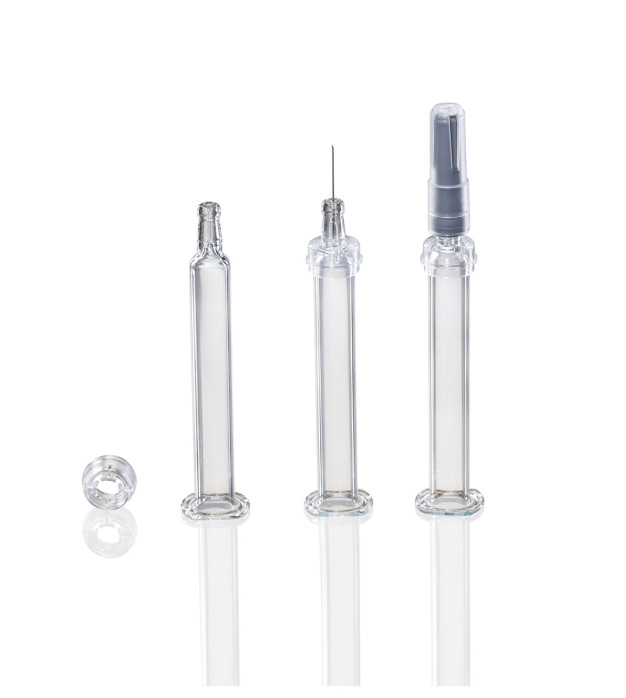
The GX® G-FIX® is placed onto the shoulder of the syringe as a universal adapter.
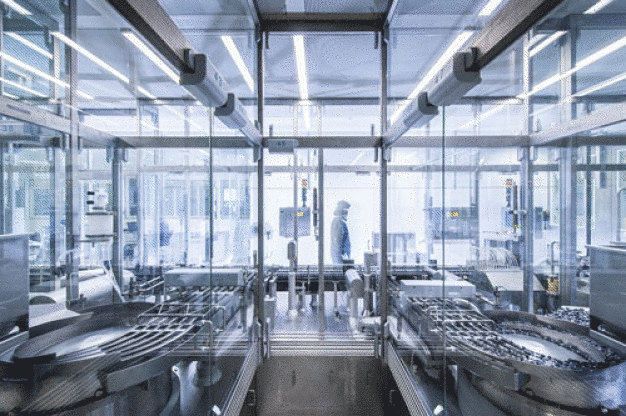
After annealing, the further processing of the syringes takes place in the cleanroom.
Gerresheimer is a globally leading manufacturer of high-quality specialty products made of glass and plastic for the international pharmaceutical and healthcare industry. The product range includes devices such as insulin pens, inhalers, and pre-filled syringes, primary packaging like injection vials, ampoules, and bottles, as well as laboratory glassware and packaging for the cosmetics industry. Around 11,000 employees at more than 40 locations worldwide generated a turnover of over 1.25 billion euros in 2013.
The company's press day this year took place on May 21, 2014, in Bünde, the international competence center for syringes. The choice of venue signals the importance of this product group in the reorganized structure of Gerresheimer AG since December 2013. The new structure now comprises only three business segments instead of four: Medical Plastic Systems and Syringe Systems were combined into the new Plastics & Devices segment. Plastics and glass are managed together — more important than the different materials is Gerresheimer's shared focus on complexity and customer-specific manufacturing, typical for both medical devices made of plastic and pre-filled syringes made of glass. Additionally, the market increasingly views syringes from this perspective. For both customers and the regulatory environment, the syringe is no longer just a simple primary packaging but a sophisticated drug delivery device.
GX® G-FIX®: Interface between syringe and device
How closely the worlds of plastic and glass are intertwined in pharmaceutical products is evident in the development of auto-injectors. One of the biggest challenges is reliably integrating a glass syringe with its manufacturing tolerances into a plastic device. Mechanical attachment is usually achieved via the finger rest, which is the most fragile part of the syringe. Furthermore, the attachment is far from the needle, so potential dimensional deviations can accumulate up to the injection tip. Gerresheimer has developed a standard interface, GX® G-FIX®, which allows precise and secure positioning of syringes in auto-injectors. The adapter is placed onto the sturdy shoulder of the syringe and creates an exactly defined interface to the device. This significantly reduces the risk of breakage. Additionally, the positioning accuracy of the needle and needle shield is higher, ensuring reliable engagement of the needle shield when removing the injector cap by the user. Only a small, non-regulatory modification of the syringe cone is required for using GX® G-FIX®, and filling can be carried out on existing lines without changes, making the process seamless.
Ready-to-Fill: Syringes with an expanded scope of application
The Bünde site supplies customers in Europe, Asia, North and South America with syringes and cartridges. The production capacity amounts to several hundred million syringes per year. The syringes are made from tubular glass, supplied among other sources by its own facilities in Pisa (Italy) and Vineland (New Jersey, USA). Originally, syringes were produced solely as bulk products, where the customer handled washing, siliconization, sterilization, and procurement of additional components such as plunger stoppers themselves. With Ready-to-Fill (RTF®) syringes, which have gained increasing popularity since 2002, these tasks are performed by the syringe manufacturer. The products can then be filled with medication directly in the pharmaceutical company without further preparation steps, making the syringe both primary packaging and delivery device. As manufacturing depth increases with RTF® syringes, so does the manufacturer's responsibility, requiring the highest standards of quality management. Additionally, pre-filled syringes must maintain their functionality throughout the entire shelf life. Unlike a plastic syringe, which is only assembled at the time of use, the integrity and mechanical properties must be guaranteed even after years. Comprehensive knowledge of the relationships between input factors and output enables continuous adjustment of process parameters to ensure consistent product quality. Fully automated inspections for dimensional deviations and cosmetic defects prevent defective products from being shipped. Equally important is the human factor. All employees must be aware that each syringe represents a patient and that even small oversights can endanger health or even lives.
Fourth RTF® cleanroom line for Bünde
Due to increasing demand, the production capacity for RTF® syringes at the Bünde site is being continuously expanded. A new production hall is currently being equipped with a fourth production line. Each new line enables the implementation of newly developed process improvements. For example, the fourth RTF® line systematically excludes error-prone glass-glass and glass-metal contacts, and optimized washing and siliconization processes ensure compliance with increasingly strict regulatory requirements. A particular challenge for cleanroom technology is the material glass. The "hot end" of the process generates unwanted particles, primarily due to the numerous open gas flames at the molding stations, especially when cutting the 1.4-meter-long glass tubes into syringe-sized sections. The patented Tekion process uses ultrasound and ionized air to remove these particles. The "cold end" of the RTF® process takes place in the cleanroom. For example, needle assembly is performed in a Class 8 cleanroom. For washing, siliconization, sterilization, and packaging, a Class 7 cleanroom with a laminar airflow zone directly above the line, according to ISO 5 standards, has also been installed. For final packaging in PP boxes for gas sterilization, the already packaged syringes are then transferred into a Class 8 cleanroom. Continuous options for process optimization are also utilized in cleanroom technology, with future efforts focusing on integrating insights from the plastics sector to reduce energy consumption in cleanroom construction.
Gerresheimer AG
40468 Düsseldorf
Germany