


- Translated with AI
Modern and Efficient - Modern Methods in Cleanroom Cleaning
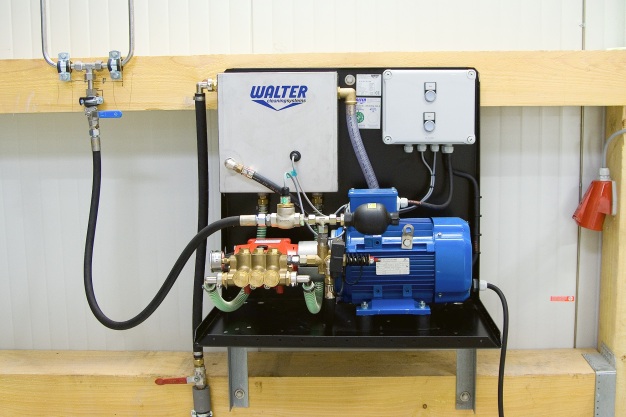
Individual printing system
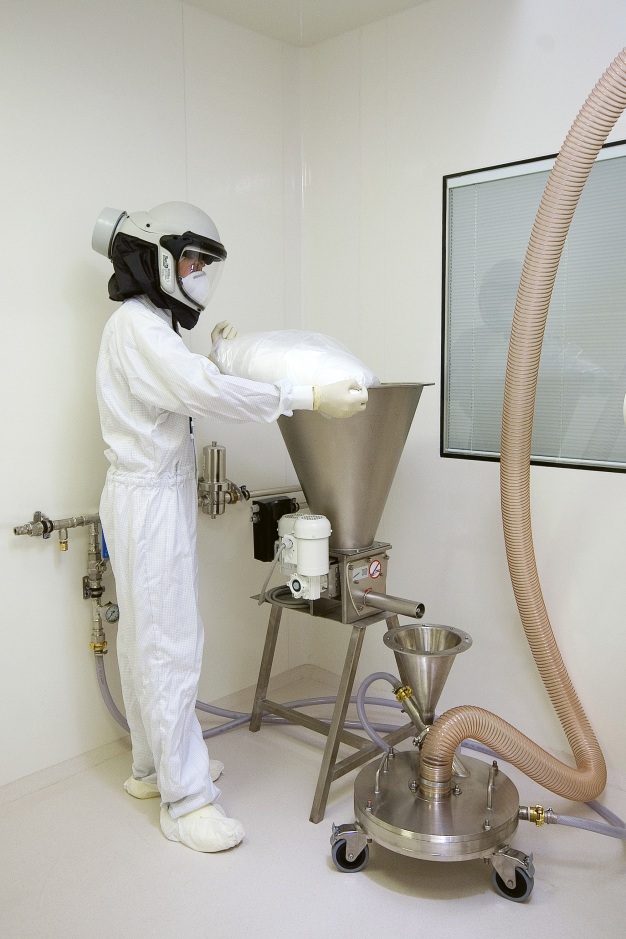
Production GfM
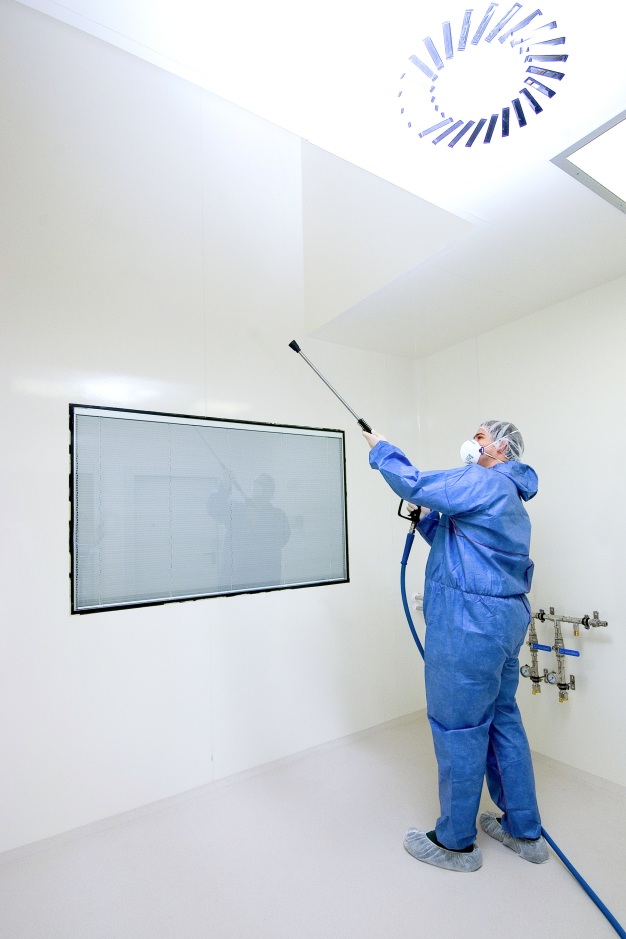
Cleaning2
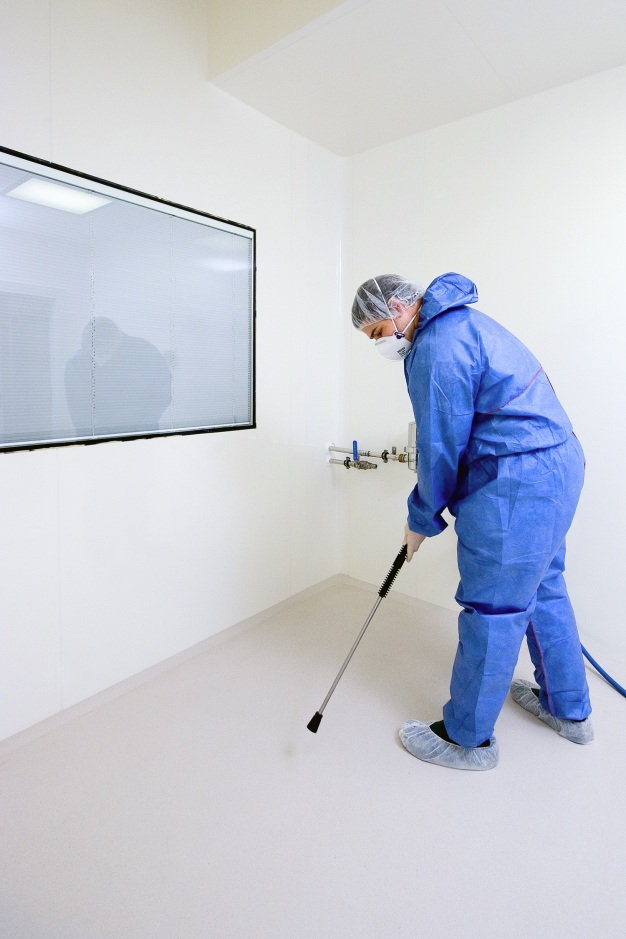
Cleaning3
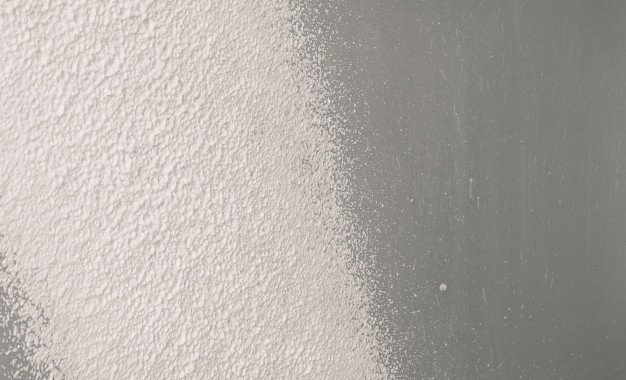
Foam cleaning
A particular challenge when cleaning cleanroom areas is to clean all surfaces product- and germ-free with as little water, chemicals, working time, and equipment as possible. During the cleaning process, employees should be exposed to only a minimal amount of cleaning chemicals. Contact with often highly toxic product residues must be largely avoided.
Since its founding in 1985, Gesellschaft für Micronisierung mbH (GfM) has been refining pharmaceutical active ingredients, auxiliary, and carrier substances for its customers on a contract manufacturing basis. In 15 cleanroom chamber systems divided by product groups, these substances are micronized, sterilized, mixed, and packaged under conditions of classes A and C. From incoming goods through storage, micronization, sampling, analytics, labeling, and monitoring, the entire process is strictly conducted according to GMP, PIC, CFR, and FDA requirements. When GfM in Bremen expanded its production facilities with four additional cleanrooms in 2007, the question of cleaning options quickly arose: Due to the variety of different customer orders, product changes are sometimes necessary daily, and each time, the production rooms and equipment must be completely cleaned and disinfected. Each cleaning process must meet individual requirements depending on the previously processed product. Speed combined with strict adherence to hygiene regulations is the hallmark of GfM, so it had to be ensured that the cleaning work delivers the required results while minimally restricting the available production time. It should be fast, flexible, safe, reliable, and cost-effective: a goal that is hardly achievable with conventional manual cleaning. At a trade fair, GfM became aware of the individual printing cleaning systems from Walter GmbH, and in close collaboration between the two companies, a perfectly tailored solution was designed to meet GfM’s needs. At a central point, the heart of the system was installed: an individual printing system from which the necessary chemicals and preheated pressurized water are supplied to the cleaning satellite. This is permanently mounted on the wall in the supply area in front of the cleanrooms and contains the dosing system for two centrally supplied chemicals. To dispense the respective liquid, a cleaning cart with spray hose and cleaning nozzles is connected. A selection of nozzles of different lengths ensures accessibility to hard-to-reach corners and angles in the room to be cleaned. A special, integrated "economical" nozzle in the spray lance allows individual adjustment of water volume and cleaning pressure. With a selector switch, the operator can easily choose between cleaning agent, disinfectant, or pressurized water via a pictogram. The system then automatically draws the pre-set amount of chemicals from the connected reservoirs. Mis-dosing, common in manual cleaning, is thus a thing of the past.
The cleaning process:
• Pre-rinse: Rough product residues are rinsed off with clear water and the necessary pressure in a first step.
• Foam cleaning: By adjusting the selector switch directly on the cleaning satellite, foam cleaning is activated. Using a special injector technique, a consistently fine-pored foam can now be produced with only a small amount of water and chemicals. The surfaces to be cleaned are sprayed with this foam, and the increased contact time between cleaning agent and product residues ensures complete removal.
• Post-rinse: The foam film along with the bound product residues is rinsed off with clear water.
• Disinfection: By switching the system again on the cleaning satellite, the selected disinfectant can now be applied with the same spray lance to microbiologically prepare the cleanroom area.
• Drying: Any remaining moisture is dried using the existing blowers.
• Disposal: All wastewater generated during cleaning is pumped into a collection tank via a special, FDA-approved drainage system and regularly disposed of externally.
The advantages of this cleaning system are obvious:
• Reduction of necessary cleaning time by about 50%. The stationary design of the system guarantees immediate availability, with no setup times. All connections for the cleaning media are directly available at the dispensing satellite and can be adjusted continuously between 0.5% and 12%. The individually adjustable water pressure and efficient foam cleaning ensure reliable cleaning of surfaces in the shortest possible time. The entire cleaning process can be performed by a single employee, minimizing personnel costs and enabling quick availability of production equipment for the next order.
• Reduced water consumption: An optimal ratio between working pressure and flow rate is used to set the maximum cleaning power for the specific product. This significantly reduces water consumption compared to conventional spray methods. When using heated water, energy consumption is reduced proportionally to water use.
• Reduced chemical consumption: With a constant concentration setting, foaming and/or non-foaming products can be individually selected according to the contamination. The guiding principle for concentration adjustment is always: as much as necessary, as little as possible. Especially with cleaning foams, the optimized contact time allows for a significant reduction in chemical use while maintaining cleaning performance.
• Reduced disposal costs: Particularly due to the decreased water consumption, disposal costs for collected wastewater are significantly lowered.
• Improved safety: All cleaning chemicals are stored in a separate room with all safety requirements and are directly supplied via a finely adjustable dosing system to the dispensing station. This minimizes or eliminates employee contact with cleaning chemicals and residual product in the cleanroom.
Depending on the design of the central unit, any number of cleaning satellites can be connected and operated either simultaneously or alternately to increase cleaning capacity and operational reliability.
Savings:
The total savings achieved by fast, efficient, and economical cleaning at GfM amounted to approximately €70,000 per year. Major savings came from personnel costs and disposal costs for the cleaning wastewater. Additionally, reducing the amount of chemicals used through fixed dosing of cleaning and disinfectant agents resulted in savings in the upper four-figure range annually.
Walter Gerätebau GmbH
74343 Sachsenheim-Ochsenbach
Germany