


- Translated with AI
Carol Bartnett, Jim Polarine, Tom Smith, Dan Klein und Peter Karanja
Fungicidal effect of globally accepted quarterly ammonium disinfectants
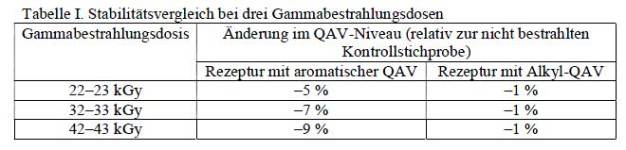
Table I
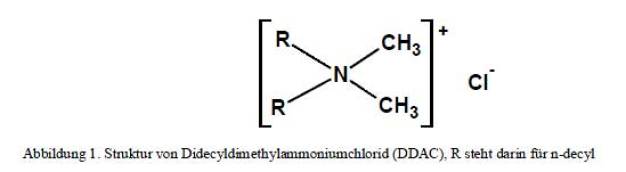
Figure 1
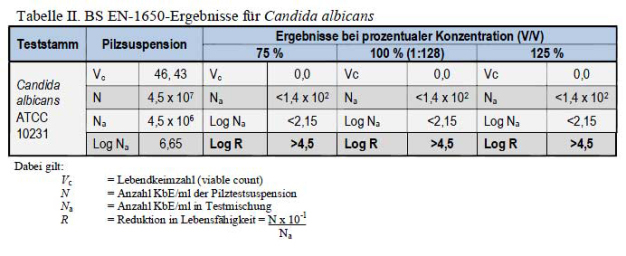
Table II
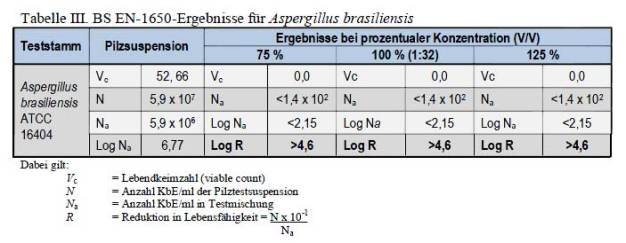
Table III
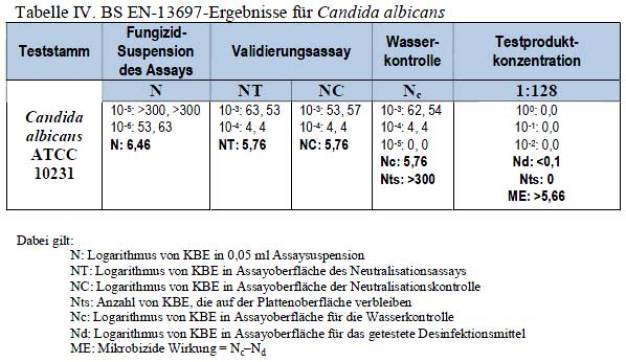
Table IV
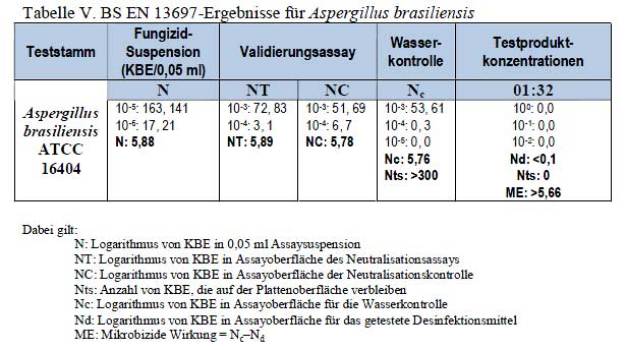
Table V
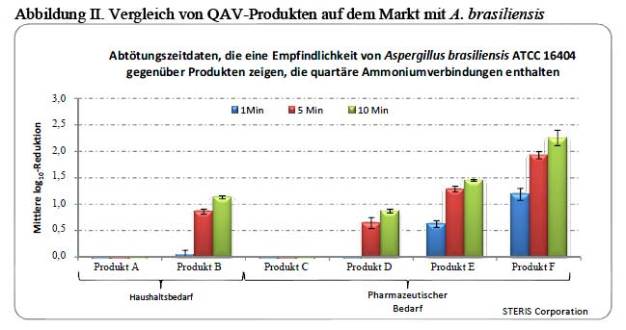
Figure 2
ABSTRACT
Quaternary ammonium compounds (QACs) are excellent active ingredients in disinfectant products because they exhibit low toxicity, good cleaning activity, and bactericidal efficacy. Unfortunately, many of the QAC products available on the market today are incompatible with some sterilization methods and have insufficient fungicidal activity. These disadvantages can lead to the avoidance of using QAC disinfectants in ISO-5 cleanrooms. Additionally, some QACs are only limitedly accepted by authorities in certain European countries. The studies described here demonstrate that a product containing didecyldimethylammonium chloride (a QAC) is effective against fungal genotypes, e.g., Aspergillus brasiliensis, remains stable under irradiation, and complies with worldwide environmental standards.
INTRODUCTION
Quaternary ammonium compounds have been used as active ingredients in disinfectants for hard surfaces since the 1930s, and now hundreds of variants are available. These compounds are structured as follows: around a positively charged nitrogen atom, four organic groups are attached (1). Over the years, various QACs have been developed, all with different combinations of alkyl and aromatic groups attached to the nitrogen atom. These formulations are now used worldwide (2).
An important factor influencing the selection of a QAC for a disinfectant formulation is the acceptance of the QAC by relevant regulatory agencies, such as the United States Environmental Protection Agency (EPA) and the European Parliament's Biocidal Products Regulation (BPR). The number of QACs registered with the EPA and actively supported under the BPR is relatively small. Only certain QAC active ingredients, such as didecyldimethylammonium chloride and alkyl dimethyl benzyl ammonium chloride (3,4), are included. This can make choosing a quaternary ammonium disinfectant a challenging task for international pharmaceutical companies interested in standardizing global working regulations. The challenge becomes even greater when selecting a disinfectant for use in controlled environments.
Disinfectant products must be sterilized before use in cleanrooms (5). One sterilization method for the product and its packaging is gamma irradiation. QACs with alkyl groups have demonstrated better stability under gamma irradiation than those with aromatic groups. When aromatic QACs are exposed to gamma radiation, the bond between the nitrogen atom and the aromatic part of the molecule can break, leading to the formation of amines as by-products. Table I compares the stability of an aromatic QAC formulation under gamma irradiation with that of an alkyl QAC formulation. The decomposition of alkyl QACs due to gamma irradiation is minimal, whereas the decomposition of aromatic QACs is significant and increases with higher radiation doses (6). (See Table I)
When weighing regulatory criteria against the desired irradiation stability, didecyldimethylammonium chloride is the best choice among all remaining QACs suitable for a globally applicable disinfectant formulation. (See Fig. 1)
Although didecyldimethylammonium chloride meets requirements for worldwide use, some QAC formulations lack broad-spectrum efficacy. On one hand, some QAC products demonstrate bactericidal and virucidal activity, but on the other hand, they lack the necessary effectiveness against certain types of fungi due to mechanisms of specific resistance and the nature of fungal spores, which are more resistant to disinfection (7). The consequences of fungal contamination can be severe and lead to long-term problems in operations. FDA warning letters and deficiency reports (Form 483) often list inadequate measures against fungal contamination and the lack of assurance that disinfectants used in facilities are effective against fungi (8,9).
A particular fungal genotype, Aspergillus brasiliensis ATCC 16404 (formerly known as Aspergillus niger ATCC 16404), has proven to be a challenging obstacle for pharmaceutical companies and is not effectively reached by most QAC-based disinfectants (10). In many cases, sporicidal agents and disinfectants such as bleach (sodium hypochlorite), hydrogen peroxide, peracetic acid, chlorine dioxide, ozone, glutaraldehyde, iodine, and phenols are used in applications requiring efficacy against Aspergillus brasiliensis. However, some of these compounds can pose safety, environmental, odor, or staining issues. A QAC-based disinfectant with recognized efficacy claims against Aspergillus brasiliensis provides a secure alternative for this application.
In formulating a QAC-based disinfectant, ingredients such as an alkali source, a chelating agent, an additive solvent, or a surfactant can be selected to improve the efficacy of a didecyldimethylammonium chloride-based formulation. These ingredients also meet the requirements of the REACH regulation (REACH stands for Registration, Evaluation, Authorization and Restriction of Chemicals) (11). Compliance with this regulation is mandatory for all formulations marketed within the European Union.
The tests described in this article were conducted on a formulation based on didecyldimethylammonium chloride. The formulation was tested against various fungal genotypes using European and US methodologies approved by the EPA.
MATERIALS AND METHODS
Strict adherence to the relevant standard methods recognized by the competent authorities is required for efficacy testing related to label claims of US and European disinfectants. The procedures are summarized below.
BS EN 1650 Method (12)
Preparation of test microbes. Suspensions of Candida albicans ATCC 10231 and Aspergillus brasiliensis ATCC 16404 were prepared and adjusted to approximately 1.5–5.0 x 10^7 CFU/ml. Tenfold serial dilutions were made to verify the number of colony-forming units (CFU) per ml in the inoculum suspension.
Test procedure. An aliquot of the disinfectant, diluted in hard water with 300 ppm calcium carbonate (CaCO3), was placed into a tube containing the interfering substance and a fungicidal suspension, and left at 20 ±1 °C for the specified contact time. After the contact time, 1.0 ml of the mixture was transferred into a neutralization solution. Following a neutralization period of 5 minutes ±10 seconds, a 1.0 ml sample of each neutralized mixture was placed onto a sterile Petri dish. Melted malt extract agar (MEA) was spread over each dish. After incubation, all plates were counted, and the CFU/ml of the test mixture was calculated. Validation and controls were performed simultaneously during the BS EN 1650 test procedure.
BS EN 13697 Method (13)
Preparation of test microbes. Suspensions of Candida albicans ATCC 10231 and Aspergillus brasiliensis ATCC 16404 were prepared and adjusted to approximately 1.5–5.0 x 10^7 CFU/ml. Serial tenfold dilutions were made to verify CFU counts. The test inoculum was prepared by adding 1 ml of each fungicidal suspension to 1 ml of interfering substance (3.0 grams BSA in 1 liter distilled water) and mixed thoroughly.
Test procedure. Clean, dry stainless steel discs with a diameter of two centimeters were placed into sterile, shallow containers. The test surface was inoculated with 0.05 ml of the prepared inoculum and dried at 37 °C until visibly dry. An aliquot of the disinfectant solution was applied to each test surface, ensuring the dried inoculum was completely covered. After the designated contact time (5 min for C. albicans and 15 min for A. brasiliensis), 10 ml of neutralizer was added. Each container was covered and shaken for 1 minute to remove remaining cells/spores from the surfaces. After a neutralization period of 5 min ±10 s, the neutralized mixture was serially diluted, and a 1.0 ml sample of each dilution was plated onto sterile Petri dishes in duplicate. Melted MEA was then added. The test surface was removed, rinsed with 10 ml of distilled water, and placed with the test side facing upward onto a Petri dish containing approximately 10 ml of solidified MEA. An aliquot of sterile distilled water was applied to the disc, and the surface was scraped with a sterile spatula for 1 minute to remove residual dried inoculum. Further, 10 ml of melted MEA was poured over the disc. After incubation, all plates were examined, and colony counts were recorded. Validation and control tests were performed simultaneously as described in BS EN 13697:2001.
Fungicidal methodology according to AOAC (14)
Preparation of test microbes. Fungal cultures of Aspergillus brasiliensis ATCC 16404, Aspergillus niger ATCC 6275, and Trichophyton mentagrophytes ATCC 9533 were grown on Neopepton-Glucose Agar (NGA) at 25–30 °C for 7 to 10 days. The mycelial mats were detached from the agar surface and softened with saline solution in a sterile glass tissue grinder. Subsequently, filtration was performed through sterile glass wool. The final inocula were prepared by adding the appropriate amount of fetal bovine serum (FBS) to each culture to produce a 5% mixture. The density of each conidial suspension was determined via plate count method. Before use, the suspensions were standardized with saline to produce approximately 5.0 x 10^6 conidia/ml.
Test procedure. For each test microbe, two 25 x 150 mm test tubes containing 5 ml of the respective test substances were equilibrated at 20 ±2 °C. Then, 0.5 ml of the standardized filamentous fungicidal inoculum was added to each tube and shaken. After a contact time of 10 minutes at 20 ±2 °C, a sample was transferred from each tube using a 4 mm wide microbiological loop into 10 ml of the corresponding neutralizer. The process was repeated for all tubes. Appropriate controls were also performed according to the official AOAC method 955.17 "Fungicidal Activity of Disinfectants". After each transfer, tubes were shaken thoroughly, and all tubes were incubated for 7 to 10 days at 25–30 °C. After incubation, tubes were examined for growth, and the log10 CFU/ml values were calculated for controls and test samples. The log10 reduction values represent the difference between the mean log10 control values and the test sample values.
"Kill Time" Method
Preparation of test microbes. A culture of Aspergillus brasiliensis ATCC 16404 was grown on Sabouraud Dextrose Agar (SDA) for 7 to 10 days at 25–30 °C. The microbial working medium was prepared by detaching the mycelial mats from the agar surface and softening with saline solution in a sterile glass tissue grinder.
Test procedure. 0.1 ml of the working medium was added to 9.9 ml of disinfectant. After contact times of 1, 5, and 10 minutes, a 0.1 ml sample was transferred from the tube into 10 ml of neutralizer. Serial tenfold dilutions were then prepared, plated, and overlaid with SDA. Plates were incubated for 5–7 days at 30 °C. Controls were performed similarly, but with buffer instead of disinfectant. The log10 CFU/ml values were calculated for controls and test samples. The log10 reduction values indicate the efficacy of the disinfectant over time.
RESULTS AND DISCUSSION
The BS EN 1650 is a quantitative suspension test used to evaluate the fungicidal activity of disinfectants. Since the test conditions are representative of practical use, this method can be used for generic efficacy claims for disinfectants in many European countries. The acceptance criterion for the test is a ≥ 4 log10 reduction in viable microbial counts (Log R). Table II shows that the tested product, diluted in hard water at a ratio of 1:128 and tested under soiled conditions at 20 ±1 °C, achieved a Log R over 4.5, demonstrating fungicidal activity against Candida albicans ATCC 10231 over 5 minutes. Table III shows that the same product, diluted in hard water at a ratio of 1:32 and tested under soiled conditions at 20 ±1 °C, achieved a Log R over 4.6, demonstrating fungicidal activity against Aspergillus brasiliensis ATCC 16404 over 15 minutes.
The BS EN 13697 is a quantitative surface test designed to demonstrate that products have a microbicide effect against microorganisms adhering to surfaces. The acceptance criterion for fungicidal activity is a ≥ 3 log10 reduction; the value is calculated as the microbicide efficacy (ME) value. Table IV shows that the tested product, diluted in hard water at a ratio of 1:128 and tested under soiled conditions (3 g/l BSA) at 20 ±1 °C, achieved an ME value over 5.66, confirming fungicidal activity against Candida albicans ATCC 10231 over 15 minutes. Table V shows that the same product, diluted in hard water at a ratio of 1:32 and tested under soiled conditions (3 g/l BSA) at 20 ±1 °C, achieved an ME value over 5.66, confirming fungicidal activity against Aspergillus brasiliensis ATCC 16404 over 15 minutes.
In the United States, fungicidal activity is determined using the official AOAC method 955.17 "Fungicidal Activity of Disinfectants". Results have shown that the test product was effective after a 10-minute contact time against Trichophyton mentagrophytes ATCC 9533 and Aspergillus niger ATCC 6275 when diluted at a ratio of 1:128 in 400 ppm hard water and tested in the presence of a 5% organic load with fetal bovine serum (FBS). The product also demonstrated efficacy after 10 minutes against Aspergillus brasiliensis ATCC 16404 when diluted at 1:64 in 400 ppm hard water with a 5% organic load. Studies have shown that Trichophyton mentagrophytes responds more strongly to the disinfectant than Aspergillus brasiliensis ATCC 16404 (15).
The basic efficacy of QAC-containing products against Aspergillus brasiliensis ATCC 16404 can be assessed using a "kill time" suspension test, as shown in Figure II. Products A and B are ready-to-use household cleaners (QAC cleaners/disinfectants), while products C, D, E, and F are QAC disinfectants for pharmaceutical use. Product C also contains a biguanide.
The results in Figure II demonstrate the importance of proper formulation in the development of QAC disinfectants. A significant difference in efficacy against Aspergillus brasiliensis can be observed, which does not directly correlate with the active ingredient type, concentration, or practical application.
CONCLUSION
The use of a disinfectant based on a quaternary ammonium compound offers several advantages, including excellent cleaning activity, low toxicity, and bactericidal and virucidal efficacy. However, not all formulations with quaternary ammonium compounds provide fungicidal activity comparable to other active ingredients, and market-available QACs may have varying degrees of development regarding activity against fungal spores. A properly formulated QAC-based disinfectant can effectively target challenging fungi such as Aspergillus brasiliensis without compromising other important properties like globally accepted ingredients, environmental safety, and irradiation stability in concentrated form.
REFERENCES
1. M. Cucci. Soap and Sanitary Chemicals. 25, 129-134,145 (1949).
2. P. Schaeufele. J. Assoc. Ocs. 61, 387-389 (1984).
3. U. S. Environmental Protection Agency, Substance Registry Services, http://iaspub.epa.gov/sor_internet/registry/substreg/searchandretrieve/substancesearch/search.do, accessed July 13, 2011.
4. Regulation (EC) No. 2032/2003. List of participants/applicants to the Review Programme of existing active substances used in biocidal products, http://ec.europa.eu/environment/biocides/pdf/list_participants_applicants_subs.pdf, accessed July 13, 2011.
5. FDA Guidance for Industry, Sterile Drug Products Produced by Aseptic Processing – Current Good Manufacturing Practice, U.S. Department of Health and Human Services, Food and Drug Administration, September 2004.
6. Internal data of STERIS Corporation, unpublished.
7. McDonnell, G.E. “Antisepsis, Disinfection, and Sterilization: Types, Action, and Resistance,” ASM Press, Washington, DC, 2007.
8. U.S. Food and Drug Administration, Inspections, Compliance, Enforcement, and Criminal Investigations, Medimmune, Inc. Warning Letter, May 27, 2007, http://www.fda.gov/ICECI/EnforcementActions/WarningLetters/2007/ucm076398.htm, accessed May 9, 2011.
9. GMP Trends Inc., Issue 766, December 15, 2008.
10. Polarine, J., Macauley, J., Karanja, P., Klein, D., Martin, A., “Evaluating the Activity of Disinfectants Against Fungi,” Cleanrooms: The Magazine of Contamination Control Technology, 23 (2), February 2009.
11. Regulation (EC) No 1907/2006 of the European Parliament and of the Council of 18 December 2006 concerning the Registration, Evaluation, Authorization and Restriction of Chemicals (REACH), establishing a European Chemicals Agency, amending Directive 1999/45/EC and repealing Council Regulation (EEC) No 793/93 and Commission Regulation (EC) No 1488/94, as well as Council Directive 76/769/EEC and Commission Directives 91/155/EEC, 93/67/EEC, 93/105/EC and 2000/21/EC, http://eurlex.europa.eu/LexUriServ/LexUriServ.do?uri=CELEX:32006R1907:EN:NOT, accessed July 11, 2011.
12. BS EN 1650:2008. Chemical disinfectants and antiseptics – Quantitative suspension test for the evaluation of fungicidal activity of chemical disinfectants and antiseptics used in food, industrial, domestic and institutional requirements (phase 2, step 1). Available from British Standards Institute (BSI), 389 Chiswick High Rd., London W4 4AL, UK, http://www.bsi-global.com.
13. BS EN 13697:2001. Chemical disinfectants and antiseptics – Quantitative non-porous surface test for the evaluation of bactericidal and/or fungicidal activity of chemical disinfectants used in food, industrial, domestic, and institutional areas – Test method and requirements without mechanical action (phase 2/step 2). Available from British Standards Institute (BSI), 389 Chiswick High Rd., London W4 4AL, UK, http://www.bsi-global.com.
14. AOAC Official Method 955.17 “Fungicidal Activity of Disinfectants,” Official Methods of Analysis of the AOAC, Eighteenth Edition, AOAC International, 2005.
15. Internal data of STERIS Corporation, unpublished.
STERIS Deutschland GmbH
50933 Köln
Germany