

- Packaging
- Translated with AI
Dr. Christoph Strubl
Cleanroom packaging in contamination-critical environments GMP and PPWR – a contradiction?
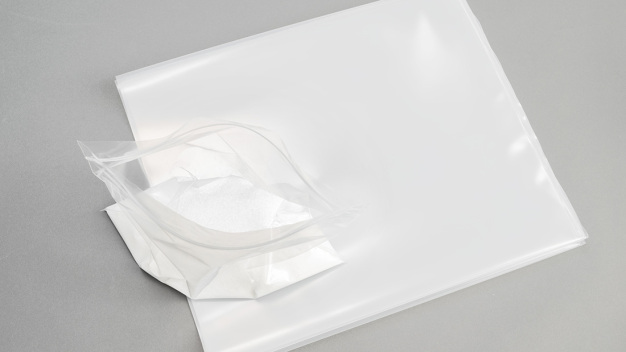
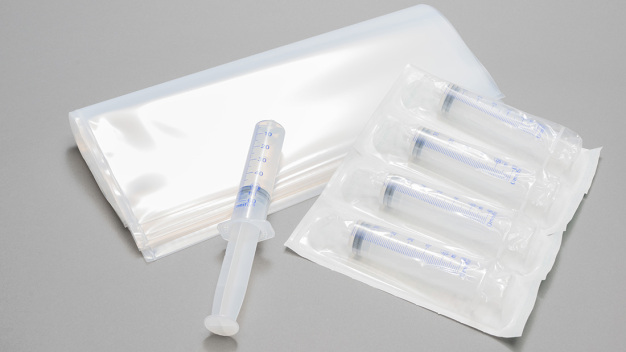
In the production of pharmaceutical and medical device products, high standards for product quality, cleanliness, and hygiene must be met. To prevent damage and contamination during handling and transportation, products must be appropriately packaged. In many cases, flexible plastic packaging is used as the primary packaging material. The avoidance of particulate, chemical, and microbiological contamination is possible if the primary packaging materials are produced in a qualified cleanroom environment. However, plastic packaging has recently come into focus as a critical element concerning environmental and sustainability issues among consumers. The European Union has responded to this with the recently adopted Packaging & Packaging Waste Regulation (PPWR). For cleanroom plastic packaging, these changed framework conditions must be analyzed and assessed based on risk.
Plastic cleanroom packaging as primary and secondary packaging is a clean and safe packaging material. Plastic packaging includes, for example, flexible packaging such as films, tubes, bags, stand-up pouches, or liners. These packages serve as primary packaging (see Figure 1 and Figure 2) that come into contact with the product or as secondary packaging to ensure safety during transport and handling. In many cases, they also constitute so-called sterilization barrier systems, the requirements of which are regulated in ISO 11607.
Risk-based consideration of plastic cleanroom packaging
The importance of primary packaging materials, especially for pharmaceutical products, is beyond question and is clearly stated in the GMP guideline in Chapter 5.45: “The selection, qualification, approval, and ongoing monitoring of suppliers of primary and printed packaging materials should be given as much attention as that given to suppliers of starting materials.” Packaging is therefore classified at the same quality level as pharmaceutical raw materials. This applies to the entire process chain for manufacturing pharmaceutical products. A risk-based assessment of the primary packaging materials made of plastic is unavoidable. Essentially, four groups of underlying contamination sources can be identified:
- – Raw material risks: metabolism between packaging and product
- – Process risks: contamination of the GMP environment by inadequate packaging must be avoided
- – Logistics risks: concerns the packaging of the packaging
- – Product risks: product-specific criteria such as tightness, strength, sterilization barrier properties
Plastic packaging in focus - PPWR
However, packaging has become a topic of intense societal discussion for various reasons. On the one hand, it is about avoiding packaging waste and returning it to the circular economy to improve sustainability and environmental standards. On the other hand, packaging plays a significant role in product and patient safety. The sustainability topic is clearly reflected in keywords such as recyclability, material reduction, mono- vs. multi-materials, labeling requirements, chemical recycling, bio-based plastics, or biodegradable plastics. The existing EU Packaging Directive 94/62/EC is now being replaced by the Packaging & Packaging Waste Regulation (PPWR). This aims to replace the country-specific implementations of the current EU directive with a regulation that applies uniformly across all EU member states. It concerns: requirements for packaging materials, packaging waste, packaging design or design for recycling (Article 6), use of recycled materials, definition of recycling quotas (Article 7) in packaging products, up to packaging bans.
Of course, exceptions have also been formulated for “contact-sensitive” packaging, i.e., packaging for food, animal feed, cosmetics, hazardous goods, medical devices, and medicines for humans and animals.
Article 6 Recyclable Packaging Section 11 regulates exceptions:
“This Article shall not apply to the following:
(a) immediate packaging as defined in Article 1, point (23), of Directive 2001/83/EC and in Article 4, point 25, of Regulation (EU) 2019/6;
(b) contact-sensitive packaging of medical devices covered by Regulation (EU) 2017/745;
(c) contact-sensitive packaging of in vitro diagnostic medical devices covered by Regulation (EU) 2017/746;
(d) outer packaging as defined in Article 1, point (24), of Directive 2001/83/EC and in Article 4, point (26), of Regulation (EU) 2019/6 where such packaging is necessary to comply with specific requirements to preserve the quality of the medicinal product;
(e) contact-sensitive packaging for infant formula and follow-on formula, processed cereal-based foods, baby foods, and food for special medical purposes as defined in Article 1, points (a), (b), and (c), of Regulation (EU) No 609/2013;
Article 7 Minimum recycled content in plastic packaging, Sections 4 and 5 regulate exceptions:
“4. Paragraphs 1 and 2 shall not apply to the following:
(a) immediate packaging as defined in Article 1, point (23), of Directive 2001/83/EC and in Article 4, point (25), of Regulation (EU) 2019/6;
(b) contact-sensitive plastic packaging of medical devices, devices exclusively intended for research use, and investigational devices covered by Regulation (EU) 2017/745;
(c) contact-sensitive plastic packaging of in vitro diagnostic medical devices covered by Regulation (EU) 2017/746;
(d) outer packaging as defined in Article 1, point (24), of Directive 2001/83/EC and in Article 4, point (26), of Regulation (EU) 2019/6 where such packaging is necessary to comply with specific requirements to preserve the quality of the medicinal product;
…
5. Paragraphs 1 and 2 shall not apply to:
(a) plastic packaging intended to come into contact with food where the amount of recycled content poses a threat to human health and results in non-compliance of packaged products with Regulation (EC) No 1935/2004; …”
The pharmaceutical process chain must clarify in this context:
- – Which regulations of the PPWR apply to the specific packaging system
- – Which exceptions are applicable, and if not, what the use of recycling quotas means for approvals and specifications
- – Regardless, it is sensible from an environmental and sustainability perspective to scrutinize the used packaging and, where possible and meaningful, apply principles of ecodesign as proposed by the “Round Table” initiative. It’s about “Design for Recycling.”
From the perspective of GMP and cleanroom packaging, the requirement for mandatory recycled content quotas poses a particular problem. It concerns questions of approval, material purity, and formulation consistency. How does, for example, the use of post-consumer recycled material (PCR) affect extractable/leachable studies as a prerequisite for approval? What consequences are to be expected regarding process purity in the cleanroom?
It would be disastrous if the safe, clean, and efficient plastic packaging, which is demonstrably intended to protect the product as primary packaging, becomes a contamination risk due to the PPWR, thereby potentially endangering product and patient safety.

Strubl GmbH & Co. KG Kunststoffverpackungen
Richtweg 52
90530 Wendelstein
Germany
Phone: +49 9129 90350
email: christoph.strubl@strubl.de
Internet: http://www.strubl.de