


- Translated with AI
Can you recover data with the washing machine?
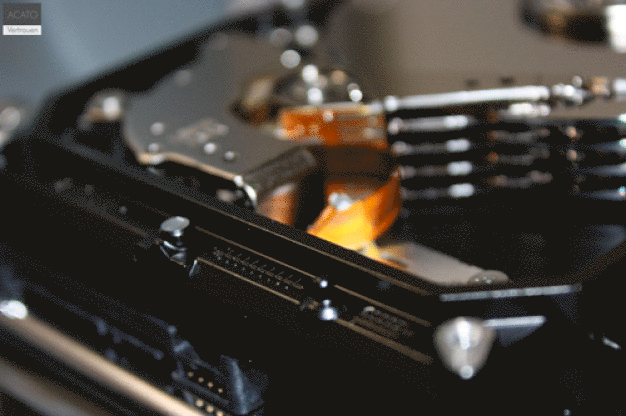
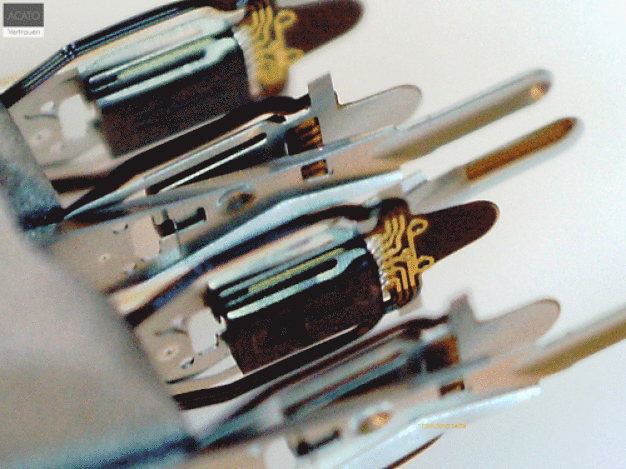
If scratches and contaminants prevent a hard drive from retrieving data, a special operation in a cleanroom must be performed. The disk cleaning requires the use of special agents to minimize subsequent damage as much as possible. A look behind the scenes ...
If hard drives fall or cause damage on the media surface through other triggers, a residue almost always remains on the surface and in various parts of the casing. Depending on the model, overheating of the components can also lead to cracks and subsequent contact with other parts.
Due to the elements built into the read heads, they can heat the air between them and the media surface. This allows them to regulate the height above the disk. Occasionally, the control components that keep this height adjustment under control are damaged.
This can cause metallic particles to adhere to the heating elements. As a result, several cleaning tasks must be performed by a professional data recovery technician in a cleanroom. Such cleanings can only be carried out on high-quality laminar flow workbenches, as the commonly promoted glove-vacuum chambers do not meet the requirements.
Special liquids are used here, requiring the technician to have corresponding freedom of movement. However, one does not need the cleanroom protective suits used in wafer manufacturing, as some portals suggest to customers. ACATO GmbH uses the latest cleanroom workstations made in Germany, which have been tested by a leading institute for compliance with European ISO 5 or US Class 100 cleanroom standards.
In some situations, hard drives have suffered water damage, allowing saltwater or other liquids to penetrate the interior of the casing. Saltwater poses a significant problem for all metallic/copper-like components after a long period. Oxidation requires intensive cleaning and sometimes the replacement of oxidized parts. When the Danube flooded several industrial and commercial buildings in Austria some time ago, mud and other contaminants also entered the data cabinets of companies.
In one case, the Danube apparently entered a lock chamber, damaging stored data carriers inside. When the most important data carrier arrived at the German ACATO GmbH laboratory, the package had to be opened first. Immediately, a very unpleasant smell was detected. It was clear that more than just pure sweet water had come into contact with the hard drive.
The data carrier first had to be carefully opened and freed from the remaining water. Then all parts had to be disassembled and cleaned specifically, which was quite time-consuming. Some parts could no longer be cleaned because they were too contaminated, so they had to be replaced with suitable spare parts. Only after this could the individual components be examined under a microscope and subsequently tested. According to the express order, most of the data could be recovered in a short time.
Component cleaning is also necessary in other situations. Very robust and reliable SAS hard drives can wear out after a long period of operation. Occasionally, contamination occurs on the inside of the particulate filter and on the media surface. A similar situation is seen with very durable SCSI drives that have been operated for over 15 years. Here, natural dust and particle deposits form due to soft components beginning to loosen or crumble over the years. The resulting sticky mass must be carefully removed.
In general, very old hard drives also suffer from crumbling seals, as the sealing compound used in the past dries out and develops holes, allowing contaminated outside air to enter the interior. The damage triggered by this on the read heads replicates on the media surface, resulting in deep and shallow scratches.
In a special process, surface scratches can be compensated with a filler after cleaning. However, this method is currently only suitable for a few hard drive series and only makes sense for extremely valuable data, as the process technology required incurs significantly high costs.
It should also be noted that the cleaning liquids used are not comparable to the chemical agents used in flash chip cleaning in the cleanroom laboratories. Therefore, a different component cleaning process is performed for SSD data recovery than for mechanical hard drives.
Only in the case of hybrid drives does it sometimes become necessary to remove dirt deposits from the respective complement unit using an appropriate process. Hybrid drives combine mechanical disk technology with SSDs. The goal is to significantly accelerate the drive's speed.
Currently, these drives are still rarely used due to their high procurement costs, but this does not mean that problems will not occur. Typically, a certain period (6 months to 3 years) passes before the first issues arise in the respective application areas of the drives.
Many companies are now quickly replacing mechanical drives with SSDs within RAID systems. However, SSD data recovery must address various problems in emergencies. Known issues like "Bad CTX Error or 8-bit errors" and "No FW" (no firmware found) limit the capacity of SSD data recovery systems. Nevertheless, many cases can be resolved quite quickly.
This has allowed the previously very costly SSD data recovery jobs to be carried out much more affordably. The cost reduction has been passed on to customers by ACATO GmbH. The ongoing development of SSD software aims to support the latest models as comprehensively as possible.
However, if an SSD is submerged in water, many areas affected by oxidation damage must be cleaned. Various cleaning concepts exist for this purpose. The main problem with water damage is residual moisture, which can cause damage to the electronics. Usually, affected users connect the wet SSD to a computer, causing a short circuit that damages important components. It is important to note that SSD data recovery does not require a cleanroom for traditional SSD drives, even if some uninformed sources claim otherwise on their websites.
The most common damage occurs in the SSD controller and control programs, which in some cases require the SSD to be completely disassembled and read out for data recovery. SSDs are mostly available as SATA models in companies, but SSDs with SAS connections are slowly entering the market.
Hard drive failures in RAID systems with SAS drives can jeopardize valuable company data. Specialized equipment must be used to test electronics and mechanics with minimal risk. SAS drives have a fairly robust interior, but this technology makes temporary repairs significantly more complex than with SATA or older PATA drives.
Accordingly, SAS workstations are designed for RAID SAS data recovery. After resolving electronic, mechanical, and service area issues, the RAID array must be reconstructed. This involves using not only intact copies but also virtual drives based on the contents of damaged drives. Rebuilding the RAID structure can take several days or even many days depending on the size of the array.
Old SCSI drives (e.g., "Seagate Cheetah" drives) require experienced technicians for replacement of defective read heads. These drives have very specific properties, and improper opening by laypersons (without a cleanroom) can cause severe damage. Removing heads stuck on the media surface after many years of continuous operation is particularly challenging. Such unfortunate parking situations occur after many years of operation.
RAID systems can control up to 32 + 4 drives, even if 4 are damaged and essential for rebuilding intact data. In emergencies, multiple RAID stations can be combined, allowing four defective SAS drives per station to be integrated. However, the connection is not via standard SAS controllers. Technicians must be trained in an internationally recognized training center by experienced experts. Consequently, such emergencies are resolved at significantly higher costs than with simple RAID systems.
This explains why professional data recovery takes time and also entails a corresponding financial burden for the customer. Due to cooperation with insurance companies, ACATO GmbH can offer individual risk consulting and follow-up support to insured clients.
ACATO GmbH
80339 München
Germany