- Translated with AI
Christine Weiß
Black Hole Water System Qualification
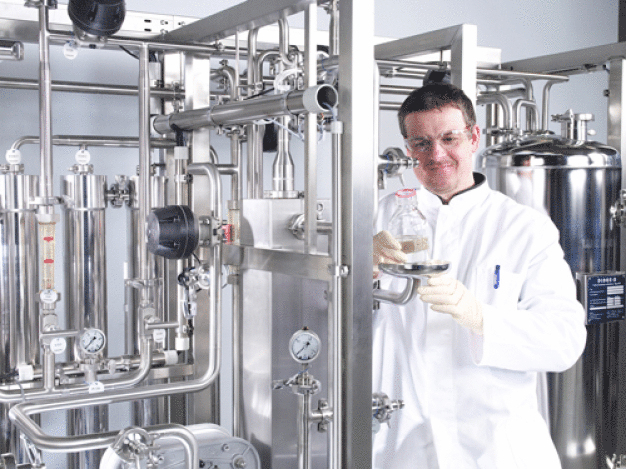
Photo: Wilhelm Werner GmbH, Leverkusen
The qualification of water systems often presents companies with major challenges. The recurring questions are: what, when, where, how?
Often, the medium water, its properties, and its variability are underestimated. Water in its various treatment stages is an indispensable raw material for the pharmaceutical industry. Few processes are not directly or indirectly related to water of different quality levels. The common water qualities – purified water (PW), highly purified water (HPW), and water for injection (WFI) – must meet special requirements day after day. Since water must be regarded as an extremely sensitive raw material that can be influenced in the short term by multiple factors, ensuring the desired quality features requires a well-thought-out and planned qualification process, followed by regular routine monitoring. Caution is advised even when it comes to drinking water fed into the treatment system. External weather-related influences, such as heavy rain or prolonged drought, as well as the season and the environment of the water source area, can negatively affect water quality. And further surprises often hide in the subsequent processing stages.
For example, certain process steps can already pose risks to water quality. Likewise, a flawed system design, such as incorrect sizing of the system, dead legs, use of unsuitable materials, improper planning of sampling points, or an inappropriate sanitization concept, can impact water quality. But this does not mean all pitfalls are eliminated. The best system will only operate reliably if routine monitoring is well planned and carried out by qualified personnel. Only proper sampling can lead to reliable results.
This raises the next question: which parameters should ultimately be tested and at what intervals? Depending on water quality, monographs require testing of various parameters such as microbiological purity, endotoxin testing, as well as physicochemical measurements like TOC (total organic carbon), conductivity, or heavy metals.
Since water treatment generally involves continuous production, each sampling only provides a snapshot of the current state. Depending on the parameter being tested, test results are often available only after several hours or days. When unexpected results occur, expert advice is costly. A repeat analysis on the same sample is therefore no longer possible. However, results from a new sample do not necessarily confirm the previous findings. Additionally, at the time of obtaining the results, the water may already have been used in production or for cleaning purposes. Therefore, an assessment of potential product contamination can only be made retrospectively.
Conclusion
A water system is only as good as the care it receives. Qualification, validation, and maintenance are the three main pillars that provide the system with the necessary stability.

Labor LS SE & Co. KG
Mangelsfeld 4, 5, 6
97708 Bad Bocklet
Germany
Phone: +49 9708 91000
Fax: +49 9708 910036
email: service@labor-ls.de
Internet: https://www.labor-ls.de/