




- Buildings & Rooms
- Translated with AI
Being prepared for the new VDMA guidelines
Minimizing risk potentials by the qualification of compressed air
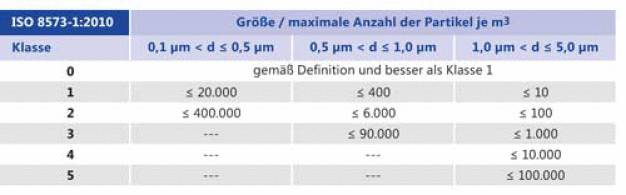
Figure 1: Classification of compressed air according to ISO 8573. Maximum permissible particles per m³ of compressed air.
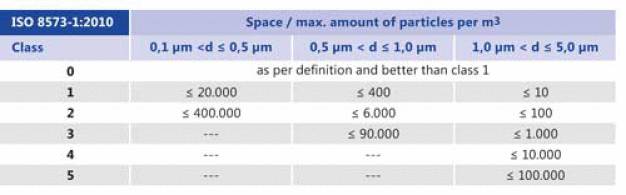
Fig. 1: Classification of compressed air according to ISO 8573. Maximum allowed particles per m³ of compressed air.
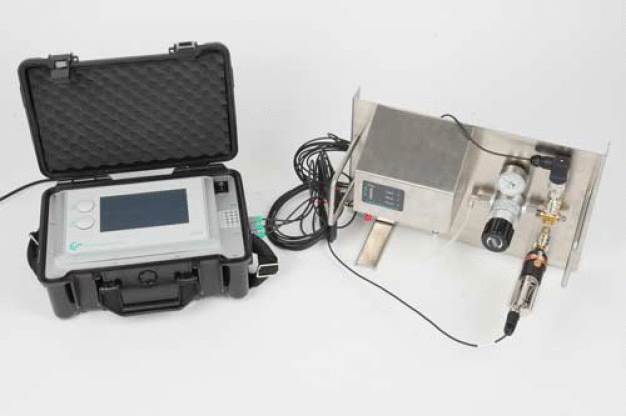
Figure 2: Measurement system for determining the particle content
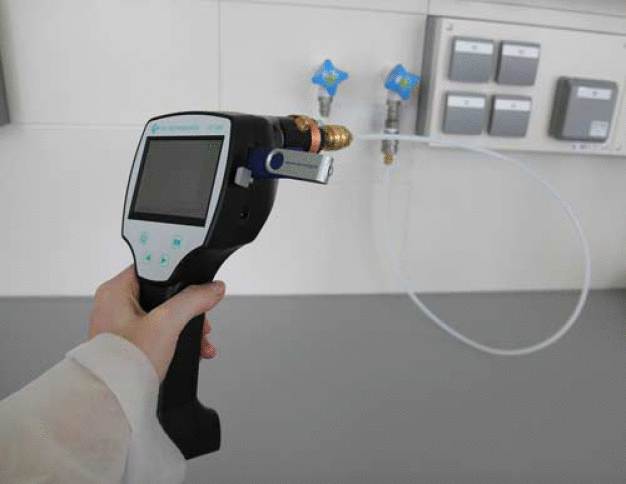
Figure 3: Test of the pressure dew point
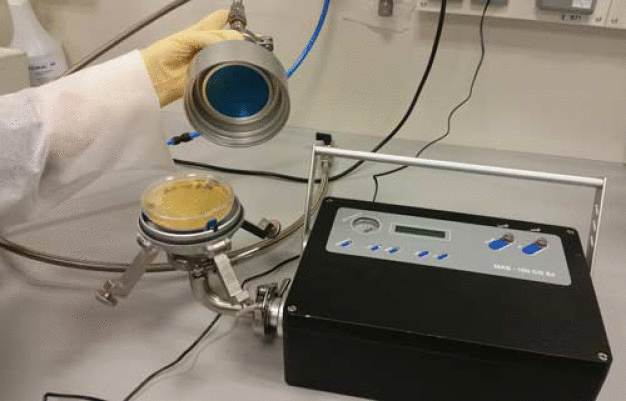
Figure 4: Test of the microbiological contamination
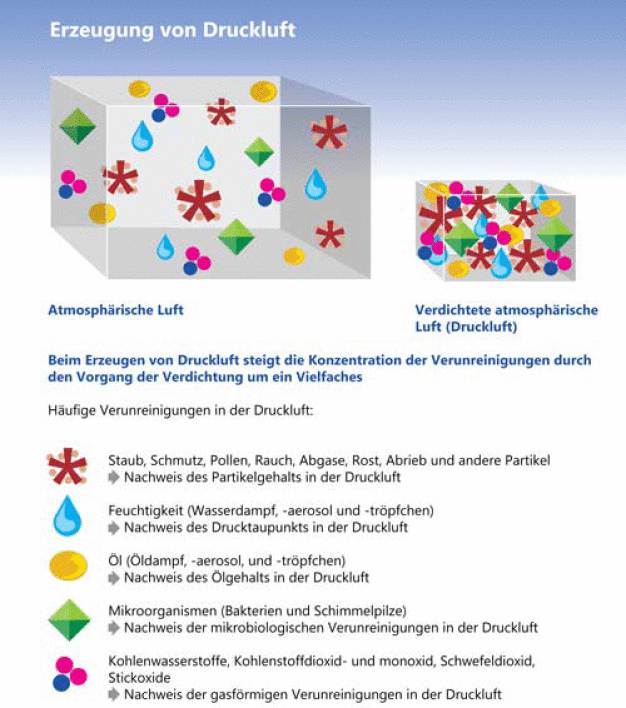
Figure 5: Generation of compressed air
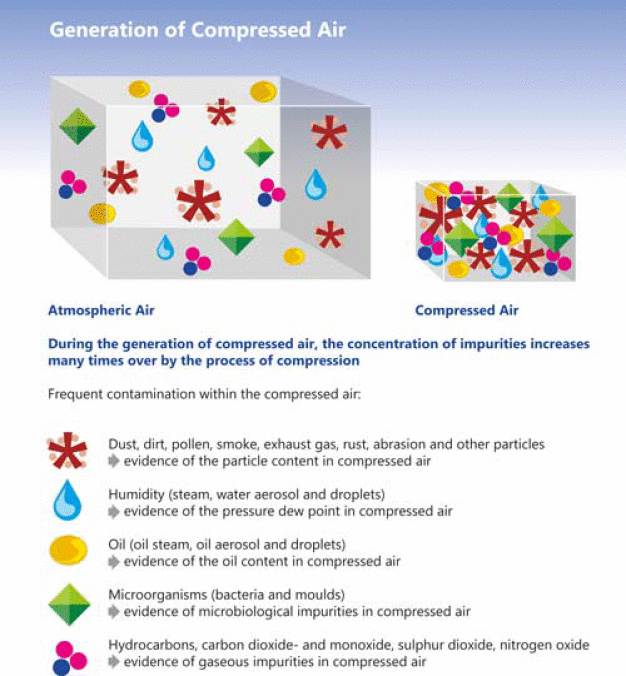
Fig. 5: Generation of compressed air
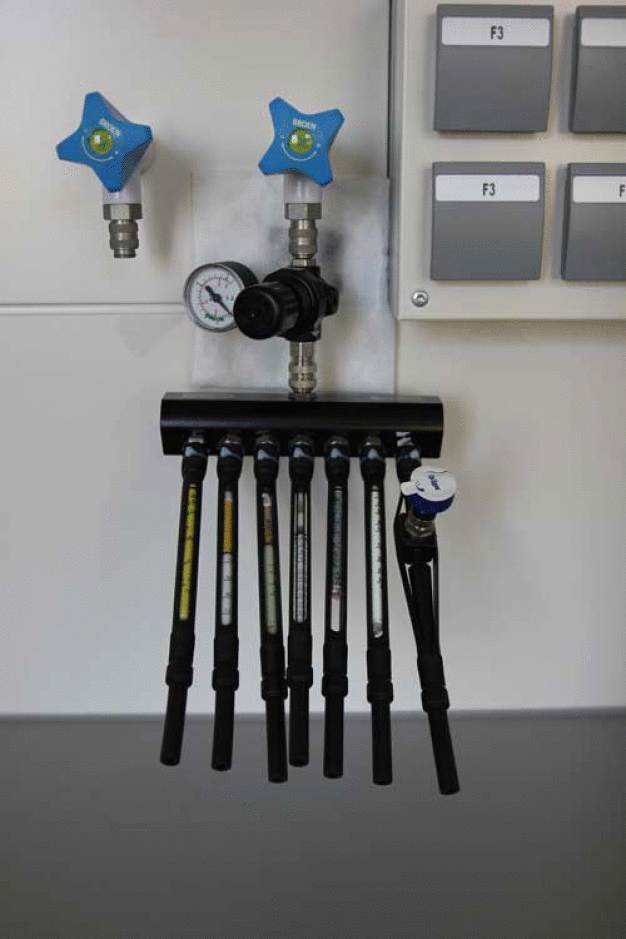
Figure 6: Visual assessment of low oil concentrations and trace gases using the oil impactor.
The impairments, caused by using compressed air of insufficient quality for operations in cleanrooms should not be underestimated. Seasonal influences (pollen count etc.), temperature and humidity, fine dust pollution at the point of origin, or impurities, e. g. of compressors can impair the quality of the cleanroom air and thus also the quality of the product.
Compressed air is an important process medium and develops a far-reaching effect on the air quality
Compressed air is among the essential process media and therefore indispensable for the medical and pharmaceutical industry. As compressed air is efficient, quickly available and easy to store, it is frequently used for transporting granulates, checking tightness or blowing out plastic blanks.
In practice, compressed air is, in contrast to cleanroom air, not sufficiently monitored. Therefore, a potential contamination risk exists during the manufacturing process, as compressed air often gets into contact with the product itself, but also indirect contact with the product, for instance via packaging material, can lead to a transmission of impurities. As a consequence of this, a negative effect on durability and sterility of the product is possible. There are contamination risks from different sources.
The good news is that risk potentials, in principle, are easy to identify and to minimize.
For the generation of compressed air, atmospheric air is aspirated from the surrounding and compressed by a compressor. Thus, within the compressed air there are all possible impurities such as particles, dust, humidity and steams, which exist in the surrounding. All these impurities occur then in compressed form. There is also an additional danger during the generation of compressed air: it is possible that impurities such as rust, dust, abrasion and oil, caused by the compressed air net itself, get into the compressed air out of the compressor or the medium lines.
Using compressed air of insufficient quality in sensitive production areas might result in a significant decrease of the product quality. It is therefore crucial to treat the compressed air in sensitive production areas for achieving the required purity. That is possible by a certain treatment in removing impurities from the compressed air.
Qualified compressed air enables the evidence of technical purity
The qualification of compressed air serves as evidence of the required purity. Basis for this is the international ISO 8573 series of standards. This series of standards enables the classification in purity classes based on specified parameters: particles, oil and humidity. Dust, airborne particles and pollen are counted among other things to these particles.
Within the compressed air system, water occurs in form of steam, water aerosol or water droplets and enters the system, especially via the atmospheric air. This humidity can cause rust in the pipes and lines. Furthermore there is a serious danger with regard to the growth of bacteria and moulds. Microbiological contamination as moulds and bacteria can enter the compressed air in this way. The usual lubrication of the compressors with oil may also lead to a permanent contamination of the compressed air system.
However, even with oil-free compressors small quantities of hydrocarbons in aerosol or gas form may enter the compressed air. So, escaping compressed air can have a negative effect on the quality of the clean room air.
Conclusion
Product-contacting compressed air needs to be equal or better than the room air, in which the product is manufactured.
The German Engineering Federation (VDMA) currently works on a draft concerning the purity of compressed air for defined applications in the food technology and pharmaceutical engineering. The estimated publication date of this work is 2017.
Apart from the prescribed period, companies, using compressed air in their cleanrooms, should think about a qualification. The quality of compressed air is an important factor for the quality assurance.
bc-technology GmbH
72666 Neckartailfingen
Germany