- Hygiene & Cleaning
- Translated with AI
A targeted training and further education guarantees a sustainable cleaning process.
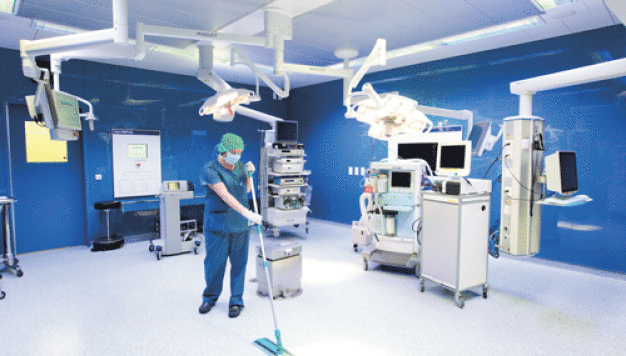
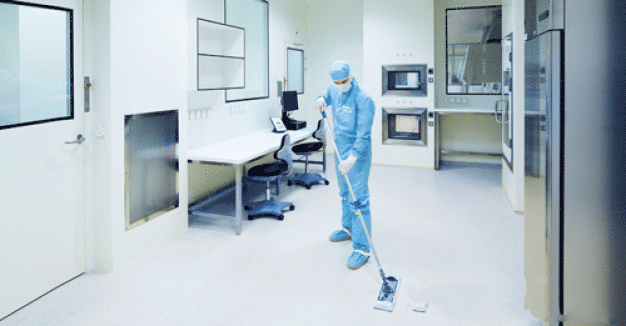
The cleaning staff for cleanrooms is extensively trained for this demanding task.
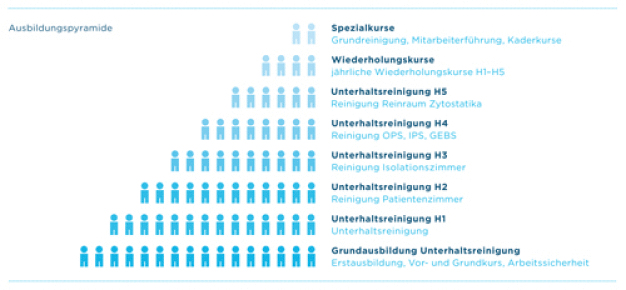
Training Pyramid
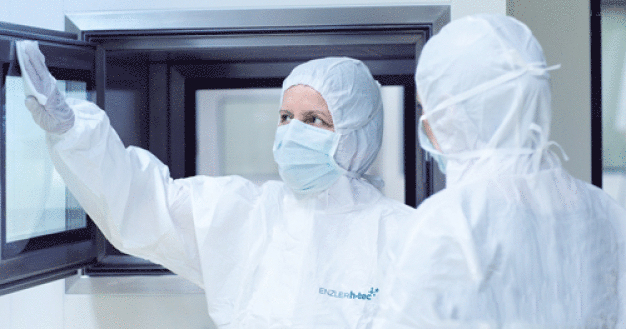
Sterilization requires the strictest hygiene measures.
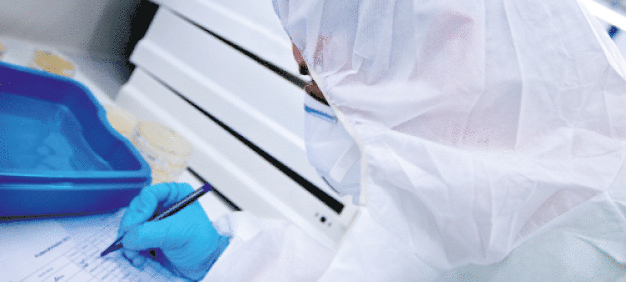
In healthcare and cleanrooms, high hygienic and regulatory standards apply, which require cleaning staff to demonstrate diligence, expertise, and commitment. The foundation for successful cleaning lies in training and education. Enzler Hygiene AG has developed a training and education concept for its cleaning staff. Each employee completes a basic training. After successfully passing the basic training, all staff are trained and regularly updated on the requirements of their specific work area.
The cleaning according to specific criteria (e.g., GMP, healthcare standards) is a sensitive task that requires a particular focus on hygiene. Training personnel is an important part of this. With proper training and expertise, major sources of error can be reduced. The Hygiene Competence Center of Enzler Hygiene AG specializes in designing customized training programs that meet both regulatory requirements and the operator's wishes and needs. The training modules always consist of theory and practice, with at least two-thirds of the training time spent working practically.
The following training courses are offered by Enzler:
Cleaning in Healthcare:
Basic and Introductory Course
This course introduces the behavior rules of the client, basic cleaning techniques, and initial knowledge of safety and hygiene regulations.
Cleaning of Non-Medical General Areas
Content covers different types of contamination and cleaning methods. Participants also receive initial information on handling cleaning products and equipment. They learn about various cleaning methods and systems.
Cleaning of Patient Rooms
This course primarily teaches the correct cleaning of a patient room with and without a wet area, general behavior towards patients, hospital staff, and visitors. Participants also learn important hygiene regulations, specific room markings, and how to work with work plans.
Cleaning of Isolation Rooms
This course covers independent work in the isolation area. Proper application of cleaning techniques, implementation of work instructions, and correct donning and doffing procedures are part of this training.
Cleaning of Operating Rooms and Surroundings
This comprehensive course covers various topics such as organization and behavior in the operating area, the purpose of an anteroom, and specific work and hygiene regulations in the OR. Additionally, procedures for final cleaning, intermediate cleaning, and contact isolation in the OR are trained.
Cleanroom Cleaning and GMP:
Basic Cleanroom Cleaning Course
The basic course covers personal protective equipment, correct cleaning techniques, and the use of suitable cleaning tools and materials. Participants also learn about appropriate disinfectants, strict adherence to SOPs, and documentation of all work steps.
GMP Basic Course
Good Manufacturing Practice (GMP) requires ongoing review and adaptation of all processes related to pharmaceutical production due to regulatory requirements and international standards. This course addresses regulatory and legal requirements, raises awareness of quality, and emphasizes the associated responsibilities. It also teaches how to identify sources of errors to implement corrective and preventive measures. The training is rounded out with workshops on good documentation practices, quality assurance systems, and validation/qualification.
GMP Class A-B and C-D Cleaning
Courses classified according to GMP classes focus on training the necessary fundamentals and knowledge areas related to cleaning for each class.
The target group for GMP courses includes all employees from GMP-relevant areas and persons responsible for cleanroom management.
The process proceeds as follows:
1. Assessment of the current situation
2. Proposal of the training concept
3. Customer-specific adjustments
4. Training of participants with subsequent practical support
5. Qualification implementation
Facts:
- Approximately 70,000 patients are infected annually in Swiss hospitals. Of these, 2,000 infections result in death.
- 30% of hospital-acquired infections are preventable.
- Medical advances bring new infection risks.
- Socio-demographic developments lead to increasingly older and immunocompromised patients.
- Infections cause annual costs of about 240 million Swiss francs.
Application Example: Cantonal Hospital St. Gallen
At the Cantonal Hospital St. Gallen (KSSG), 300 m² of GMP Class A–D cleanrooms and a sterilization supply department (ZSVA) were established. To ensure independent cleaning in these areas, the cleaning and production staff at KSSG were trained in cleanroom cleaning.
The assignment for Enzler Hygiene AG included training and practical support for the in-house cleaning team, as well as selecting suitable materials and adapting the cleaning concept, including work instructions (Standard Operating Procedures, SOPs).
Institute for Hospital Pharmacy
When new production facilities were commissioned at the Inselspital, the hospital management also took the opportunity to completely rethink the existing cleaning concept. Since the housekeeping department is to take over cleanroom cleaning in the future, responsible staff had to be professionally trained, primarily according to the wishes and needs of Inselspital and in compliance with Swissmedic regulations, and related processes optimized.
In collaboration with Enzler Hygiene AG, a training program was developed to sensitize staff to cleanroom procedures, hygiene, and microbiology. Through ongoing support from Enzler Hygiene AG, all relevant topics—from personnel hygiene, basics of cleanrooms, and occupational safety to zone concepts, procedures in the anteroom, work according to defined processes, and documentation—were effectively trained and implemented. The conclusion from Inselspital was that this collaboration was the right decision, providing staff with the best possible knowledge transfer and preparing them optimally for work in the cleanroom.
Enzler Hygiene AG
8005 Zürich
Switzerland