


- Translated with AI
Paul Jochem
What can color do in the cleanroom, in the age of digitalization?
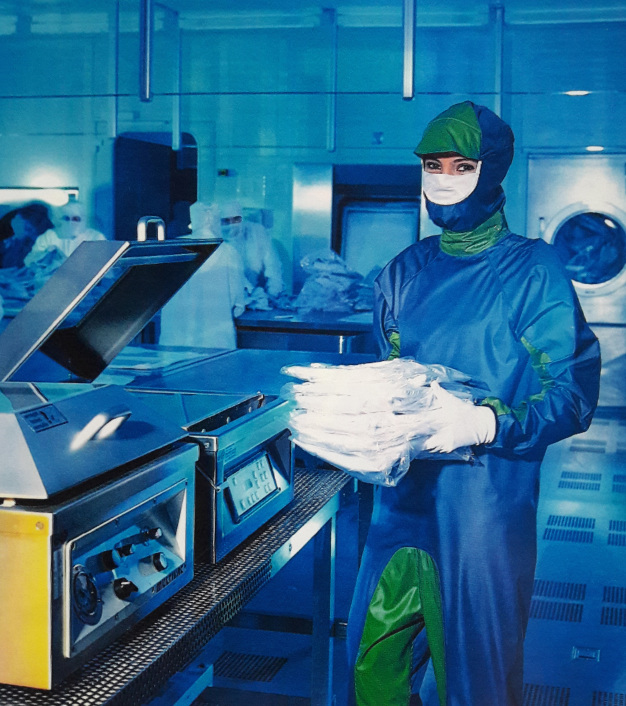
Changes in color at the cleanroom workspace affect the motivation of cleanroom staff.
©Becker Cleanroom Technology
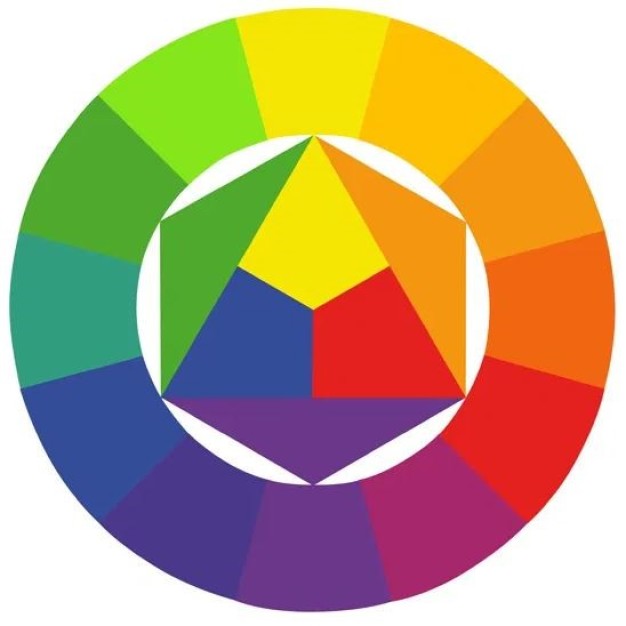
Primary colors and secondary colors

Paul Jochem
If we look at the technological change currently reflected in terms such as Industry 4.0, Reine 4.0, or digitalization in its expression, we also find sustainable changes in work tasks and work processes within organizations.
Especially with the 4th revolution, it can be expected that the way human work is organized in the future will fundamentally change. Our previous way of working will inevitably change through the interplay of various production structures, such as: artificial intelligence (AI).
The entire production chain is transforming. In Industry 4.0, the physical and virtual worlds merge. Ultimately, this results in a connected factory and an increasingly autonomous production and logistics chain with machines, devices, and productions that seem to operate independently. That all sounds quite promising. But how can this be implemented in the area of particle-free landscapes?
The digitalization of the working world is characterized by a rapid change in products and production processes. This requires a high degree of technical, spatial, temporal, and especially content flexibility in work tasks.
On one hand, we find many jobs with one-sided, low-demand tasks. On the other hand, the working world 4.0 is characterized by increasing complexity and dynamics of digitally controlled work processes and networking within and between companies. Through "industrial digitalization," primarily new organizational structures, work processes, and tasks emerge, for which employees are not yet sufficiently qualified through their training. At the same time, we must not forget one thing: "Change does not mean deterioration." However, it is important to keep in mind that activities will be phased out.
But new activities and entirely new fields of activity will also emerge. These opportunities must be seized.
We need a digital education offensive that considers the entire education chain and aims at healthy development, digital self-determination and active participation, data handling, and excellent vocational training.
Change (digitalization) is always associated with something new, i.e., technical systems, machines, control elements, process requirements, etc. This requires continuing education to be an essential and important part of the work process. For older employees, this also requires additional motivation.
If work stress causes under- or over-demand, pleasant workplace designs (e.g., colorful wall elements creating a pleasant atmosphere) can evoke positive effects—now color comes into play. Colors influence our well-being more than one might think.
How can workplace design using color influence employee motivation?
It all started with light. And with it, color. Without light, we would not perceive colors, and without colors, the world would be... colorless. Differences in brightness and hue allow us to experience the world visually and differentiate objects.
We orient ourselves based on colors. Even our ancestors in nature, and today in the modern city through color coding (traffic lights, signs, etc.). Colors have an intense subconscious meaning that influences each of us. The effects can vary greatly from person to person. However, there are general associations that apply to everyone. These can also differ from culture to culture.
Many feelings are ingrained in us from childhood through our culture and upbringing. Our perception is shaped by fashions and trends. But colors do not only evoke associations; they also trigger feelings and emotions. These have long been deliberately used in marketing— in product design, packaging, and interior design.
Color perceptions generate feelings and emotions. Emotions are omnipresent in our lives: we rejoice when our favorite song plays on the radio in the morning, get annoyed by the morning rush hour, or feel nervous before an important appointment with the boss. Emotions enrich our lives—they undoubtedly make it more interesting and colorful. But emotions also have a significant influence on many psychological processes such as perception, thinking, actions, and our interactions with others.
Besides subjective perception, there are also general color effects, so colors can be objectively selected and this choice can be theoretically justified.
In artistic color theory, red, yellow, and blue are the so-called primary colors, and orange, green, and violet are secondary colors, which result from mixing the primary colors.
An optimally equipped workplace is the employer's responsibility and the foundation of good work by employees. The employer is responsible for designing the entire workplace and office, as well as providing technical devices, furniture, and lighting.
"Psychology is the science of behavior of living beings."
This is where psychology comes into play. Why future work needs occupational psychology! Psychology is the science of the forms and laws of experience and behavior of individuals or groups of individuals.
Holistic psychology states: individual experience and behavior arise from the totality of an individual. The humanistic paradigm sees an individual as an active being, inherently good, and capable of finding an individual path. Individuals strive for goodness and optimal self-actualization.
Work psychology is a subfield of economic psychology that deals with the psychological analysis, evaluation, and design of work activities.
Practically, the following tasks arise for work psychology based on these considerations:
1. Analysis of work systems and work activities
2. Evaluation of these systems and activities based on human criteria (contrastive task analysis). This means examining to what extent the requirements of the workplaces meet human needs.
3. Development and implementation of design proposals that consider human needs. It must be taken into account that work should not only avoid harming or impairing people but also promote their personality development, potentials, and competencies whenever possible.
Benefits of workplace design
Every illness is a waste of human resources regarding their knowledge, skills, and moreover, their willingness. Human-centered workplaces increase performance when conditions and abilities are carefully considered during design. Healthy employees feel better and are more motivated: they have a positive effect on the company's productivity and the quality of work. Furthermore, healthy employees incur fewer costs. Sick leave is minimized, reducing costs.
A colorful workplace prevents negative work morale and reduces negative attitudes toward product manufacturing. This also saves costs in the long run. It not only leads to a positive company image but also secures personnel and reduces staff turnover. When the workplace design aligns with the requirements of the production process, it releases potential that manifests in a more efficient and effective manufacturing process and higher quality.
Let's take nature as our example! Nature knows no disharmony. In spring, the color palette is bright and yellow-based. Summer makes colors more vivid: blue stands out. Autumn is dominated by warm red tones, which are replaced in winter by cool, clear blue-white-black shades. We should use this knowledge for the color design of our spaces.
If you are only considering which color to paint the walls, then pay attention to the effects of different colors on human psyche and mood. Use the advantages of certain colors to create the desired atmosphere in your workplace:
Blue - promotes communication, objectivity, and precision of thoughts;
Violet - inspires and has balancing & regenerative effects;
Green - strengthens the senses and concentration, calms nerves;
Yellow - supports all mental activities, promotes concentration;
Red - energizes, stimulates, activates, and excites, awakening inner strength
Notes on colorful optics: Cheerful colors lift the mood and increase motivation in many active people. The quality of work, well-being, and motivation also depend on external—so-called soft—factors. An important factor here is how the work environment is colored. In general, it can be said that all dark colors appear oppressive and discouraging; they also hinder cleanliness. All light colors appear light, friendly, and uplifting; they spread more light, brighten rooms, and encourage greater cleanliness. If a task in a room requires high concentration, the coloring should be handled very conservatively to avoid unnecessary distractions and disturbing effects. In such cases, walls, ceilings, and other structural elements should be painted in as light and color-neutral tones as possible.
Work environment: importance and overview
Why is the environment important for employees? A good work environment is crucial for employee enthusiasm. Often, the work environment contains many motivational obstacles. A poor work environment demotivates even the most committed employees. Even a psychologically well-designed task and genuinely enthusiastic employees can encounter these obstacles and cannot fully realize their motivational potential. Therefore, it is essential to first create an inspiring environment so that employees are motivated and able to stay motivated.
Work environment as stimulation
To keep employees enthusiastic and effective in the long term, they must feel comfortable at their workplace. This means that order and cleanliness at the workplace should not only be documented in rules but also lived and integrated into the corporate culture. Management must lead by example. Additionally, suitable workplace conditions must be created to sustainably keep all employees healthy.
One thing can also be confirmed 100%: colored walls in cleanroom areas do not influence or even alter the particular quality of the cleanroom compared to white-coated walls!
Colors cause the body to subconsciously sense what is expected of it, such as communication, concentration, or relaxation. When designing colors, also consider authenticity—that is, the colors should reflect your company's image.
Sources: Workplace Ordinance, Wikipedia, various press reports, coalition agreement (GroKo 2018) of the German federal government
ReinraumTechnik-Jochem
66538 Neunkirchen
Germany