

- Translated with AI
Dipl.-Ing. Roland Mimmler
What are cleanrooms and sterile rooms?
When talking about clean rooms or clean environments, many first think of high technology such as computer chip manufacturing and microelectronics.
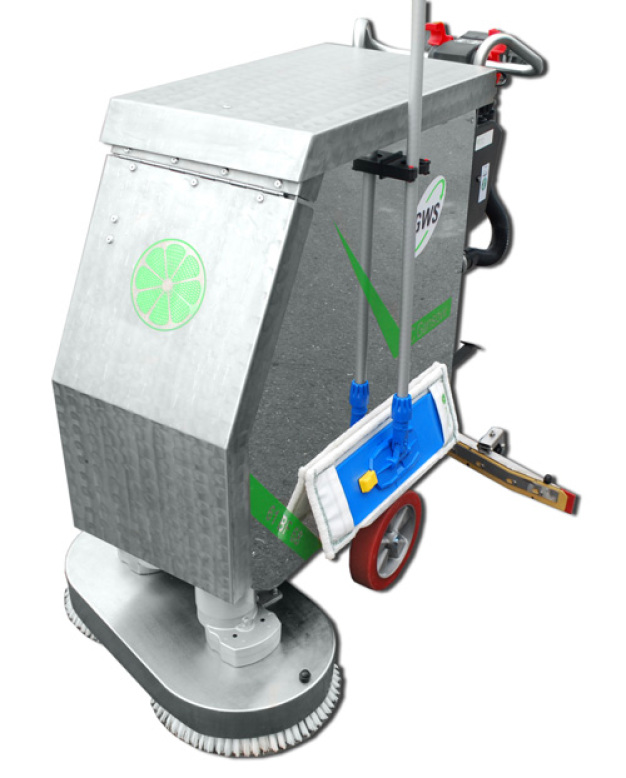
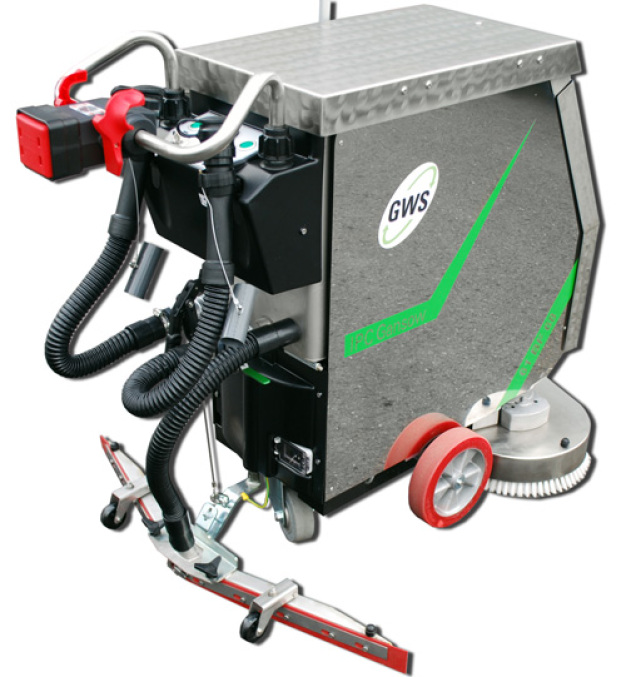
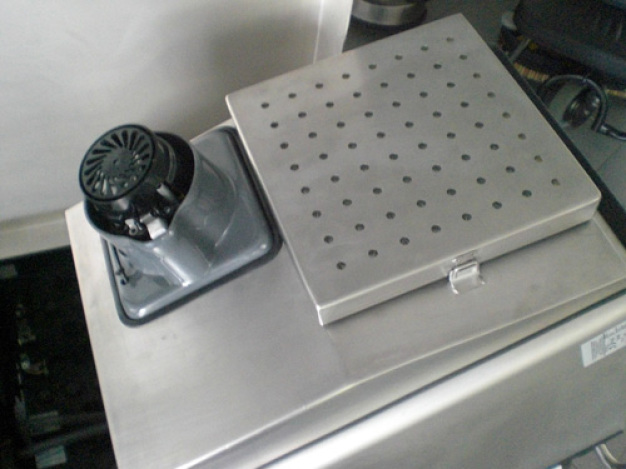
Filter RR
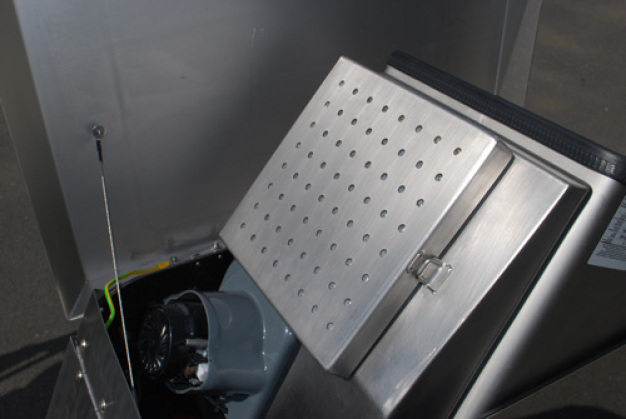
Hepa Filter
Cleanrooms are used for the production and packaging of highly sensitive products, which can become unusable and thus worthless if even the tiniest contamination by airborne particles occurs in their environment. Additionally, special tasks and activities must be carried out in cleanrooms, such as surgical procedures or laboratory work under sterile conditions.
Cleanrooms differ according to the very different requirements of the activities or manufacturing processes, ranging from ISO 1 to ISO 9. The lower the number in the cleanroom class designation, the higher the required level of cleanliness. The classification of cleanroom classes is regulated, among others, by the standard DIN ISO 14644. The term "Reinraum" (cleanroom) does not appear in the standard; it exclusively refers to "Reinräume" (cleanrooms). However, in literature, the term "Reinstraum" is used, referring to cleanrooms with a very high level of cleanliness, e.g., ISO 1 to ISO 3.
The chip and semiconductor industry indeed demands production rooms with very high cleanliness levels; we are talking about cleanroom classes ISO 1 to ISO 5, while the pharmaceutical industry operates between classes ISO 5 and ISO 7. But also, the manufacturing of electronic and optoelectronic goods, food products such as beverages, dairy, and cheese products largely takes place in cleanrooms of classes ISO 6 to ISO 9.
The pollutants or contamination present in cleanrooms do not differ significantly from those found in other areas, but they occur here in much lower concentrations and are characterized as particles. For each cleanroom class, maximum values for particle concentration in particles per cubic meter are specified.
However, the maximum concentration values vary for different particle sizes. To better understand, here are two examples:
1. The maximum concentrations in ISO 2 class are:
Particles up to 0.1 μm (1 μm = one thousandth of a millimeter) max. 10 particles/m³, particles up to 0.2 μm max. 2 particles/m³. Larger particles must not be present. This is practically unthinkable — "pure".
2. For the ISO 8 cleanroom class, these are:
Size up to 0.5 μm max. 3,520,000 particles/m³, size up to 5.0 μm max. 29,300 particles/m³.
A size comparison makes it easier to imagine these tiny particles:
Human hair ≈ 60 μm, dust particles = 5 μm, living bacteria = 0.5 – 2 μm.
The sources of these pollutants are primarily humans, who move and work in the cleanrooms, but also, and here the emphasis is really on this, machines and equipment, as well as transport vehicles. Humans are the biggest source of contamination through hair, skin flakes, and abrasion of their work clothing.
Up to now, cleaning in cleanrooms has almost exclusively been manual. Why?
Upon closer examination of the few publications and forums on cleanroom cleaning, it can be observed that they only discuss cleaning within the so-called cleanrooms. The sensitivity here is naturally very high, i.e., particle concentrations and sizes are extremely low, and the surfaces to be cleaned are particularly small. For these reasons, only manual cleaning under the most challenging conditions has been rightly reported.
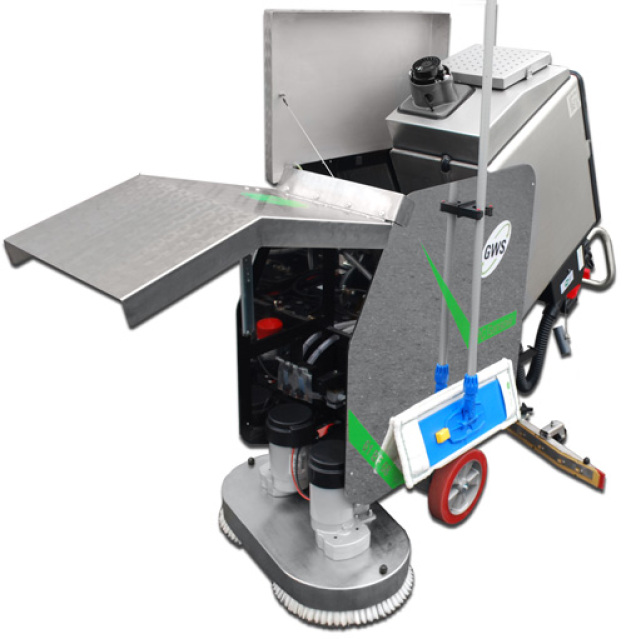
IP Gansow claims to offer the only scrubber-dryer specifically designed for use in cleanrooms
The company asserts that it has been involved in the topic of floor cleaning in cleanrooms and ESD-protected areas — both of which cannot be separated in some applications, such as chip manufacturing or microelectronics — for a very long time, more than 20 years. "Involved" means they also manufacture such machines, even though the required quantities are relatively small. This type of special machinery has distinguished Gansow for many decades.
The requirements for such a specialized scrubber-dryer are very high. The drive concept, whether battery-powered or mains-powered, does not matter. The company has created the basis for building a custom machine from a standard model through its modular design of the green line scrubber-dryers, allowing it to convert a standard machine into a specialized one for use in cleanrooms and/or ESD-protected areas or other special applications using special add-ons during ongoing production. Retrofitting would be theoretically possible but economically unjustifiable due to the enormous technical and time effort.
For use in cleanrooms, such a machine must, among other features, be equipped with a particle filter for the turbine exhaust, use materials for tanks and covers that have very easy-to-clean surfaces, and ideally also have antistatic properties, i.e., be made of electrically conductive plastics or metallic materials.
Otherwise, the machine could attract airborne particles electrostatically and, during an uncontrolled discharge, release them again, causing the particle concentration to rise unexpectedly and rapidly.
What requirements / prerequisites must be met when using cleaning machines, and what approval procedures must be followed?
In any case, the cleaning machine must meet all requirements for use in these sensitive areas, i.e., it must not negatively influence the maximum permissible particle concentrations, neither by stirring up particles nor by contamination from itself. It must also be guaranteed that after necessary repairs, of course outside the cleanroom zones, the machine is thoroughly decontaminated before re-entering the cleanrooms; this also applies to all production and transport equipment leaving and re-entering the cleanroom area.
Whether such a cleaning machine may be used in cleanrooms is always and exclusively decided by the operator. The decision is usually made based on an assessment of the protective features installed in the machine and measurements of particle concentrations before, during, and after the machine's operation in the affected cleanroom.
The estimated area to be cleaned in designated cleanrooms and adjacent areas is, according to the company, much larger than generally assumed. If nearly all production areas of the pharmaceutical, beverage, food industries, dairies, and cheese factories are added up, the total area in Germany alone amounts to a gigantic surface that must be cleaned hygienically to meet the existing requirements.
The proportion of self-cleaning is still relatively high, especially on sensitive surfaces, with explosion-protected areas still exceeding 90%.
This opens a large field for professional cleaning service providers, who can bring their existing know-how to bear here in an outcome-oriented manner.
IP Gansow GmbH
59425 Unna
Germany