




- Buildings & Rooms
- Translated with AI
Michael Kuhn
VDI 2083 Sheet 19 - Brief Introduction
Tightness of Containments – Classification, Planning, Testing
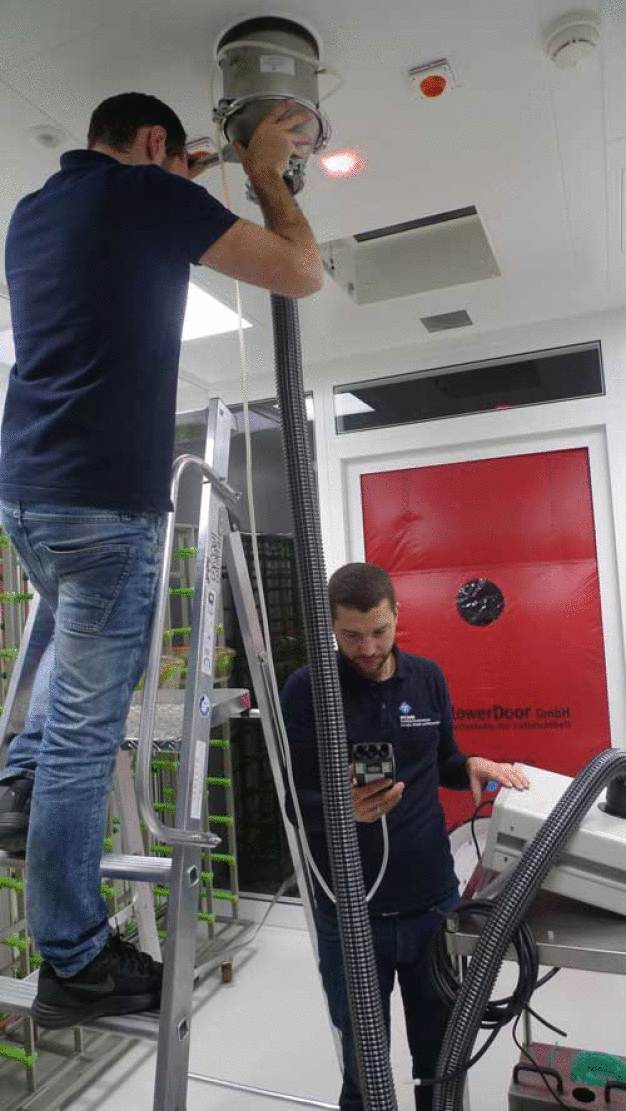
Fig. 1: Testing of leak air volume flow on individual components
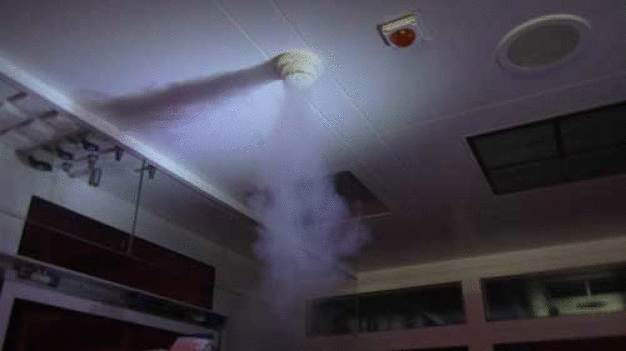
Fig. 2: Visualization of the leakage airflow volume at a smoke detector
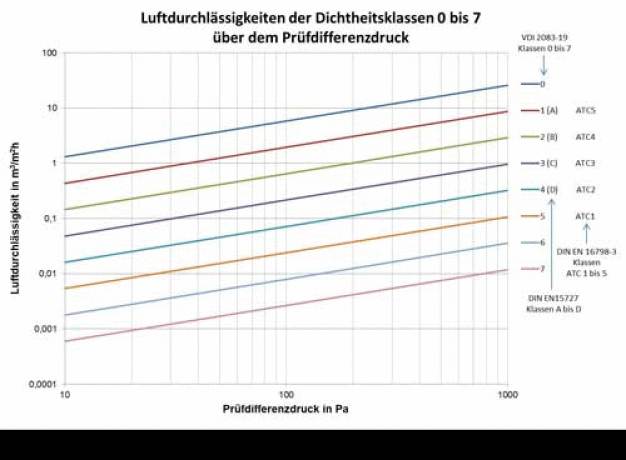
Fig. 3: Tightness classes according to VDI 2083-19

Author: Michael Kuhn (Chairman)
In August 2018, the final version or the white paper of the new guideline VDI 2083 Sheet 19 was published. This is - for the first time in this scope and application area - the description of the airtightness of containments. In particular, this guideline is applicable to containments such as, e.g.:
- Cleanrooms in general
- Cleanrooms with decontamination systems, e.g., H2O2 sterilization
- Laboratories with special requirements
- Isolators
The application to similar areas (e.g., adjacent controlled environments) with special requirements is possible and sensible.
The guideline applies to all rooms that require overpressure or underpressure compared to the environment during operation to fulfill a protection goal (product protection, personnel protection, environmental protection, environmental safety). The airtightness requirements depend on the hazards that leaks could pose. The scope of testing, execution of the test, and, if necessary, leak detection are again dependent on the airtightness requirements.
Initial Situation
The need for a standardized definition and testing of room airtightness is increasing. Reasons for this include, among others, the growing use of hydrogen peroxide and other volatile decontamination media, the increased use of toxic substances in the pharmaceutical industry, and the growing handling of dangerous pathogens and genetically modified organisms. Until now, no suitable technical regulation for airtightness testing in the cleanroom sector existed. All known regulations describe different procedures for execution and are not directly comparable regarding acceptance criteria and measurement results. But it is not only a matter of purely technical standardization. If room airtightness is not considered holistically across all project phases, a client might order a "more airtight" cleanroom that is not sufficiently specified, and during airtightness testing, it is found that unacceptable large leak air volumes are present. Leak detection and correction then proceed in very detailed and labor-intensive work. Many faulty installations (especially at penetrations in cleanrooms) can no longer be corrected afterwards or only with significant time and cost expenditure, as access is often no longer available.
Holistic Approach of the Guideline
The guideline offers a uniform classification for various applications in the pure environment, from cleanrooms to isolators to high-security laboratories.
The classification of the airtightness of containments is based on the definitions in DIN EN 15727. The air duct airtightness classes A to D according to DIN EN 15727 are integrated into the containment airtightness classes shown in Figure 2 and are identical with the airtightness classes 1 to 4. Additionally, the airtightness classes according to the new norm DIN EN 16798 are listed. This makes it possible to test a complete system, consisting of one or more rooms and the associated air ducts and components (e.g., filter and damper housings), as a unit. The air permeability is related to the surface area of the containment. Since each containment includes a certain proportion of ventilation ducts, there is a corresponding alignment of the airtightness requirements.
VDI 2083 Sheet 19 considers the whole: starting from the definition of the airtightness requirement, the entire planning process is described, up to the planning of airtightness tests. Furthermore, construction-phase monitoring and qualification/requalification are addressed. The guideline recommends appointing a system-responsible person (entity) who oversees the overall coordination of all airtightness measures. This person accompanies the entire planning, implementation, and qualification process until approval for use.
Part of the guideline are also detailed described measurement and testing procedures for the entire containment, for subsystems, and individual components, which serve as reproducible proof of airtightness.
Summary
- The airtightness of a containment will in the future be defined by establishing an airtightness class (0-7) and a reference differential pressure. The requirements are considered met if the containment maintains the limit value of air permeability at the reference differential pressure.
- Using the new guideline, the airtightness requirements for all relevant cleanroom technology containments operating at typical differential pressures can be defined and tested measurement-wise.
- There is a holistic and practical guideline available with VDI 2083 Sheet 19, which describes the requirements for all relevant project phases (planning, construction, qualification, and requalification).

STZ EURO Steinbeis-Transferzentrum
Energie-, Umwelt- und Reinraumtechnik Offenburg
Badstraße 24a
77652 Offenburg
Germany
Phone: +49 781 20354711
email: mkuhn@stz-euro.de
Internet: http://www.stz-euro.de