- Translated with AI
Textiles that protect people – environmental relief included
Innovative ultrasound process for antimicrobial textile finishing

The new ultrasound technology for antimicrobial and antiviral treatment of textiles enables bacteria, viruses, and fungi to be effectively and permanently eradicated. (Image source: iStock)
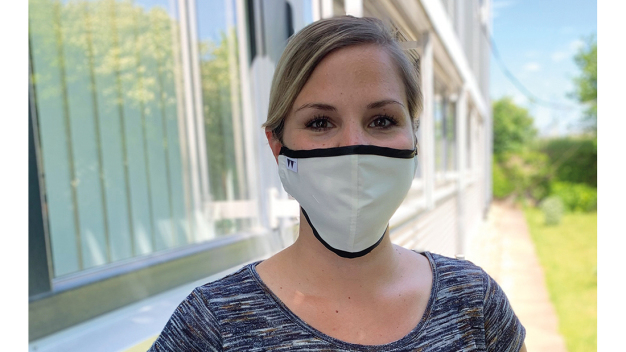
Textiles equipped with the Sono-Finishing process, which are antimicrobial and antiviral, are already being used for mouth-nose masks. (Image source: Weber Ultrasonics)
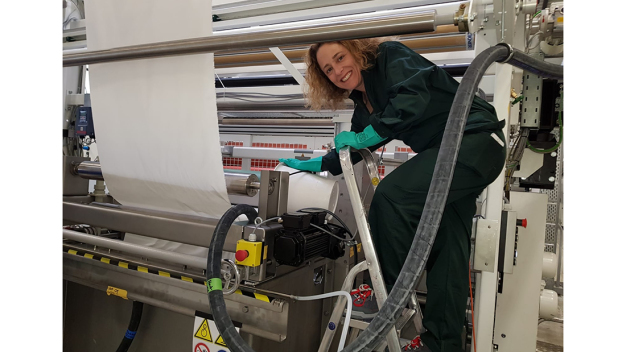
"Ultrasound is used to optimally, permanently, and environmentally friendly anchor zinc oxide nanoparticles contained in the active ingredient formulation onto the surface of textiles of all kinds," explains Liat Goldhammer, CTO of Sonovia. (Image source: Sonovia)
An effective, durable, and washable antimicrobial treatment for textiles such as work clothing for medical personnel, hospital linen, or even mouth-nose masks can significantly reduce the risk of infection. This has been a topic of concern not only since Corona but has gained additional urgency. Such textile finishing is made possible by a new ultrasound-based process in which Weber Ultrasonics is involved. The so-called Sono-Finishing technology offers great potential to minimize environmental problems associated with conventional textile finishing.
The outbreak of pandemics, such as the current Corona, and the globally increasing number of hospital infections with multidrug-resistant bacteria are increasingly bringing preventive measures into focus for healthcare, politics, and society. These include, among others, textiles equipped with antimicrobial and antiviral properties — provided they offer a permanent and reliable defense function. A flagship project in this direction was the development of a Sono-Finishing process at Bar Ilan University in Israel. It enables textiles of all kinds to be permanently and sustainably endowed with highly effective antibacterial, antiviral, and antifungal properties using ultrasound. "The impregnation must withstand the frequent washing cycles typical in the medical field at high temperatures and must not lose effectiveness," explains Liat Goldhammer, CTO of Sonovia Ltd., a key requirement.
From the laboratory to mass production
The Israeli startup began in 2017 to transfer the patented process from university laboratory scale to a production technology for industrial mass manufacturing. For this purpose, it entered strategic partnerships with Brückner Textile Technologies and Weber Ultrasonics AG, based in Karlsbad.
The latter is a globally leading manufacturer of ultrasound systems, including for cleaning, welding, and cutting tasks. For this application, the company developed a specific, series-ready ultrasound solution. It meets the current requirements of the textile industry for productivity, process safety, and cost efficiency. At the same time, it ensures that the active ingredient formulation with zinc oxide nanoparticles is optimally integrated into the material through a one-step, sonochemical process. This process is based on the physical phenomenon of acoustic cavitation: small bubbles form in the liquid mixed with the antimicrobial formulation, grow, and collapse suddenly. This creates strong currents that permanently anchor the nanoparticles onto the textile surface. "This is a significant differentiator of our technology compared to traditional textile finishing methods that use chemical binders," explains Liat Goldhammer. Since these chemical components are washed out with each wash, not only does the protective function of the impregnation diminish, but it also leads to a considerable environmental burden.
Proven effectiveness against bacteria and viruses
The antibacterial properties and their durability have long been demonstrated through tests. A small-scale study at a Bulgarian hospital in the burn unit also confirmed the effectiveness — including against bacteria resistant to antibiotics.
Sono masks made from fabrics treated with the process have also been successfully tested against a virus similar to the SARS-CoV-2 coronavirus. The company is currently awaiting results from tests with the novel CoV 19. Procedures for CE conformity certification and FDA approval of the Sono masks have also already been initiated.
It has also been proven that the fabrics retain their full antimicrobial properties after 100 washes at 75°C.
Weber Ultrasonics AG
76307 Karlsbad-Ittersbach
Germany