



- Translated with AI

Markus Hansel
Technical cleanliness and connection elements – what should be considered?
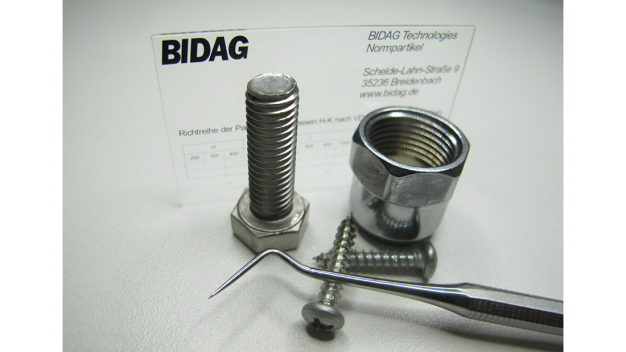
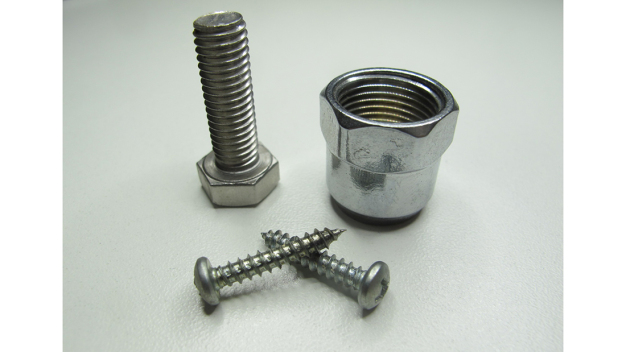
Connection elements with increased requirements for technical cleanliness pose particular challenges during planning and manufacturing, industrial cleaning, logistics, and application. Due to the rising demand for technically clean products, many manufacturers of connection elements already offer corresponding services. But does the product always live up to what the label promises? Markus Hansel, Senior Consultant and Managing Director of BIDAG Technologies GmbH & Co. KG, reports as an independent advisor to numerous OEMs and leading suppliers about his experiences with industrially cleaned connection elements.
Even with connection elements, technical cleanliness begins during design. The developer should pay particular attention to future manufacturing processes such as thread rolling, coating, cleaning capability, as well as packaging and logistics of the product. For example, excessive forming degrees should be avoided, as they can lead to overrolling in the thread root, which in turn can cause poor adhesion of the galvanic coating, resulting in an increased risk of flitter formation during relative movements of the parts. The cleanliness previously achieved through extensive cleaning processes can thus only be temporarily maintained. During production, the selection of tools is also crucial. Worn tools or improperly set machines can produce poorly formed parts, which can negatively affect subsequent processing steps or even application.
The cleaning process itself also requires special attention for electroplated cast parts. Increasing cleaning intensity undoubtedly results in greater particle-free cleanliness. But what impact does this increased cleaning intensity have on the coating of a screw? If the coating is attacked too strongly, it can negatively influence torque values or corrosion resistance.
Immediately after the cleaning process, ideally, packaging and shipping should be directly to the customer. Storing cleaned goods or subsequent manufacturing processes should be avoided as much as possible, as they can adversely affect the previously achieved cleanliness level. Packaging is ideally carried out in a cleanroom or at least a dust-free environment under cleanliness-controlled conditions. The packaging process must ensure that relative movements of small parts during transport are reliably prevented. Some connection element suppliers have already developed very reliable packaging concepts that ensure the product arrives clean at the customer and remains particle-free for a long time.
When applying cleaned connection elements, there are also important considerations. The application process usually begins with guiding the screw to the component. Typically, vibration or belt conveyor systems combined with compressed air channels are used to transport a screw directly to the screwing point. Suppliers of such feeding and screwing systems have already developed very innovative solutions to deliver the screw cleanly to the application site. Particular attention is paid to gentle and wear-minimized movement. When selecting the bit for the screw drive, the properties of the screwing system and the screw come together. If the latter has already been optimally designed and manufactured, the process proceeds wear-free and without generating new unwanted particles.
As technical cleanliness increasingly becomes a quality-assuring and safety-relevant product property with ongoing technological development, many connection element manufacturers already offer their technically clean and cleanliness-optimized products. From low-cost providers to quality leaders, the market promotes, among other things, cleanliness-optimized geometries, thread forms, coatings, or logistics concepts. In our times, characterized by terms like productivity or cost optimization, the question arises whether increasing cleanliness necessarily correlates proportionally with rising costs. It should be noted upfront that this is not always the case. With a variety of providers offering different solutions for the particulate cleanliness of connection elements, choosing the right supplier for the specific requirements is often not easy.
As an independent partner, the consulting division of BIDAG Technologies GmbH & Co. KG is pleased to offer its many years of experience and a broad network of manufacturers of connection elements. The BIDAG experts work together with your designers and developers to identify the optimal and most cost-effective suppliers that meet your requirements to the highest degree.

BIDAG Technologies GmbH & Co. KG
Zum Bolzenbach 7
35236 Breidenbach
Germany
Phone: +49 6465 4380
Fax: +49 3222 3190149
email: info@bidag.de
Internet: https://www.bidag.de