

- Packaging
- Translated with AI
Standards for sensor technology in sterile environments
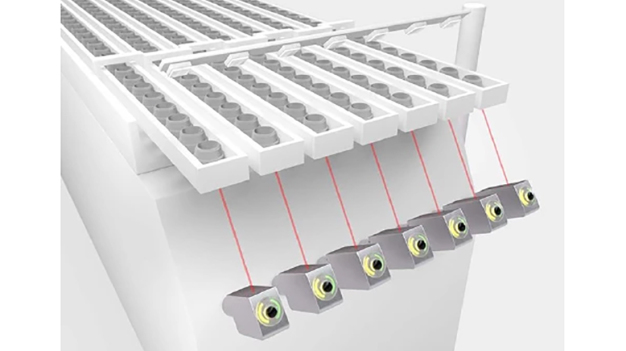
Sterile medicines and medical devices must be packaged contamination-free; the requirements for sterilization of components are regulated by the EU-GMP guideline. The sterilization obligation, with the updated Annex 1, since the end of August 2024, applies not only to directly and indirectly product-contacting parts but also to all components considered "First-Air-interrupting" – such as sensors or reflectors located above sterile components. Depending on the sensor type, different challenges and opportunities arise regarding their use in pharmaceutical production and packaging.
Stricter Requirements
Strict requirements apply to the production and packaging of sterile medicines, as even small errors can endanger patient safety. With the current revision of Annex 1 "Manufacture of Sterile Medicinal Products Guideline" of the EU-GMP guideline, these requirements are being significantly tightened. Annex 1 explicitly mentions the sterilization of "First Air" interrupting parts for the first time: filtered air should reach the pharmaceutical product and machine parts that contact the product without interruption, because any interruption caused by components can pose a contamination risk. Components that interrupt the airflow must therefore be removed or – if this is not feasible – designed so that they can be sterilized. Previously, for sensors and reflectors mounted as First-Air-interrupting, surface cleaning with disinfectants or H₂O₂ vapor (hydrogen peroxide vapor; Vaporized Hydrogen Peroxide, VHP) was sufficient. Annex 1 "Manufacture of Sterile Medicinal Products Guideline" now requires that these components are also treated with validated, penetrating sterilization processes (e.g., autoclaving). This increases the effort for technology, documentation, and monitoring. This technology report explains the impacts on sensor technology and how companies can implement the new requirements in practice.
Annex 1: Key Changes at a Glance
1. Sterilization is handled more strictlyThe term "sterilization" is now defined more narrowly: not every disinfection or decontamination counts as sterilization. Instead, sterile procedures are required (no detectable living microorganisms present). For indirect and First-Air-interrupting contact parts: they must be treated like direct parts if they are part of the critical sterile environment.
2. Mandatory penetrative sterilization of all contact partsIt is no longer sufficient to sterilize only directly and indirectly product-contacting parts. New is: this now also applies to First-Air-interrupting contact parts. These are indirect contact parts that can interrupt airflow – such as components located above sterile components and products, e.g., sensors. An exception is possible if a risk analysis within the framework of the Contamination Control Strategy (CCS) demonstrates that cleaning or decontamination are sufficient and pose no contamination risk.
3. Higher requirements for sterilization methodsSterilization must be validated. For indirect and First-Air-interrupting parts: the process must be equivalent to the methods accepted for direct parts – such as penetrative sterilization methods like autoclaving, moist or dry heat, gamma radiation, or ethylene oxide. Direct and indirect contact parts, as well as First Air-interrupting components, are classified as "critical surfaces" according to Annex 1 and must therefore be sterilized. Surface decontamination, VHP-based procedures, or vapor disinfection are only permissible if evidence or risk analyses demonstrate that these methods are sufficient. VHP procedures are generally considered decontamination rather than sterilization, especially for enclosed or hard-to-access surfaces.
4. More comprehensive risk analysis and documentationA justification must be provided for why and how indirect contact parts are sterilized. The risk assessment must show how critical the contact is and its influence on product sterility. Additionally, requirements regarding control and monitoring increase – especially during maintenance or repairs.
Contamination Control Strategy Required
The binding version of Annex 1 of the EU-GMP guideline since August 2024 requires a comprehensive Contamination Control Strategy (CCS) that encompasses all areas of production – from raw materials to packaging. This is a document that considers all contamination risks holistically and based on risk assessment. Companies must evaluate how likely it is that a component – even without direct product contact – poses a contamination risk. Depending on the risk assessment, either validated sterilization must be performed or a justifiable reason provided why cleaning or decontamination suffice. This assessment and the measures taken must be thoroughly documented and regularly reviewed. Technologically, this means that not only traditional production equipment but also sensors, automation, and digital interfaces are increasingly in focus. First Air-interrupting parts (e.g., sensors, reflectors, etc.) are now considered potential sources of contamination. Consequently, requirements for the selection, integration, and validation of these components are increasing.
Indirect vs. Direct Contact vs. First Air-Interrupting
GMP Annex 1 regulates the requirements for cleaning, sterilization, and monitoring of various contact parts. Direct product contact occurs when a component directly touches the product – for example, filling needles, the inside of hoses, or mixing tools. Such parts must always be sterile because they could directly introduce contamination into the product.
In contrast, indirect product contact means that a component does not directly touch the product but components that will contact the product later (e.g., caps, stoppers, etc.).
A component is classified as First-Air-interrupting if it does not directly contact the product but is located in the intake path of the "First Air." Contamination can occur via air, particles, droplets, or proximity to open product surfaces. Examples include grippers, holders, or cameras above the filling line. These components must also be sterilized.
Implications for Used Sensor Technology
The position and design of sensors and reflectors play a crucial role in complying with the new Annex 1 requirements. Sensors or reflectors mounted above the product are considered First-Air-interrupting contact parts. For them, sterilization by SIP (Sterilization in Place) or autoclaving is prescribed. In practice, ultrasonic sensors for level measurement and reflection light barriers with reflectors above the product have often been used because they offer the necessary range. However, these solutions are now critical: reflectors and ultrasonic sensors often cannot withstand the high temperatures and conditions of sterilization. Even if technically suitable for sterilization, this would entail significant additional effort – sensors and reflectors would need to be removed for autoclaving.
Hygienic Time-of-Flight Sensors as a Response to Annex 1
Modern optical sensors based on ToF (Time-of-Flight), such as the Leuze ODT53CL1-2M, offer significant advantages regarding Annex 1: thanks to large detection ranges and stable detection behavior across various object surfaces at different angles, these sensors can be mounted laterally or underneath the product and at a considerable distance. As a result, they have no direct, indirect, or First-Air-interrupting contact with the sterile product they detect – for example, a stopper – and therefore do not need to be sterilized. The compact design, as offered by the 53C and 55C sensor series in stainless steel housings, is also an advantage because pharmaceutical facilities often have limited space. If sensors enable measurement data evaluation via IO-Link, plant operators benefit from additional process data, facilitating control and documentation in accordance with Annex 1.
Conclusion
The new Annex 1 requirements make a well-considered selection and integration of sensor technology indispensable. Hygienic, flexible stainless steel sensors from Leuze support you in implementing the specifications safely and efficiently. Our experts are happy to advise you and find the right solution for maximum process safety and compliance.
Source: EudraLex - Volume 4 - Good Manufacturing Practice (GMP) guidelines
Leuze electronic GmbH + Co. KG
73277 Owen
Germany