

- Translated with AI
Solvents – often the more economical and sustainable alternative
Ecoclean: choosing the right cleaning technology makes the difference
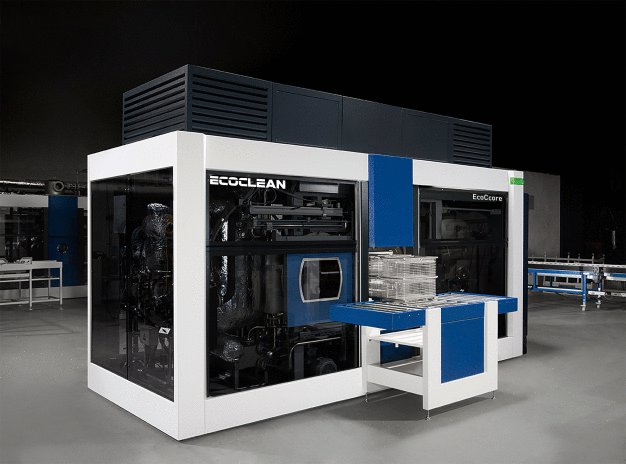
A large batch size, details on minimizing unproductive downtime, and innovative process engineering solutions ensure reduced unit costs at EcoCcore while simultaneously improving cleaning quality. (Photo: Ecoclean GmbH)
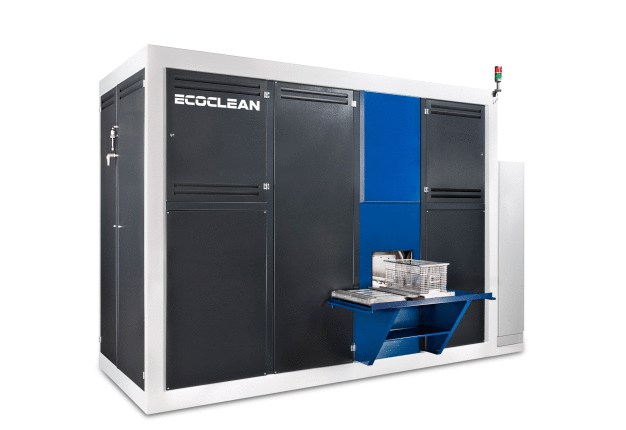
The full vacuum solvent cleaning system EcoCcompact can be optimally adapted to the specific task with up to three flood tanks and numerous standard options. (Photo: Ecoclean GmbH)
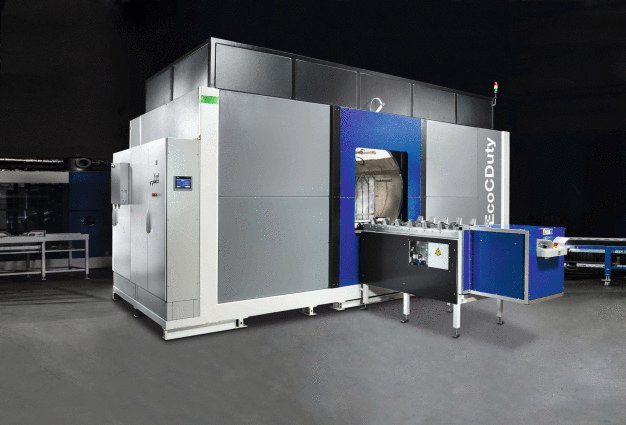
The modular, full-vacuum operating large chamber solvent cleaning system EcoCduty can be operated with hydrocarbons or modified alcohols. The working chamber is designed for batches with dimensions up to 1250 x 840 x 970 mm and a weight of up to one ton. (Photo: Ecoclean GmbH)
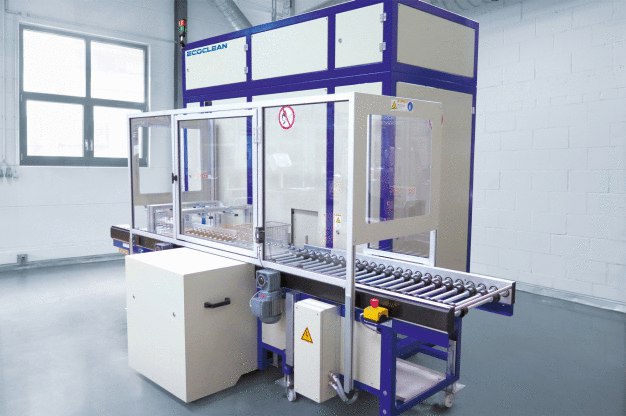
The compact Minio 85C enables reliable and economical degreasing and cleaning with non-halogenated hydrocarbons between or after manufacturing processes. (Photo: Ecoclean GmbH)
If the goal is to achieve stable, oil- and grease-free surfaces, component cleaning with solvents can usually offer process technical, economic, and ecological advantages. Due to the polarity of contamination and cleaning media, cleaning is quick and reliable. Ecoclean offers a comprehensive range of solvent cleaning systems providing the right solution for every task.
The purpose of industrial part cleaning is to ensure the cleanliness required for high-quality subsequent processes such as coating, bonding, welding, or curing, not only reliably but also economically and resource-efficiently. How well this is achieved largely depends on the use of a solution tailored to chemistry, plant and process engineering, and media preparation.
Contamination, material, and component geometry are crucial
When choosing the cleaning medium, the chemical principle "like dissolves like" provides guidance: aqueous cleaners are typically used for water-based (polar) contaminants such as aqueous cooling and lubricating emulsions, salts, abrasives, and other solids. To prevent surface attack by the medium, it is advisable to clarify material compatibility and achievable results through cleaning tests. For mineral oil-based (non-polar) contamination, such as processing oils, fats, waxes, and resins, a solvent is usually the right choice. Chips and particles on the parts lose their adhesion to the surface when oil is removed and are cleaned off using mechanical methods such as injection flood washing and ultrasound.
Depending on the contamination to be removed, an optimal solution is provided by a non-halogenated hydrocarbon, chlorinated hydrocarbon, or modified alcohol (polar solvent). The latter have lipophilic and hydrophilic properties, allowing them to remove both non-polar and, to some extent, polar contamination. Solvents are highly compatible with materials. The cleaning process occurs without oxidation, discoloration, mattification, or other effects on the workpiece surface. Another advantage is rapid and complete drying—even in complex component areas such as blind holes and undercuts.
Future-proof solutions tailored to the task
Ecoclean's extensive product range for solvent cleaning includes fully enclosed systems in which the medium is circulated in a closed loop. All solvent cleaning systems are equipped with an integrated distillation unit and filtration systems for continuous automatic solvent regeneration. This ensures consistently high cleaning quality and long medium service life. Additionally, almost all contact with personnel is avoided.
The EcoCcore, operating under full vacuum, was designed for efficient cleaning of large quantities of parts with high cleanliness requirements. It can be operated with non-halogenated hydrocarbons or polar solvents and can be easily switched from one solvent to another. This allows for future-proof operation even with changing requirements or product ranges. The solvent cleaning system also features extensive standard equipment, such as two flood tanks, heat recovery, full-flow and bypass filtration, and details aimed at minimizing unproductive downtime. Contributions to reducing unit costs while improving cleaning quality include innovative pre-steam degreasing, where the oil-containing solvent is directed not into the flood tank as usual but directly into the distillation unit, as well as the possibility of using ultrasound simultaneously with filtration. Particles are removed during cleaning and do not settle at the bottom of the work chamber before filtration.
With the EcoCcompact, a series-produced system equipped with two flood tanks for cleaning and preservation with polar solvents or non-halogenated hydrocarbons is available in a space-saving, modular design. The full vacuum system offers versatile options—from quick degreasing and intermediate cleaning to final cleaning with specific cleanliness standards. The option to add a third flood tank also contributes. The focus is on targeted reduction of unit costs while maintaining high cleaning efficiency.
Especially for foundries and companies in forming technology, automotive, and aerospace industries, highly capable systems for economical part cleaning and degreasing are required. For this purpose, the large chamber solvent cleaning system EcoCduty was developed. It is designed for batches measuring 1250 x 840 x 970 mm and weighing up to one ton. The system for hydrocarbons or polar solvents operates under full vacuum and can be adapted to customer-specific requirements thanks to its modular design. It is available as a standard steam degreaser and additionally with one or two stainless steel flood tanks, for example, for the process steps of steam degreasing and injection flood washing or steam degreasing, injection flood washing, and preservation. Vacuum drying is standard for all three variants. Chlorinated oils used in forming processes can be cleaned after compatibility testing with stabilizable solvents. The system can also be used without restrictions for removing sulfur-containing oils.
As a compact solution with minimal space requirements, the Minio 85C enables reliable and economical degreasing and cleaning with non-halogenated hydrocarbons between or after manufacturing processes. Both small operations with relatively low production capacities and large plants with decentralized cleaning stations benefit from the mature process technology for the steps of dunking, steam degreasing, and vacuum drying.
The optimal system and process engineering for each application, as well as process parameters, can be effectively and reliably determined through cleaning tests with original contaminated parts at Ecoclean's technology centers.
Ecoclean GmbH
70794 Filderstadt
Germany