
- Translated with AI
Researching the transition of raw materials
BasCat Labor at TU Berlin opens
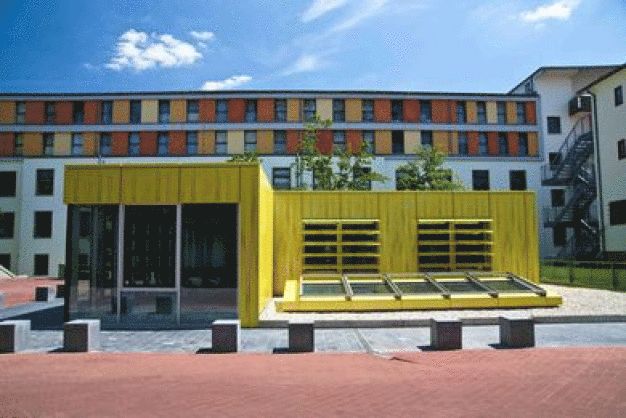
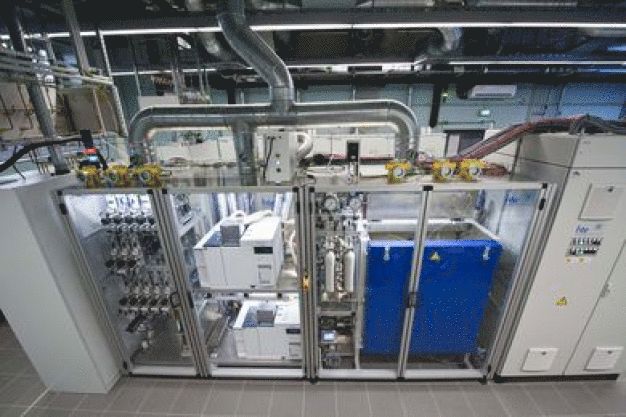
At the Technical University of Berlin, on July 9, 2014, the Excellence Cluster Unifying Concepts in Catalysis (UniCat) and BASF SE officially opened the joint laboratory BasCat. This adds another scientific building to the Charlottenburg campus. Covering around 1,000 square meters of laboratory and office space, 17 scientists will research the fundamentals of heterogeneous catalysis for raw material transformation and advance the search for alternatives to oil.
The research partners include working groups at the Institutes for Chemistry, Process and Plant Engineering, and Materials Science at TU Berlin, as well as the Department of Inorganic Chemistry at the Fritz Haber Institute. Since signing cooperation agreements between BASF and TU Berlin in 2011, they have launched numerous projects. With the new facilities, BasCat now becomes a joint research center for heterogeneous catalysis under one roof.
The total volume for BasCat amounts to approximately 13 million euros for the first five years. BASF SE invests up to 6.4 million euros. About the same amount comes from TU Berlin and the Excellence Cluster UniCat. The BasCat building is located on TU Berlin's South Campus at the Eugene-Paul-Wigner building on Hardenbergstraße. It is led by scientific directors Dr. Frank Rosowski, BASF, and Prof. Dr. Matthias Drieß, UniCat spokesperson. Additionally, a BasCat steering committee has been established for decisions regarding the strategic orientation of the research program, with all partner institutions represented.
Dr. Knut Nevermann, State Secretary for Science at the Senate Department for Education, Youth, and Science in Berlin, was among the guests at the opening event. "With the application for the Excellence Cluster 'Unifying Concepts in Catalysis,' TU Berlin recognized the signs of the times early on and successfully positioned itself. The leading 'global player' BASF was won as a cooperation partner, ready to make a clear investment. Today, we can observe the fruits of this cooperation in terms of infrastructural progress," said Dr. Knut Nevermann.
Prof. Dr. Christian Thomsen, President of TU Berlin, stated on the occasion of the BasCat opening: "Through the cooperation of the Excellence Cluster UniCat with BASF, catalysis research has gained a new location at TU Berlin. The joint laboratory BasCat conducts forward-looking top-level research that benefits our society. The scientists make important contributions to securing energy and raw material supplies. We are pleased to have come together in this project with strong partners, enabling both research at the highest level and excellent doctoral training in the new laboratory."
"Heterogeneous catalysts make many chemical reactions more cost-effective, environmentally friendly, or even possible in the first place. Especially in an era of dwindling resources, energy and raw material efficiency are becoming increasingly important," says Dr. Peter Schuhmacher, head of BASF's "Process Research and Chemical Engineering" competence center and member of the BasCat steering committee. "Together with our internationally renowned partners, we aim to gain fundamental scientific insights into activating minimally reactive molecules to accelerate the development of industrially relevant catalysts in the long term."
"In the UniCat Excellence Cluster, synergies between chemical and biological catalysis are being researched to make innovative contributions to the energy transition and drug discovery," says Prof. Dr. Matthias Drieß, spokesperson for the UniCat Excellence Cluster and, alongside Dr. Frank Rosowski, scientific director of BasCat. "The spirit of discovery and innovation of UniCat researchers is, among other things, making BasCat the gravitational center of catalysis research in Germany, developing new experimental and theoretical solutions for raw material transformation."
BasCat, with its three research areas—synthesis, spectroscopy, and catalytic reactions—provides the fundamental basis for developing new methods and conducting extensive studies on innovative catalyst materials and reaction conditions. The long-term goal is to ensure the supply security of raw materials for the production of chemical products. The current research program focuses on the oxidative activation of low-reactivity molecules from natural gas. The key and time-determining factor for realizing new processes is the successful search for long-term stable, resource-efficient, and sufficiently active catalysts. The ongoing focus of catalysis research remains the elucidation of the nature of the reactive catalyst surface. The fundamental knowledge gained is intended to lead to a catalyst design concept that allows for performance prediction and accelerates the targeted search for innovative catalysts as a crucial component.
The new BasCat laboratory adds another modern research building to the Charlottenburg campus. Recently, an energy laboratory and a building for biochemistry were opened. Additionally, at the end of 2013, the Wüstenrot Foundation announced it would provide 3.5 million euros for the renovation of the large pink circulating tank on the Charlottenburg campus, to protect the extraordinary architecture and enable further research in the building.
"Unifying Concepts in Catalysis" (UniCat) is an interdisciplinary research network established as part of the Federal and State Excellence Initiative, with its central theme being catalysis. UniCat is supported by four universities and two Max Planck Institutes in Berlin and Potsdam. About 45 research groups work together across disciplines on future-relevant topics for raw material transformation and the energy transition: from the chemical conversion of methane into ethylene, the chemical and enzymatic activation of carbon dioxide, to the catalytic production of hydrogen from water using sunlight as an energy source, and the synthesis of active compounds with the help of artificial enzymes. The leading university is TU Berlin.
Technische Universität Berlin
10587 Berlin
Germany