
- Furnishing & equipment
- Translated with AI
Optimized hood-glasses combinations – a particularly user-friendly "click system"
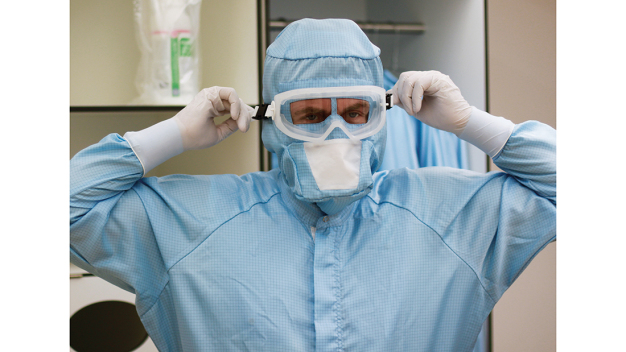
Fig. 1: Hood with visual field in the shape of a bag (duck bill shape)
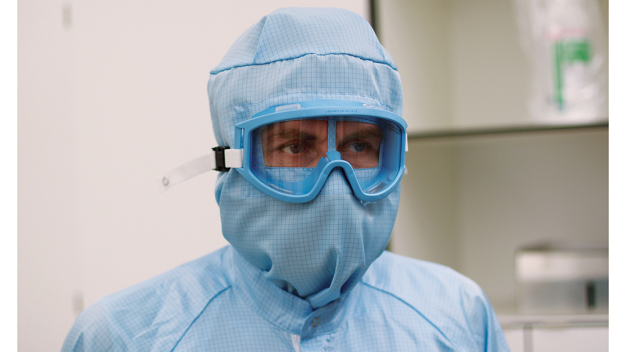
Fig. 2: Hood with completely closed visual field (eye slit hood)
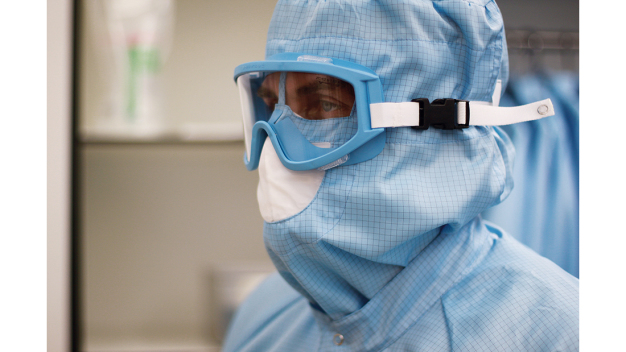
Fig. 3: Hood with visual field with gauze insert
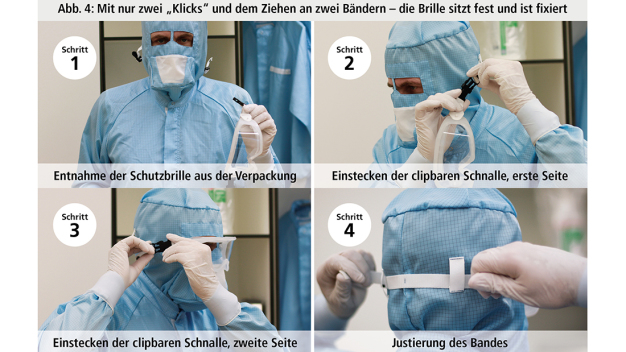
Fig. 4: With just two "clicks" and pulling on two straps – the glasses fit snugly and are fixed in place.
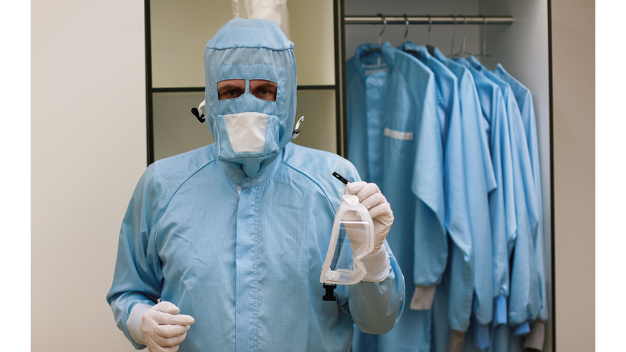
Removing the safety goggles from the packaging
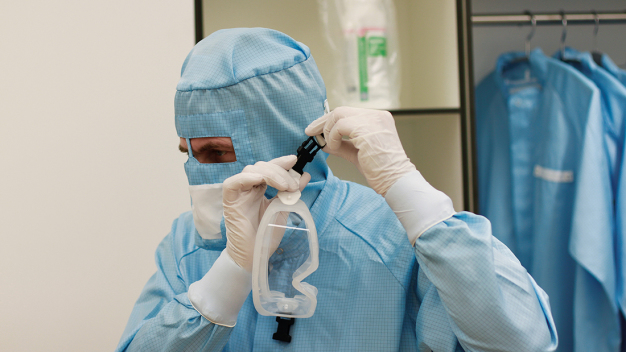
Inserting the clip buckle, first side
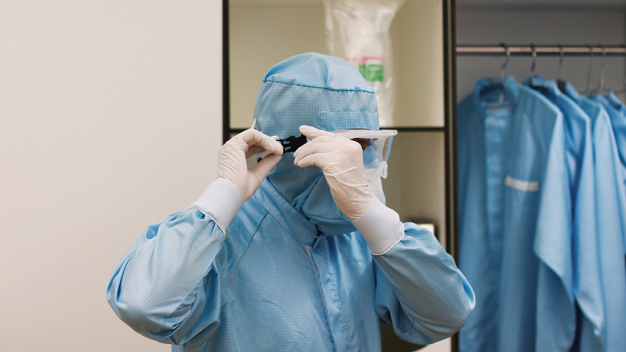
Inserting the clip buckle, second side
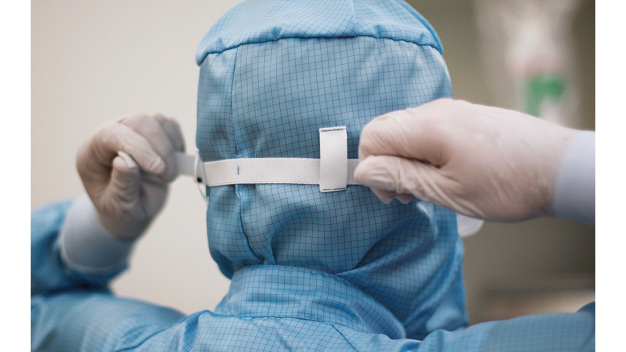
Adjustment of the belt
Among the currently most frequently discussed points of a cleanroom clothing system for use in sterile areas are certainly the protective glasses (English: goggles) mandated in the new Annex 1 (GMP guideline). It is common practice that head hair or beard hair must be covered by protective clothing. Consequently, eyelashes and eyebrows as well as open skin areas around the eyes must also be appropriately covered. It is also undisputed that wearing these protective glasses is anything but comfortable for the wearer. The goal must therefore be to find the best possible compromise between cleanroom requirements (A-/B-areas) and wearer comfort.
State of the Art
Putting on currently available protective goggles is time-consuming and presents significant challenges for many wearers, as numerous manual adjustments are required to achieve the correct fit. In addition to manually adjusting the fixation straps to the correct (individual) head tension, it must also be ensured that all open skin areas are covered. The risk of cross-contamination increases accordingly.
Objectives and Implementation of the New Development
Considering the above-mentioned difficulties and the additionally limited comfort of protective glasses, the aim was to find solutions that not only allow wearers to easily put them on but also provide the best possible comfort – without pressure points on the face. Additionally, the risk of cross-contamination should be minimized.
In developing an optimized hood-glasses combination, the following important criteria were considered, among others:
- Fit (every head shape is different, and not every protective glass fits every head shape)
- An as unobstructed as possible viewing window (not least for occupational safety reasons)
- Anti-fog properties
- No impairment of visual acuity
- Easy handling (to prevent cross-contamination)
- Secured coverage of all still open skin areas on the face (eye area)
- Avoidance of pressure points
- Suitability, among others, for glasses wearers (the protective glasses should fit well over prescription glasses)
A solution already proven in practice was replacing the so-called elastic straps with cleanroom-compatible textile straps. Discomfort from pressure points can be avoided with this solution. However, putting on protective glasses with textile straps remains relatively complex and involves corresponding contamination risks. Based on these experiences, the second step followed: adapting and optimizing the hoods. The challenge here was the multitude of different hood models available on the market. Many users prefer their own hood model tailored to their application processes and are understandably hesitant to re-qualify a modified cleanroom full protection hood. The requirement, which was ultimately successfully implemented, called for further development to ensure that the "click system" could be adapted as universally as possible for all hood models and also for all common cleanroom protective glasses.
Figures 1 – 3 show that it has been possible to combine the "click system" with very different hood shapes.
The simple handling of the hoods is crucial
With just two "clicks" and pulling on two straps, the protective glasses sit securely, and simultaneously, the hood circumference is adjusted to the respective head size without the wearer having to repeatedly touch the hood and protective glasses. Cleanroom protective glasses are usually put on as the last component of the cleanroom clothing system before entering the cleanroom. Handling with the buckles and straps of our new "click hood models" is straightforward even in full gear, as shown in Fig. 4.
Easy maintenance included
An additional significant advantage of the "click hood" solution is the simple cleaning and sterilization of both the hoods and protective glasses. Both components can be decontaminated separately. The need for complex installation or removal of components is eliminated, saving costs in processing. Furthermore, replacing or repairing individual components of the "click system" solutions is considerably easier and consequently more cost-effective. Thus, the hood-glasses combinations with "click system" are also easier to implement for rental clothing solutions.
Practical feedback and award winner
The new hood-glasses combinations, which could not be easier to use, almost meet all criteria for easy, quick, and safe handling in the donning process. Feedback from users has been consistently positive, and some companies have already begun switching to this innovative and GMP-compliant new development. This solution was already awarded the renowned Red Dot Award (innovative product) in 2020 through nomination and victory.

Dastex Group GmbH
Draisstraße 23
76461 Muggensturm
Germany
Phone: +49 7222 9696 60
Fax: +49 7222 9696 88
email: info@dastex.com
Internet: https://dastex-group.com/