



- R+D & Community of Interest
- Translated with AI
Eva-Maria Schlosser
Lounges and Vision Pharma 2013
The trade fair reflects the market
web_Lounge_023_21cm_DSC_2896
web_Lounge_030_DSC_2787
web_Lounge_027_DSC_2963
web_Lounge_026_DSC_2959
web_Lounge_024_21cm_DSC_2898
web_Lounge_022_21cm_DSC_2859
web_Lounge_016_21cm_DSC_2843
web_Lounge_014_21cm_DSC_2839
web_Lounge_012_21cm_DSC_2832
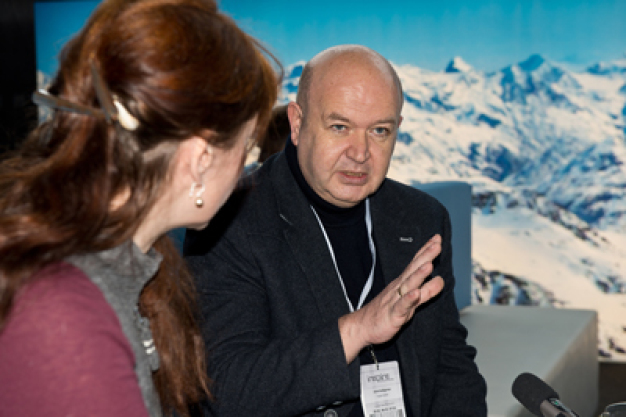
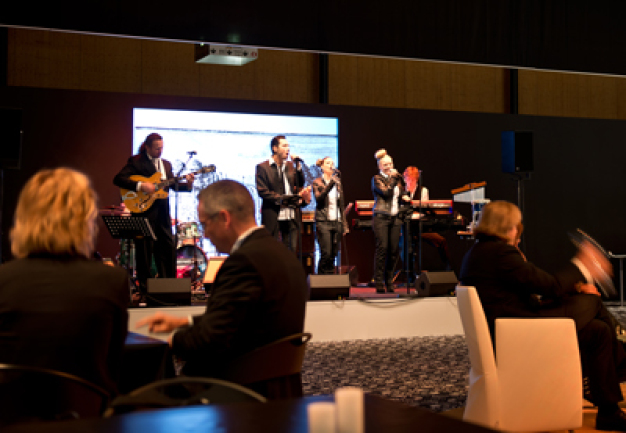
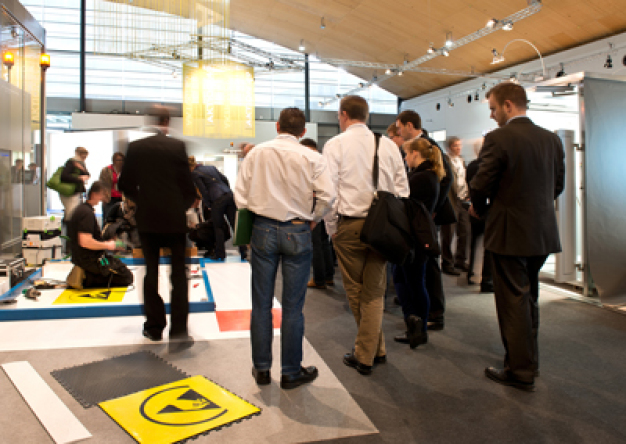
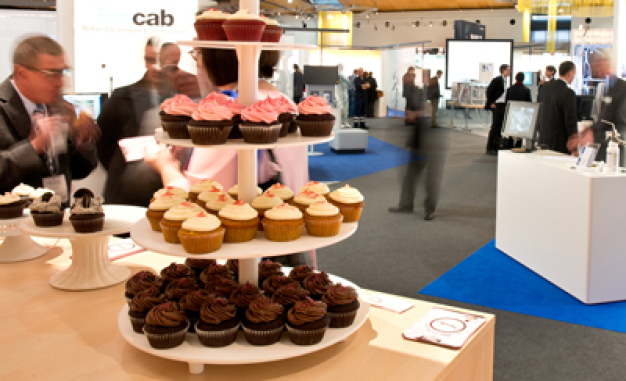
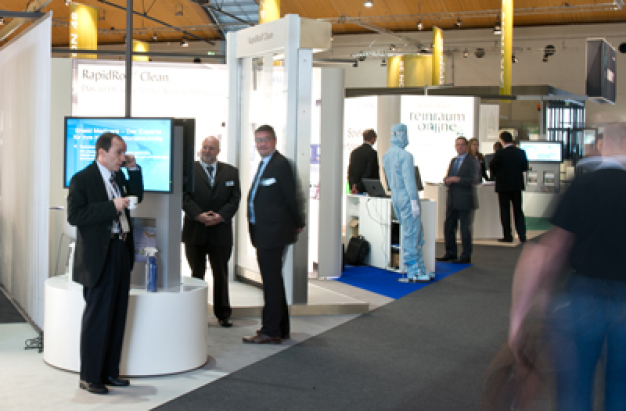
Widespread are the facilities, generously sized the aisles between the booths of the exhibitors. The Messe Lounges and Vision Pharma 2013, which as usual took place in Karlsruhe from February 5th to 7th this year, has significantly expanded. Around 290 exhibitors with their booths were represented across two halls. Numerous visitors participated in a total of 66 sessions with over 200 individual lectures. The lecture rooms were located as mobile units directly on site, centrally in both halls. Surrounding them were the booths, with the differently designed bars well visible along the walls. Additionally, the VIP lounge offered a retreat for quiet conversations, and the improvised canteen with seating was located on the opposite side. Once again, contacts were made in a relaxed atmosphere. A conversation with Ulrich Rothgerber, event manager of the organizer agency Inspire.
Reinraum online: Mr. Rothgerber, the Messe Lounges and Vision Pharma 2013 have expanded enormously in terms of area this year. What is the reason?
Ulrich Rothgerber: Indeed, we distributed Vision Pharma and the Lounges across two halls this year. We took this step to re-integrate the conference rooms into the hall on the one hand, and on the other hand, to establish Vision Pharma in its own hall. Moreover, we wanted to maintain the flair we had from the beginning. We aim for a family-like atmosphere, no trade fair hustle. For this, spaciousness of the facilities is necessary, which radiates a certain calm without making the fair appear poorly attended. That’s a balancing act. After all, we also want the fair to be economically viable, also for the exhibitors. They should meet their customers, and visitors should be able to make contacts as well as attend training sessions and seminars. I think we managed all this quite well again this time.
What other innovations are there?
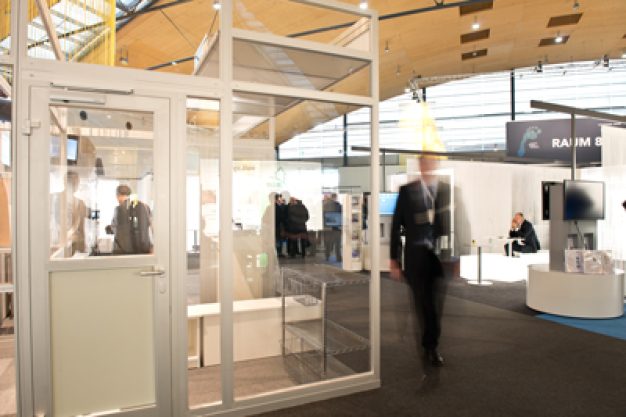
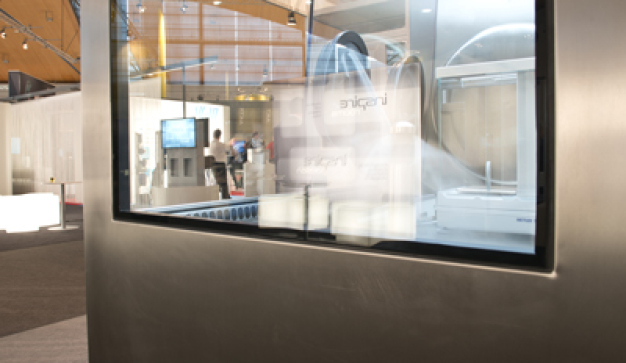
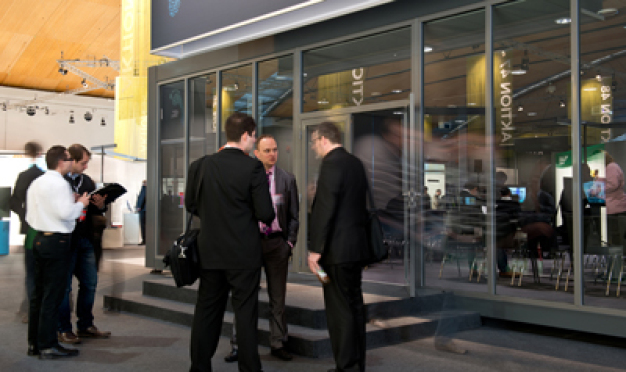
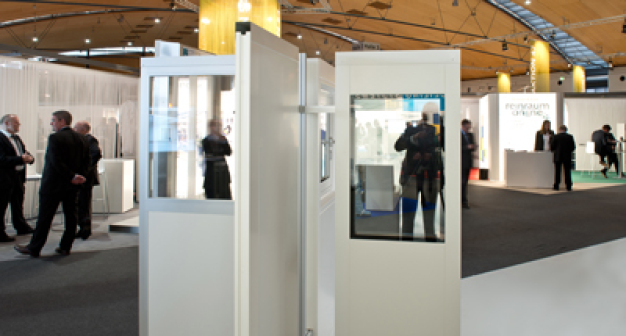
We built and deployed our own mobile lecture rooms. This means we brought the lectures back into the hall. This has huge advantages: short distances for visitors, the rooms are fully air-conditioned, very well soundproofed, and equipped with the right technology. Additionally, they have glass walls, so there is still a feeling that the speakers are in the hall. This is very well received by both speakers and visitors.
How is the infrastructure, such as dining areas and lecture rooms, distributed across the two halls?
In the halls, there is an identical dining area as well as various bars. Evening events alternate between both locations. Topics that concern both areas, such as the trade press, are placed in transition zones. We want to establish two equally important events. However, the Vision Pharma area is still expandable, as it is a new concept. There are individual topics that are doing very well, such as the new “Cool Chain” – “Cold Chain”. This has started very successfully and is gaining strength.
Why was the fair divided into the two areas Lounges and Vision Pharma in the first place?
We have about 25 more exhibitors than last year. In total, there are now 290, around 110 companies offering cleanroom technology alone, 90 companies in the pharmaceutical sector. These are two different approaches: Vision Pharma encompasses the pharmaceutical industry and the pharma process. The Lounges feature other sectors such as semiconductors, solar, photovoltaics, and everything related to process support, such as air conditioning technology, clothing, consumables, and much more.
In which trade fair area does an entrepreneur who covers multiple sectors go?
That varies greatly. Depending on whether the focus is on pharma or other sectors. In case of doubt, exhibitors go to the Lounges. You automatically reach all visitors. Most take enough time to see everything.
Is that really the case? Or do visitors rather target the area and topics that concern them most?
Actually, 90 percent of visitors look at both areas. 80 percent come from the pharmaceutical sector. And it is still the case that many visitors come here because of the lectures. But unlike other fairs, more than 50 percent even visit on two or three days. Normally, even at large fairs, the rate is about 18 percent. Theoretically, you could attend around 20 lecture sessions over three days. On the open market, you would pay around 4,000 euros for that.
80 percent from the pharmaceutical sector? What about the other industries?
The market is strongly reflected in a trade fair like ours. The semiconductor market is currently mainly in Asia, as is photovoltaics. But for the pharmaceutical sector, Karlsruhe is an ideal location. Along the Rhine, from Basel to Frankfurt, many pharmaceutical companies are based.
From which countries do your exhibitors and visitors come?
Last year, we had registrations from 21 countries; this year, from 28 countries. On the exhibitor side, there are six countries, mainly European, especially German-speaking. But in the future, we want to become multilingual and offer lectures mainly in English, as our audience is international. We are seeing a growing share of visitors from Eastern European countries, as well as from the USA and Asia.
What are your plans for the future?
We will try to maintain the two-hall solution. However, there are also voices from individual exhibitors who would prefer the previous single-hall solution. But depending on the size and number of exhibitors, expansion makes sense. As I said, a trade fair always reflects the market. So, it always depends on the market itself.

reinraum online
W.A. Schuster GmbH
Mozartstraße 45
70180 Stuttgart
Germany
Phone: +49 711 9640350
Fax: +49 711 9640366
email: info@reinraum.de
Internet: http://www.reinraum.de