



- Translated with AI
Leaving it lying around is worth it for the assembly
Long-term test of stored seals shows a surprising improvement in friction values
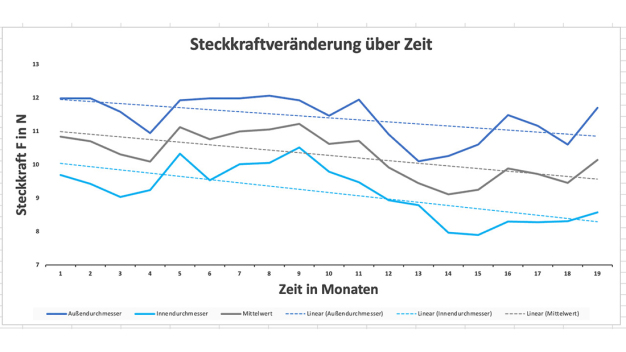
Elastomer seals washed, deep-cleaned, and coated by OVE Plasmatec show improved values by 20% through storage. © Image source: OVE Plasmatec
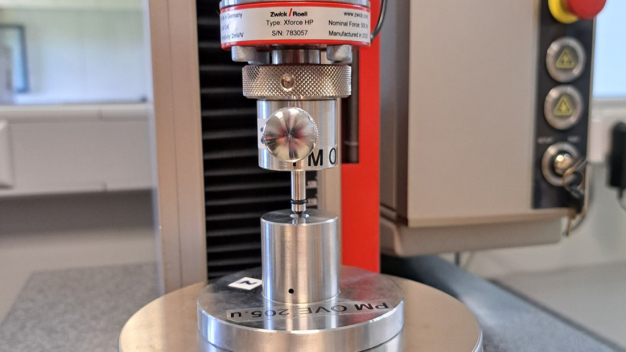
The two-year project involves monthly inspections of the returned seals. For this purpose, the end customer provides testing equipment and conducts testing equipment monitoring. © Image source: OVE Plasmatec
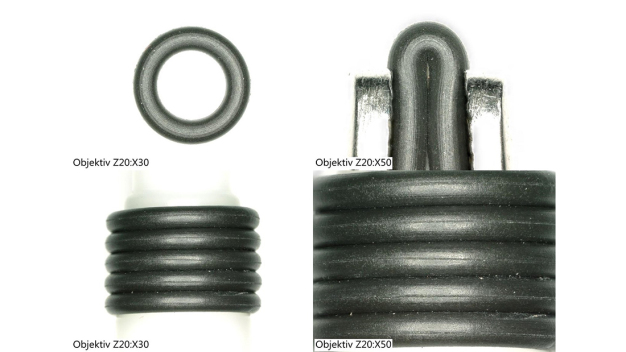
A bend and stretch test also confirms it: When stored correctly, OVE-coated seals perform better. © Image source: OVE Plasmatec
Oven Plasmatec-washed, deeply cleaned, and coated elastomer seals show improved values through storage. Contrary to assumptions, friction values and associated insertion forces for assembly decrease. This is confirmed by a long-term test with regular inspections. The result allows an electric motor manufacturer to change its storage strategy and ensure its delivery capability. In times of fragile supply chains, an aspect not to be overlooked.
"That seals with our coatings regularly achieve top values regarding friction and wear in application, we're already accustomed to. However, that the values improve when the seals are stored, we couldn't initially believe," reports Carsten Ebert, Technical Director at OVE Plasmatec. What surprises all involved, however, can be substantiated. Retained sample seals from a coated seal project started in 2021 are monitored monthly for their storage behavior and consistently show lower friction and insertion force values. This means that insertion forces during assembly decrease. This trend is already clear after 19 months, although the project is planned for 24 months.
Transparent long-term testing
But let's take it step by step: A large and well-known manufacturer of electric motors for e-bikes uses a very small seal in the coupling pins. It sits exactly where the drive is decoupled when the e-bike reaches a certain speed and no longer requires electric assistance. Because the requirements for increased cleanliness are very high, a very well-known seal manufacturer has the products from OVE Plasmatec washed, plasma-cleaned, and coated. The process is very transparent for all involved.
Now, the end customer wants to know more about the storage capability of the seals and especially whether and how the coated seals change through storage. The two-year project involves monthly inspections of the returned seals. For this purpose, he even supplies the testing equipment and conducts annual testing equipment monitoring. Already after just under 20 months, an irreversible trend is clear: the coated seals do not deteriorate due to storage. On the contrary, friction and insertion forces improve, and insertion forces decrease — currently by about 20%. This brings significant improvements and greater safety in automated assembly.
Seals that behave like fine wine
Carsten Ebert, who leads and supervises the project at OVE, is enthusiastic and jokingly draws parallels to wine. "It's almost like a good Bordeaux, which gets better with age." Of course, customers won't store the seals for ten years or longer. But for the end user, the result is important, as they can plan with much larger batch sizes for orders when they know that the quality of the seals and coating in storage does not deteriorate. In times when supply chains have become fragile and many companies are rebuilding their own inventories, this is naturally an important result. Because this way, the motor manufacturer remains reliably able to deliver.
For Ebert, the conclusion is already clear today, four months before the end of the testing period: with proper storage regarding temperature and humidity, in a sealed bag, the seals coated by OVE perform better. Forces decrease, and assembly can be planned with up to 20% lower insertion forces.
OVE Plasmatec GmbH
71093 Weil im Schönbuch
Germany