



- Standards
- Translated with AI
Bettina Huck
Hazardous Substance Ordinance changed: What companies need to do
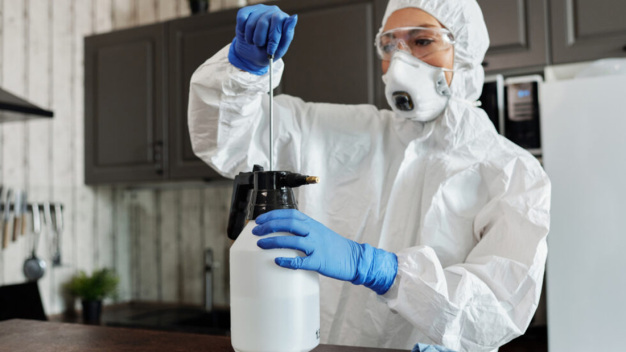
The amendment of the Hazardous Substances Ordinance came into force on December 5, 2024. Significant changes primarily concern activities involving carcinogenic, germ cell mutagenic, and reproductive toxic substances, so-called KMR or CMR substances, as well as asbestos. The goal is to improve the prevention of work-related cancer diseases.
Companies that manufacture or use KMR substances must identify changes and review existing measures, adjusting or establishing new ones if necessary. Likewise, new requirements for activities involving asbestos and asbestos-containing materials must be identified and appropriate protective measures implemented. Companies are seeking suitable tools to manage hazardous substances and legal changes.
Major Changes
Activities with carcinogenic (K), germ cell mutagenic (M), and reproductive toxic (R) substances:
– KMR substances in categories 1A and 1B may generally only be manufactured and used in closed systems.
– The risk-based measures concept for activities with carcinogenic hazardous substances in categories 1A and 1B – currently regulated in TRGS 910 – is adopted. Requirements for protective measures are linked to the statistical risk of developing cancer due to the activity.
– When exceeding the occupational exposure limit value (OEL) for activities with KM substances in categories 1A and 1B, an action plan must be created. Companies must inform the competent authority of the measured exposure and submit the action plan. The sealing regulation for KM substances in categories 1A and 1B is repealed.
– Additional regulations for activities with reproductive toxic substances in categories 1A and 1B are established, including maintaining an exposure register for 5 years (for KM substances in categories 1A and 1B, the retention period remains unchanged at 40 years).
Activities with Asbestos
Since all buildings constructed before October 31, 1993, must be assumed to contain asbestos in building materials or structures, the following applies:
– Activities with low and medium risk may be carried out if specified protective measures are observed; for activities with high risk, stricter requirements remain in place.
– An information and participation obligation for the initiator of construction work is introduced. They must now provide the contracted company with all available information (e.g., year of construction or start of construction) or data on pollutant load.
– In case of unclear circumstances, the construction company must conduct an investigation within the buildings.
– The requirement for expertise is now also introduced for activities involving potentially asbestos-containing materials (e.g., track, road, and tunnel construction, quarries). A transition period of 3 years applies.
– Work with asbestos may only be performed by qualified personnel. Expertise can be acquired through further training courses, e.g., at BG BAU. A three-year transition period also applies here.
As part of the risk assessment, psychological stress must now also be explicitly considered.
What companies must do
Employers must first check whether they are affected. If KMR substances are manufactured or used, internal processes must be adjusted. Construction companies must implement the changed requirements, especially concerning client information and employee qualification. The Hazardous Substances Ordinance and Technical Rules for Hazardous Substances (TRGS) generally regulate what applies to activities involving hazardous substances.
Risk Assessment
The employer may only commence activities involving hazardous substances after conducting a risk assessment. Psychological stress due to insufficient or misunderstood information, inadequate instruction, or conflicting work requirements must also be considered.
Safety Data Sheet
According to § 6 GefStoffV, the employer must obtain necessary information on health protection and safety from suppliers for the risk assessment, including details on approval requirements as well as manufacturing and usage bans. The most important information source for activities involving hazardous substances is the safety data sheet (SDS). Since an up-to-date version must be used, it is recommended to request current versions every two years.
The employer must then check the SDS for obviously incomplete, contradictory, or incorrect information and, if necessary, request a correct SDS from the supplier. The background for this plausibility check according to GefStoffV in conjunction with TRGS 400 is that safety data sheets are often inaccurate. Correct information is, however, the basis for safe handling and appropriate protective measures, such as personal protective equipment.
Hazardous Substance Register / Directory
In principle, a hazardous substance register must be created when handling hazardous substances (§ 6 Abs. 12 GefStoffV). Relevant data are generally provided by the SDS. The following data must at least be included:
– Designation of the hazardous substance,
– Classification of the hazardous substance or information on its dangerous properties,
– Information on the quantities used in the operation,
– Designation of the work areas where employees may be exposed to the hazardous substance,
– A reference to the relevant SDS.
Hazardous substance registers are often created as Excel tables; relevant data must be collected and updated meticulously. In daily operations, oversight can be lost, and the hazardous substance register may then be outdated.
Practical Tip: Quick Hazardous Substance Check
Beyond simply providing composition and hazards, employers also want to quickly recognize whether used hazardous substances are classified as carcinogenic, mutagenic, or reproductive toxic.
Information on which substances activities are inadmissible for pregnant women or require occupational medical surveillance also provides important data for companies to ensure the safety and health of their employees.
Software that performs these checks from recorded data without additional effort promotes safe working and saves time.
Work Instructions
Based on information and results from the risk assessment, the employer must prepare written work instructions. They must be made accessible to employees before starting work, preferably near the workplace, e.g., as a notice. Work instructions must be written in an understandable form and language; translations may be necessary for non-German-speaking employees.
Work Instructions Must Include at Least:
– Information about the hazardous substances present or generated at the workplace,
– Appropriate precautions and measures,
– Measures to be taken during operational disruptions, accidents, and emergencies, and to prevent them, especially by rescue teams.
In case of any "material change in working conditions," e.g., a change in classification of the hazardous substance used, it must be checked whether the associated work instructions are still current or need to be adjusted. Ultimately, employees must be instructed based on the work instructions.
Possible Tools
Suitable are applications for hazardous substances that can automatically read PDF safety data sheets and enable simple plausibility checks. From the recorded data, an individual hazardous substance register should then be created, and work instructions should be generated at the push of a button.
A quick hazardous substance check for substances and mixtures should automatically display the KMR property, recognizing KMR substances based on relevant hazard categories and H-phrases. Also, an indication of which substances activities are inadmissible for pregnant women and where occupational medical surveillance is required facilitates the work of responsible personnel. To reliably manage hazardous substances, software such as the web-based software from QUMsult meets all these requirements.
Conclusion
Responsibles in occupational and environmental protection must determine applicable regulations for activities involving hazardous substances and establish and implement suitable measures. They must keep track of changes and adjust internal processes accordingly. Software applications support this and enable legally compliant work. Companies save time and money, and employees remain healthy and fit for work.
Interested parties can test the HSEQ software free for 30 days or get to know it via a web meeting, conveniently from their desk: Web SARA Hazardous Substances.
QUMsult GmbH & Co. KG
79098 Freiburg
Germany



