


- Service
- Translated with AI
Continuous airborne microbial monitoring in critical environments
A comparison of methods

Image 1: Formula

Table 2
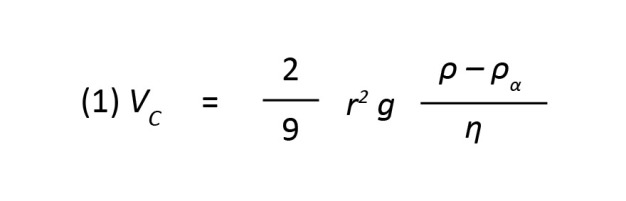
Image 2: Formula
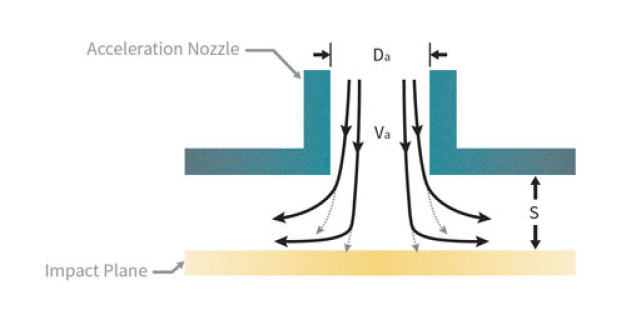
Figure 1: Airflow model of an active air germ collector
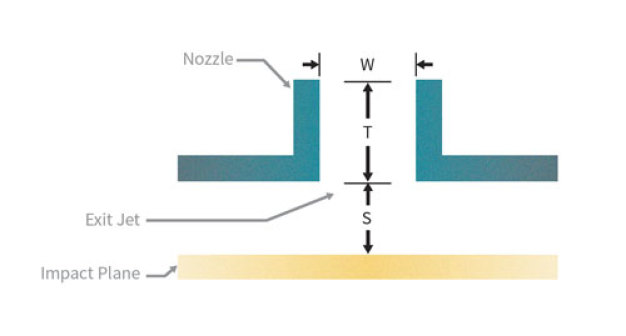
Figure 2: Geometry of the active air microbial sampler
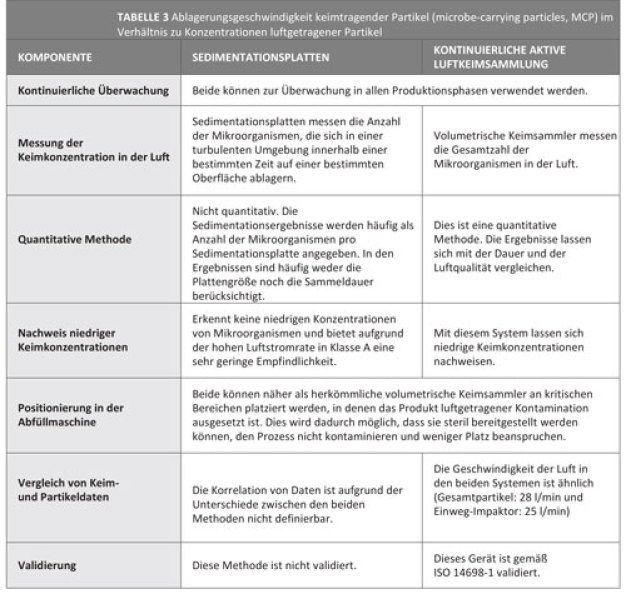
Table 3

Gilberto Dalmaso, PhD.

Anna Campanella, PhD.

Paola Lazzeri
Summary
For more than 10 years, cGMP guidelines have emphasized expectations regarding continuous microbiological process air monitoring in Class A (ISO 5) and Class B (ISO 7) areas, referring to the sedimentation plate method. However, since they rely on gravity-driven particle settling on a surface, sedimentation plates are considered non-validatable methods.
Introduction
Cleanrooms are controlled environments where the level of contamination must meet a defined purity standard. In GMP-defined cleanrooms, microbial contamination is a critical parameter to be controlled. Sterility assurance for products labeled as sterile can be achieved through terminal sterilization of the final product. These include, among others, a large portion of sterile drugs, which are unstable under conventional sterilization processes and therefore require aseptic processing. Authorities recognize that aseptic manufacturing for the final product presents a higher contamination risk than the terminal sterilization process.
To mitigate this risk, regulatory agencies have strongly recommended that pharmaceutical companies implement solutions that separate sterile products from personnel. This has led to barrier systems, which are now widespread in sterile pharmaceutical manufacturing.
With new technologies, the degree of microbial contamination in the cleanroom can be monitored continuously and reliably. However, current GMP guidelines for defining microbial contamination limits still refer to sedimentation plates with 4-hour sampling, and traditional growth-based microbiological solutions remain the most common approach for air monitoring. Pharmaceutical manufacturers mainly use sedimentation plates for continuous sampling of microbial contamination, even though the "continuous" collection of one cubic meter of air, the most common variant, often does not last longer than 40 minutes. Additionally, natural limitations of growth media often restrict microbial monitoring to short durations.
Particle size distribution in the air and effectiveness of sedimentation plates
Organic and inorganic airborne particles vary in size, shape, and density. Without a standard reference for airborne particles, general approximations such as the geometric equivalent diameter are used to obtain values for the size, shape, and density of a particle.
The equivalent diameter in this case corresponds to the diameter of a sphere with the same geometric properties that settles in the air at the same rate as the considered particle. This estimate determines the effectiveness of microbiological monitoring methods, i.e., the recovery of microorganisms. For example, the yield of sedimentation plates was estimated a few years ago based on standardized parameters for static ambient air conditions. These parameters provide only an inadequate representation of critical pharmaceutical cleanroom environments where dynamic conditions prevail (e.g., multiple air exchanges per hour depending on classification).
Calculation of the settling velocity of airborne particles
A spherical, uncharged particle without sedimentation sediments at a constant velocity according to the following formula (1): see Figure 1.
Here, Vc stands for the contamination velocity (i.e., the settling velocity of a KbE), r for the particle radius, g for acceleration due to gravity, p for particle density, pa for air density, and ɳ for air viscosity.
Between 2015 and 2016, Whyte et al. published a series of articles addressing the deposition of airborne particles on critical surfaces in cleanrooms [1-4]. Key mechanisms for deposition include gravitational settling, turbulence deposition, electrostatic attraction, and Brownian motion for particles under 0.5 µm. Smaller particles are more likely to be transported out of the cleanroom and have little time to settle, while larger particles continue to settle due to gravity. An increase in air turbulence intensity can contribute to this process. For particle sizes between 5 and 30 µm, applied to an ISO Class 5 environment, an increase in deposition velocity by a factor of five was estimated. For particles of 0.3 or 0.5 µm, a lesser influence of gravity was expected.
It has been observed that the deposition velocity increases with the increasing purity of the cleanroom [4]. The results of the study are shown in Table 2.
Efficiency of active air microbial samplers
In ISO 14698:2003 Annex B, a method is described for determining the collection efficiency of air microbial samplers concerning two aspects: physical efficiency and biological efficiency.
- Physical efficiency refers to the ability to capture particles of various sizes during sampling.
- Biological efficiency pertains to the recovery rate of viable, microorganism-carrying particles (MCP).
Physical efficiency is assumed to be the same for non-microbial particles, microorganism-carrying particles, and airborne microbes. Biological efficiency is considered lower than physical efficiency because it depends on the survival of collected microorganisms and the growth medium on which they are cultured. The test method described in Annex B primarily addresses physical efficiency.
The experimental method to determine physical efficiency involves generating and dispersing a test aerosol in a test chamber (at defined relative humidity and temperature). The test aerosol can be produced using Bacillus subtilis var. niger (NCTC 10073) spore suspension, polystyrene spheres, or other types of inorganic particles. Despite similar results, it should be considered that some samplers may not detect all inorganic particles. In contrast, microorganisms grow into colonies that are easily visible and identifiable.
To determine biological efficiency, Staphylococcus epidermidis (NCTC11047 – ATCC 14990) can be used to represent a human contamination strain. Due to variability in collection efficiency caused by solution spraying and sampling conditions, this method is considered less reliable than the method for determining physical efficiency.
Each test must be performed in parallel with a reference system (membrane filter and air microbial sampler) to assess the sampler's efficiency (5): see Figure 2.
In ISO 14698:2003 Annex A, the choice of air microbial sampler for use in a hazard zone depends on the purpose of sampling. Furthermore, the device should have an impact velocity (air velocity hitting the culture medium) that balances:
1. a velocity high enough to capture organic particles down to approximately 1 µm, and
2. a velocity low enough to preserve the viability of particles by avoiding mechanical damage or rupture of bacterial clumps or micro-aggregates.
In the life sciences industry, the ISO standard generally recommends a microbial sampler with a physical collection efficiency of around 50% at a particle size of approximately 1 µm (d50 value of 1 µm), and samplers with a d50 value of about 1 µm are widely accepted. Given that microorganism-carrying particles in aerosols are typically 10 to 20 µm in size, why is good performance up to 1 µm then important? Smaller particles are more difficult to capture than larger macro-particles (particles larger than 5 µm), and 1 to 3.0 µm corresponds to the size of most individual bacteria.
How are particles captured by active microbial samplers?
When a gas stream passes through a sharp change in direction, transported particles tend to continue moving in their original direction relative to their mass-to-size ratio. Particles of different sizes and densities follow different trajectories and can be collected separately. When a airflow is accelerated through a nozzle, the particles transported by it are propelled at the same velocity as the surrounding medium (air) and follow their flow line. If the flow lines at the nozzle exit change rapidly, particle trajectories deviate significantly from the airflow lines depending on their inertia. In other words, particles follow a straight line, and upon contact with a surface, they can adhere and be captured.
Active air microbial samplers (impactors) are designed to collect particles from the air by colliding them with a solid surface. The geometry of the impactor (W, T, S) is designed to ensure laminar flow into the nozzle (Re < 2300), with as high a velocity as possible and a low d50 value.
Sedimentation plates and alternatives
Sedimentation plates provide indications of microbial-carrying particles, which are assumed to have an average diameter of over 10 µm. In ISO 14698-1:2003 Annex C, the definition of sedimentation plates states that passive air microbial samplers, such as sedimentation plates, do not measure the total number of organic particles in the air but rather the rate at which organic particles deposit on surfaces.
Sedimentation plates are recommended for continuous airborne microbial monitoring in critical areas because, unlike active samplers, they require limited handling. To simplify and reduce handling while lowering the contamination risk for operators, disposable impactors are an ideal alternative. As long as manufacturers comply with ISO requirements and good laboratory practices, they can also provide a reliable solution for long-term sampling.
Comparison of sedimentation plates and continuous active air microbial sampling
Due to their low sensitivity and questionable data significance, sedimentation plates are not recommended for Class A areas. They are only permitted in Class B, C, and D areas, where air movement (turbulence) allows for greater deposition of microbial particles.
In modern cleanroom garments used for personnel in aseptic areas, microbial-carrying particles are expected to range from 0.5 to 5 µm. Continuous active air microbial sampling replaces the use of sedimentation plates and intermittent active sampling for Class A areas. Table 3 presents a comparison of the methods.
Reasons for monitoring different cleanliness grades
Pharmaceutical cleanroom qualification is crucial for drug manufacturing where patient safety plays a vital role. Microbiological qualification determines whether the air remains clean during production. After qualification and a positive result, pharmaceutical companies must develop a monitoring plan that documents and demonstrates air quality during batch production according to the specifications established during validation.
The risk analysis for monitoring Class A (ISO 5 critical areas) and Class B (ISO 7) environments in aseptic manufacturing includes the following points:
- Class A areas encompass the product, materials contacting the product, and contact surfaces with the environment. Particularly critical areas are continuously monitored during all production phases with high air exchange rates.
- Class B areas protect Class A environments and require personnel presence. In this case, microbiological monitoring has different significance regarding frequency and limits. The purpose of monitoring in these areas is to control microbiological contamination within the scope of specifications and qualification results. The microbial trend in these areas should always be constant or slightly decreasing if the microbial flora is known and predictable.
Continuous microbiological air monitoring in Class A is already mandated by cGMP guidelines and is implemented for total particle monitoring. It provides important information about the quantity and size of total particles present at a specific sampling point in the air. Total particles include:
- Inert particles
- Particles with microorganisms on their surfaces (without their known count)
- Microorganisms themselves, which are also particles and can be detected by particle counters
Quality assurance should have a strategy for both areas using validated methods (according to pharmacopoeia or international standards) to support investigations and enable the assessment of potential correlations between events.
Conclusions
In ISO 5/Class A areas where airflow is defined and contamination risk is higher, using sedimentation plates due to their low sensitivity provides only an inadequate monitoring strategy. Sedimentation plates are more relevant in static environments with low air changes, where particle and microorganism deposition is more probable.
Continuous airborne microbial monitoring in critical areas should be achieved with validated methods such as active air microbial samplers. This strategy fulfills regulatory requirements for better process understanding, more reliable contamination control, and significantly higher sterility assurance for the released product.
Authors
Gilberto Dalmaso, PhD
Global Life Science, Scientific Director
Gilberto Dalmaso has over 25 years of experience in pharmaceutical microbiology and sterilization assurance, mainly at GlaxoSmithKline (GSK). In 2003, his laboratory received the first worldwide approval from the US FDA under the PAT initiative for rapid microbial methods (Rapid Microbial Methods, RMM). Gilberto is currently Scientific Director for Global Life Science for particle measurement systems; he is a member of the European PDA Committee, a speaker at numerous microbiology and pharmaceutical industry symposia in Europe, Asia, and the USA, and a quality system auditor according to ISO 9001 and HACCP.
Anna Campanella, PhD.
Global Sterility Assurance and Consulting, Particle Measurement Systems
Anna Campanella, PhD, is responsible for global sterility assurance and consulting regarding particle measurement systems. In this role, she leverages her industry experience to collaborate with pharmaceutical companies, advising them and developing scientific strategies, monitoring principles, control, and improvement of the chemical, physical, and microbiological status of various production processes. She has extensive experience in the pharmaceutical field, including a PhD in molecular medicine, expertise in QA & QC processes, validation of chemical and microbiological methods, validation of sterile manufacturing processes, and microbiological aspects of aseptic production processes.
Paola Lazzeri
GMP Specialist in the Sterility Assurance Team, Life Sciences Area
Paola Lazzeri has experience supporting pharmaceutical companies in contamination control, including cleaning and disinfection strategies. Her experience with pharmaceutical manufacturers began in 2005 at a company selling cleanroom contamination control systems.
Today, Paola is a GMP specialist in the sterility assurance team regarding particle measurement systems. In this role, she works with pharmaceutical companies to develop and implement principles for monitoring and controlling microbiological contamination through improved scientific cleaning and disinfection strategies.
References
[1] W. Whyte, K. Agricola, and M. Derks (School of Engineering, University of Glasgow, UK; VCCN, Dutch Contamination Control Society, Leusden, the Netherlands; Lighthouse Benelux BV, Boven-Leeuwen, the Netherlands) 'Airborne particle deposition in cleanrooms: Calculation of product contamination and required cleanroom class' - Clean Air and Containment Review, Issue 26, April 2016.
[2] W. Whyte, K. Agricola, and M. Derks 'Airborne particle deposition in cleanrooms: Deposition mechanisms' - Clean Air and Containment Review – (2015) Issue 24, pp. 4-9.
[3] W. Whyte, K. Agricola, and M. Derks 'Airborne particle deposition in cleanrooms: Relationship between deposition rate and airborne concentration' - Clean Air and Containment Review - (2016) Issue 25, pp. 4-10.
[4] W Whyte (School of Engineering, University of Glasgow, Glasgow G12 8QQ) and T Eaton (AstraZeneca, Macclesfield, Cheshire, SK10 2NA) 'Deposition velocities of airborne microbe-carrying particles' - European Journal of Parenteral & Pharmaceutical Sciences 2016; 21(2): 45-49.
Terms and Definitions
Active air microbial sampler (impactor): Device for capturing particles in the air or other gases by collision with a solid surface.
Active air microbial sampling: Monitoring of ambient air using an active microbial sampler (impactor).
Passive air monitoring: Monitoring of ambient air using sedimentation plates. Particles follow the surrounding airflow and fall onto agar plates.
Organic particles: Particles composed of one or more living microorganisms or supporting them. [21]

Particle Measuring Systems Germany GmbH
Im Tiefen See 45
64293 Darmstadt
Germany
Phone: +49 351 88963850
email: pmsgermany@pmeasuring.com
Internet: http://www.pmeasuring.de