

- Translated with AI
Cleanroom concepts for flexible productions
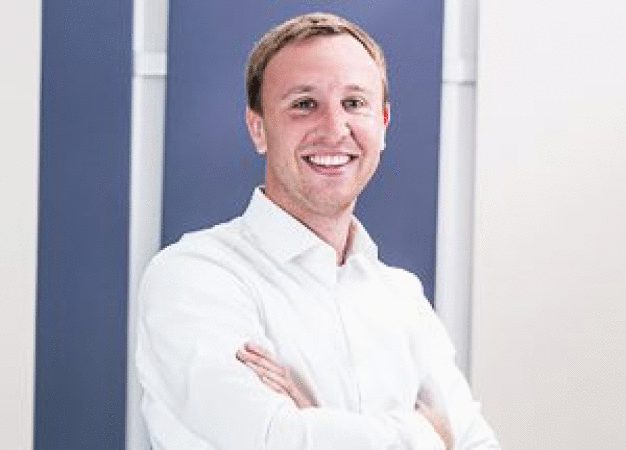
Dominic Mühleiß is Managing Director of IE Plast Germany.
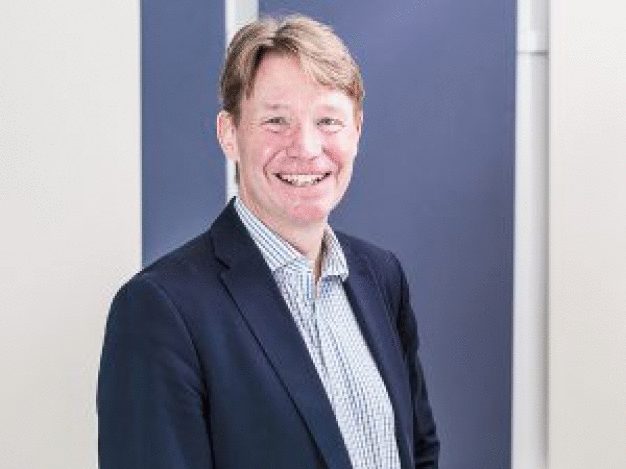
Thomas Fischer, IE Plast, is the project manager for the realization of the new Ypsomed plant in Schwerin.
The demand for cleanrooms and hygiene concepts in plastics processing is steadily increasing. Here, the specialists from IE Plast come into play, planning and implementing production facilities for industrial clients. For example, the company acts as general contractor for the new plant of the Swiss medical technology manufacturer Ypsomed in Schwerin. Reinraum Online interviewed project manager Thomas Fischer and IE Plast managing director Dominic Mühleiß about the challenges of this project as well as current trends in plastics processing under controlled conditions.
IE Plast plans and implements production facilities for cleanroom manufacturing in the plastics processing industry. What are the main challenges in this, and what expertise do you bring?
Dominic Mühleiß, Managing Director of IE Plast: For over 20 years, the demand for cleanrooms and hygiene concepts in the plastics processing industry has been steadily growing. At IE Plast, we are increasingly confronted with the topic of manufacturing under cleanroom conditions or heightened hygiene requirements. This concerns, on the one hand, the integration of cleanrooms and hygiene concepts into existing building structures and, on the other hand, their planning and realization in new builds on greenfield sites. Not only medical technology products are affected, but increasingly also technical components, such as those from the automotive or optical industries. The biggest challenge is to identify risks that could enable contamination of workplaces or products at all. The quality of a production facility in conjunction with a cleanroom largely depends on the initial assessment. The first step is to understand our clients' processes. We ensure an equal footing discussion of these processes through our operations planners, who have experience in both plastics processing and production planning. Subsequently, we conduct extensive risk assessments together with our clients to gain a precise understanding of the processes and workflows that require particular attention. From this, we develop optimal hygiene and airlock concepts tailored to each process. Another requirement we often face is the future expandability of the cleanrooms. We ensure this by considering appropriate ceiling heights and selecting a suitable building grid.
You act as general contractor for the new Ypsomed plant in Schwerin. What does that mean, and what is your task?
Thomas Fischer, Project Manager: We plan and realize the construction of a new production facility of approximately 24,000 m² on greenfield land, alongside the construction process. We guarantee our client Ypsomed adherence to agreed quality, costs, and schedules. This requires a team of interdisciplinary specialists in operations, logistics, construction planning, realization, and other areas, assembled by IE Plast. We have been supporting Ypsomed on this project from the initial planning phase through to the turnkey factory.
What specific challenges does this project present?
Fischer: The planning and realization are carried out under significant time and cost pressures. The high standards for the quality of such a production facility—covering the building, supply, and production technology—must not be neglected. To ensure this quality, Ypsomed commissioned IE Plast to oversee the necessary qualification processes. This requires close cooperation between the client’s project team, IE Plast’s construction planning team, and our qualification specialists. A particular challenge for our planning team was designing a production facility that allows for as much flexibility as possible within a limited budget. We are very proud that we succeeded in this, enabling our client to respond to changing market conditions. Our architects managed to design a building that meets the aesthetic expectations of our client while subtly blending into the landscape with its simple elegance.
Are there new trends in cleanroom manufacturing of plastic products that a producer of production facilities should consider?
Mühleiß: Flexibility is currently undoubtedly one of the biggest topics in plastics processing. Batch sizes are becoming smaller, product life cycles shorter. Our customers need to react quickly to changing market conditions. Naturally, this also concerns us as experts in industrial buildings. Therefore, we are increasingly realizing cleanrooms with separate media supply systems (media columns) to fully integrate injection molding machines, extruders, and assembly robots into the cleanroom. Concepts where, for example, injection molding machines are only connected to a cleanroom via the clamping unit are becoming rare. This ensures that machines can be repositioned or replaced with others. For this purpose, appropriate material airlocks are provided, where the equipment to be introduced is cleaned and prepared for the cleanroom environment. Another trend is reserving the possibility of upgrading to a higher cleanroom class. This also requires certain structural precautions. We strive to implement smart building concepts to enable future developments. High flexibility is usually associated with costs. At IE Plast, we therefore aim to find the right balance together with our clients to enable flexible, future-proof production without exceeding the budget.

IE Plast
Ein Bereich der IE Industrial Engineering München GmbH
Paul-Gerhardt-Allee 48
81245 München
Germany
Phone: +49 89 82993974
email: b.sticht@ie-group.com
Internet: https://ie-group.com/