


- Clothing & Packaging / Films
- Translated with AI
Cleanroom cleaning: Even terms must be clean
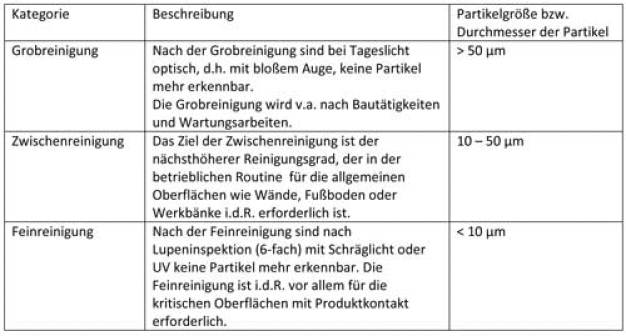
Overview 1: Overview of cleaning categories according to ISO 14644-5, Annex F, and VDI 2083, Sheet 5.1
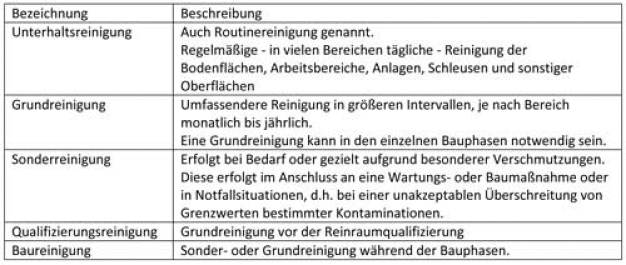
Overview 2: Overview of the cleaning methods used in the cleanroom, defined according to cleaning frequency and cleaning intensity according to ISO 14644-5, Annex F, and VDI 2083, Sheet 5.1
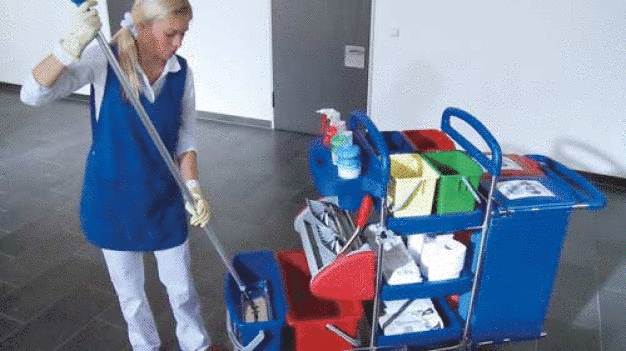
Figure 1: Two-bucket method for building cleaning, blue bucket with fresh solution and red bucket with dirty water
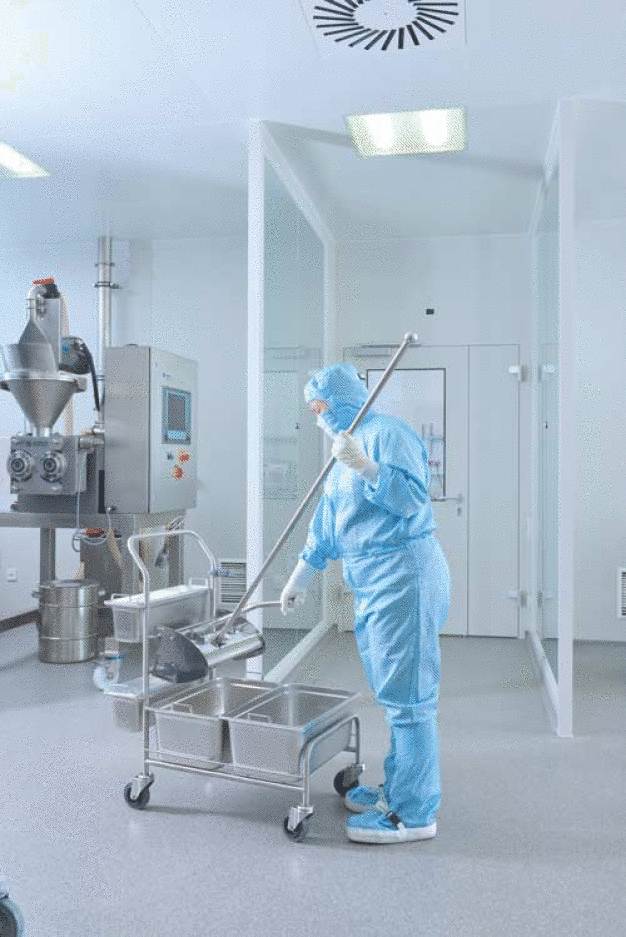
Figure 2: Two-bucket method cleanroom, front: ready-to-use solution, and back: drip solution
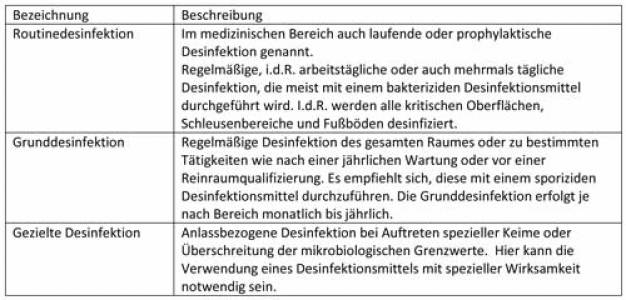
Overview 3: Depending on the frequency, disinfection can also be categorized, referencing, among others, VDI 2083, Sheet 5.1
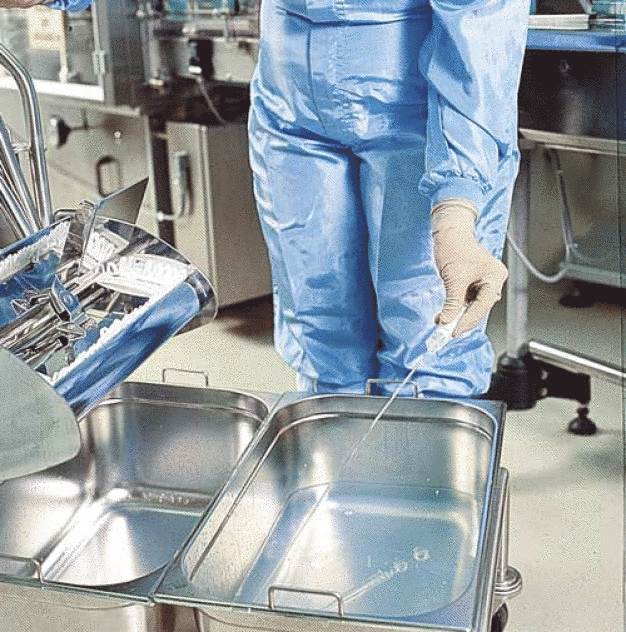
Figure 3: An incorrect dosage can be avoided by using dosing aids.
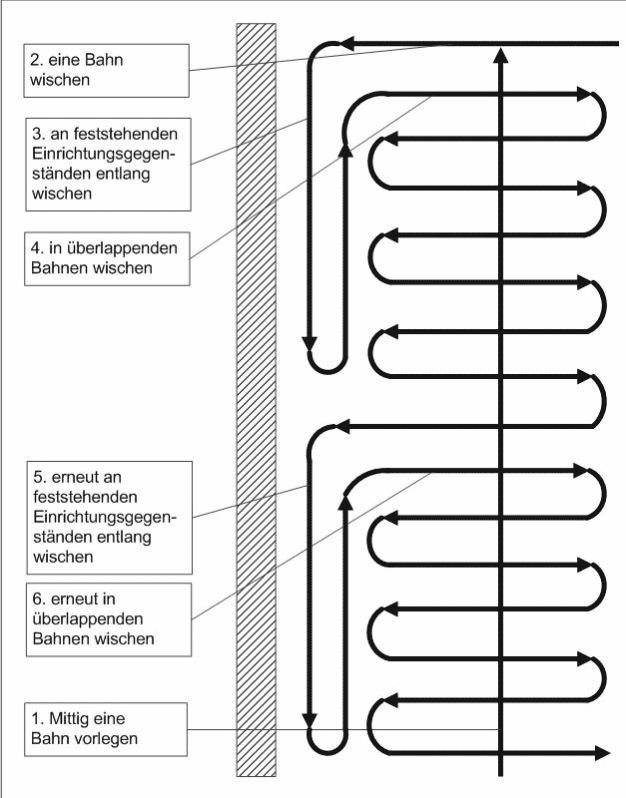
Figure 4: The illustration shows the process flow of the wiping method with the presentation of a web, source: Bachelor's thesis, HS Sigmaringen
Keywords are expressions or terms that are often used to concisely and convincingly communicate specific facts or properties. In advertising or sales, these are frequently utilized to influence purchasing decisions. Due to the consciously directed persuasive intent, the original factual context is unfortunately often altered to the detriment of the conveyed information and technical backgrounds. In a regulated and professionally oriented environment of cleanrooms, fundamental terms and their associated definitions are an important prerequisite for the application of regulations and thus for practical implementation. Purely sales-driven keywords in the cleanroom context can lead to confusion, especially since multiple uses of terms are not always excludeable. Cleanroom cleaning also has its specific terms, which sometimes differ from the definitions used in building cleaning. Some of the commonly used terms that are often employed as keywords are described below with the aim of establishing a clear terminology in cleanroom cleaning. An important clear definition begins, by the way, already with "cleanroom cleaning." Because the term "cleanroom cleaning" often specifically refers to "cleanroom disinfection."
Cleaning
Cleaning is a measure aimed at targeted, permanent, and complete removal and elimination of contaminants from a soiled surface. The goal is to achieve optical and chemical cleanliness and to interrupt the transfer of unwanted substances from the surface to the product. Cleaning is associated with a demonstrable germ-reducing effect: by removing the food source for germs, their growth is counteracted, and the mechanical action during wiping leads to a - albeit uncontrolled and incidental - reduction of germs through the wiping effect or mechanical removal.
Depending on the type of contamination, different cleaning methods are employed. The typical methods in a cleanroom are vacuuming loose contaminants and wiping, usually combined with liquids. In doing so, chemical agents are used to support cleaning, which aim to reduce surface energy or wetting of the surface, loosen dirt through chemical-physical processes, and keep suspended the contaminants in solution. These agents are typically applied via wiping textiles.
Wet and Damp Cleaning
In wiping procedures mainly used for decontamination of larger areas in the cleanroom, a distinction is made between wet and damp cleaning. The definitions of "wet" and "damp" are confusing and often mixed up. "Wet" in this context means "mist-moistened." "Damp," on the other hand, means "well wetted with liquid," but not "dripping wet." The damp wiping method removes loose fine dirt and, to a lesser extent, loose coarse dirt. Damp cleaning is recommended for intermediate and fine cleaning, i.e., for removing smaller and very small particles. For this method, mist-moistened or wrung-out, impregnated textiles are used, which bind fine dirt in this state. Wet wiping is a process used to remove adherent dirt or to achieve a germicidal effect. While previously the wet wiping process was implemented in a two-step method—first wet, then dry wiping—today it is usually done in a single-step method. The surface is cleaned in one work step with a dampened wiping cloth, and the residual moisture dries without the need for re-wiping. This method, often called the "semi-wet method," is only suitable when the surfaces have a lower level of contamination, as is typically the case in cleanrooms. The wet cleaning, also referred to in standards as "mopping," is used for coarse and intermediate cleaning, and possibly for fine cleaning. The moistening or preparation of the wiping cloth for the wet wiping process can be achieved traditionally by dipping and wringing, pre-impregnation, or soaking. Simply moistening a mop mechanically or by spraying is not sufficient for wet wiping.
Types of Cleaning
The use of various terms for cleaning methods can be confusing, as they often differ from the well-known definitions in building cleaning. Additionally, some terms have become ingrained in everyday language. (see Overview 1 + 2)
In everyday language, the two-step method is often confused with the two-bucket system. Usually, the two-bucket system involves a system cart equipped with two buckets. Depending on the industry and system cart, the application differs: while in building cleaning the front bucket is used for fresh water and the rear bucket for dirty water (see Figure 1), in the cleanroom only one container is filled with liquid. The second container is used solely to catch dripping water, as shown in Figure 2. (see Fig. 1)
In building cleaning, the used mop is rinsed and reused multiple times. In cleanroom cleaning, the cloth is changed after each use to prevent particle and germ transfer. (see Fig. 2)
Wiping Textiles
Besides cleaning chemicals, the type of wiping textile plays an important role. The choice depends on the type of contamination, the surface material, the area of use, and the wiping method. Microfiber has proven advantageous for the single-step method. Microfiber is not a specific material but a collection of fibers that are particularly fine and thin, with the fineness being defined. Due to their high fineness and the tight weave required, microfiber provides a larger surface area, which results in high strength, lint-free properties, and high cleaning performance. Even in a dry state, microfiber attracts dirt and dust particles like a magnet and binds them firmly to its surface. Another advantage is the high absorbency of microfiber. This high absorbency is achieved not by the fiber itself but by the large number of air chambers and small pores, creating a capillary effect. The capillary effect, i.e., the behavior of liquids in the capillaries of microfiber, is not the same as the intermolecular forces between fiber and dirt. Therefore, the statement that a fully saturated microfiber cloth can no longer absorb dirt is incorrect.
Disinfection
Disinfection is a measure aimed at eliminating, destroying, or deactivating microorganisms on objects or surfaces, serving to specifically reduce unwanted microorganisms, usually pathogenic and product-damaging germs. This is achieved through active substances that interfere with the structure or metabolism of the cell. (see Overview 3)
A sufficient inactivation or destruction can only be guaranteed if an adequate amount of active substances is applied to the surface and available for the inactivation process. Therefore, disinfection is performed via wet or semi-wet wiping procedures. This does not mean the surface is flooded with liquid, but that a uniform, continuous film of liquid is applied. At the same time, the surface must not be too dry, as insufficient liquid can lead to incomplete inactivation of residual disinfectant components and potential germ transfer.
Dosing and Concentration
The necessary concentration is determined through efficacy tests, both regarding cleaning performance and especially microbial effectiveness. Under-dosing—meaning too low a application concentration—not only results in reduced cleaning performance but can also cause temporary adaptation of certain microorganisms and the growth of more resistant microbes. These can then multiply especially quickly due to the lack of competing microorganisms. Conversely, overdosing will certainly ensure sufficient germ destruction but can also cause material and functional damage, residue formation, layer buildup, increased strain on personnel and the environment, and higher costs. Overdosing of a working solution occurs when a chemical active substance is added in too high a quantity to a diluent, not when an excessive amount of liquid is applied to the surface. (see Fig. 3)
Wiping Procedure Sequence
To achieve an even distribution of liquid during wiping, the classic building cleaning method begins by applying a water stream from the door centrally to the furthest area of the room, then wiping back in flat, overlapping figure-eight motions so that the paths overlap and no wetting gaps occur. The water stream is continuously moved to ensure uniform liquid distribution across the entire room. This technique is especially necessary when using cotton cloths or sponges, which initially release a lot of liquid. This approach prevents streaking. The use of microfiber, which distributes liquid evenly, combined with high air exchange rates in the cleanroom that promote rapid drying, makes pre-wetting in the cleanroom less necessary. (see Fig. 4)
Conclusion
It is not surprising that regulatory frameworks include glossaries and define the terms used in their regulations. This helps prevent misunderstandings from the outset and ensures that all involved parties speak the same language. In cleanroom cleaning, GMP- and norm-regulated areas intersect with building cleaning and their respective terminology. When keywords are then misused for sales-oriented presentation, especially among users without technical background, confusion becomes particularly significant.

Pfennig Reinigungstechnik GmbH
Heubachstr. 1
87471 Durach
Germany
Phone: +49 831 561220
Fax: +49 831 61084
email: info@pfennig-reinigungstechnik.com
Internet: http://www.pfennig-reinigungstechnik.com