



- Science
- Translated with AI
Better understanding of cellular responses to stress: DFG funds new graduate college at TU Kaiserslautern (TUK)
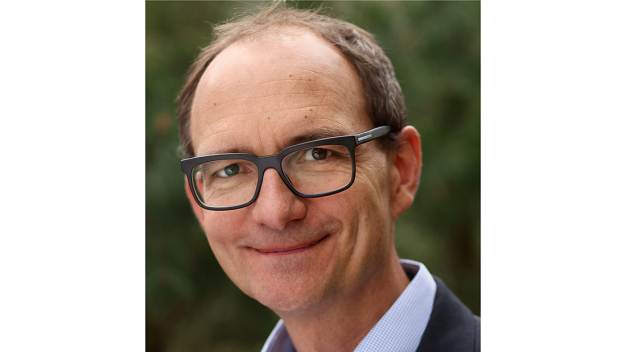
Prof. Dr. Johannes Herrmann, spokesperson of the new Graduate College. (Photo: TUK)
Under extreme environmental conditions such as heat, drought, or high salt concentrations, organisms switch to stress mode to protect themselves. Similar reaction routines occur within the cells of fungi, plants, animals, and humans. But what fundamental principles underlie these processes, and what cellular restructuring ultimately leads to resistance and thus adaptation to "unfavorable" living conditions? This is now being investigated by researchers from the fields of biology and chemistry at TUK in the new Graduate College STRESSistance. The German Research Foundation (DFG) is funding the project with around 3.9 million euros in an initial funding period of over four and a half years.
The approval of the DFG Graduate College was announced on Friday, November 5th. "This is a significant success and another accolade for our education and research in the natural sciences," says Prof. Dr. Johannes Herrmann, the spokesperson for the new Graduate College at TUK. "With the funding, we can finance nine doctoral positions, which are assigned to nine research groups—eight in biology and one in chemistry. Each research group will study a different organism or cells from different organisms, so that we can understand and decipher the fundamental principles and reaction processes involved in the development of stress resistance across the entire biological spectrum, from algae to humans."
The official start of research work for the STRESSistance Graduate College will be in the upcoming January. Nine additional doctoral candidates, who will also participate in the research, will benefit from the accompanying training program, which includes workshops, seminars, and more. The program will be coordinated by Dr. rer. nat. Gabriele Amoroso, who will oversee the scientific and non-scientific matters of the doctoral students.
"We are very pleased that the DFG is investing in our scientific Nachwuchsförderung (young talent development) and thus in our future with the new Graduate College," says Prof. Dr. Werner Thiel, Vice President for Research and Technology at TUK. "I sincerely congratulate all those involved! It is worth highlighting that the program connects the research expertise of nine research groups, thereby increasing the visibility of our interdisciplinary research achievements in the natural sciences. Not least, it almost seamlessly continues a graduate college in biology that was funded for nine years and has now concluded. With this, we can continue writing the success story with a new research topic."
Congratulations also come from the Rhineland-Palatinate Ministry for Science and Health. "I congratulate all the scientists involved in this initiative on this success," says Science Minister Clemens Hoch. "Securing a new graduate college is an excellent testament to the research strength and Nachwuchsausbildung (young talent training) at TU Kaiserslautern. Among other things, TUK has successfully expanded its focus on membrane and systems biology in recent years through the use of the state's research initiative. The new Graduate College will further strengthen the profile of the Kaiserslautern site."
The researchers involved hope to gain a fundamental understanding of stress resistance at the molecular level from their work. This knowledge could, for example, help keep humans and animals healthier for longer as they age or make crops resistant to drought.
The Graduate College is affiliated with the profile area "BioComp – Complex Data Analysis in Life Sciences and Biotechnology," which is funded at TUK as part of the state's research initiative. This has enabled significant preparatory research work in recent years.
Technische Universität Kaiserslautern
67663 Kaiserslautern
Germany