



- Translated with AI
Bad fingers
Electronic-Displays-Center explains what is rarely considered with coated touch displays
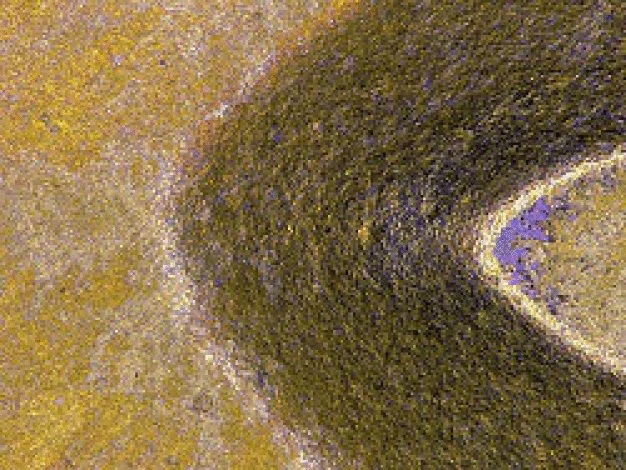
Coating Degraded Surface (c) Wammes & Partner GmbH
Dirt, water, bacteria: Touch displays in different industries are exposed to various influences. Customized functional coatings therefore undeniably have their justification. However, it is not enough to have a coating alone. New dependencies between system and components arise, which must be reevaluated in their entirety. The Electronic Displays Center shows what is often overlooked.
"Dust generated during manufacturing processes can scratch the display or render it completely unusable. In humid environments, mold can develop inside. Coatings not only make displays more robust and less susceptible to external influences and vandalism. Under certain conditions, they can even protect against diseases. For example, in medicine, when many fingers are working on the same device. More abstractly, the interaction of components in a display can be compared to a car: if the glass is replaced with armored glass, bumpers, brakes, and others must also be adjusted," says Klaus Wammes, managing director of Wammes & Partner GmbH and one of the drivers behind the idea of the Electronic Displays Center in Gundersheim.
According to the expert, the combination of installed elements must be reevaluated and adapted each time a change occurs. Replacing parts under the motto "old for new" is not straightforward. For example, the impractical ITO layer (Indium Tin Oxide) used for curved and new flexible displays is replaced by silver or carbon nanotubes for touch sensors. However, if the special properties are ignored, this can lead to misinterpretations, as the evaluation algorithm can no longer understand the user's commands. While this has no serious consequences for tablets, smartphones, and other commodity displays or systems, in industrial applications, neglecting latency times or ghost touches—touch signals misinterpreted by the controller or algorithm without actual user input—can lead to serious errors. The seemingly universal PCAP (Projected Capacitive) solution must therefore be reinitialized, recalibrated, or updated after an additional or modified coating.
The main problem for coated displays is often external influences: for example, (dirt-) fingers, moisture, dust, and dirt. Mainstream products are also affected, as staingate.org shows. The algorithm in the microcontroller, the brain among the installed components, must therefore be able to recognize whether a command comes from a touch or whether interference factors are shifting charges. The higher the artificial intelligence and processing speed of the controller, the better and safer the touch sensor. It is therefore helpful for it to know how many touches or charge shifts need to be detected and evaluated simultaneously. It also needs to distinguish whether the detected signals actually originate from fingers—that is, are intentional—or come from external influences such as moisture or water, dirt, electric fields, electromagnetic radiation, or unstable mass concepts. In tactical or gaming applications, algorithms must be capable of recognizing up to 50 simultaneous touches. Ordinary display applications, on the other hand, only need to calculate two touches at the same time: for selecting, swiping, rotating, and zooming.
Wammes & Partner GmbH
67598 Gundersheim
Germany