

- Planning
- Translated with AI
Ronny Töpfer
Avoid planning errors during cleanroom construction
How project details and interfaces are clarified with the trades in advance
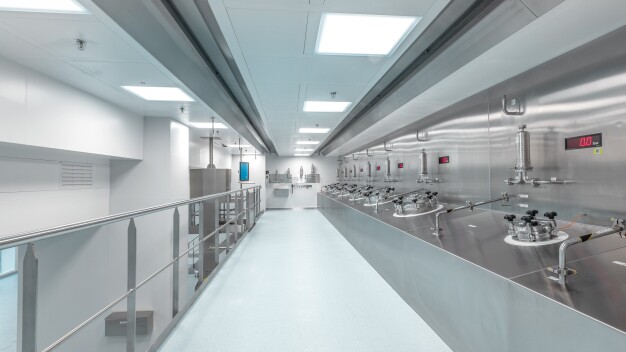
Floor joint, wall penetration, or display integration: In the cleanroom, every detail must be carefully considered. (Copyright: Jens Distelberg)
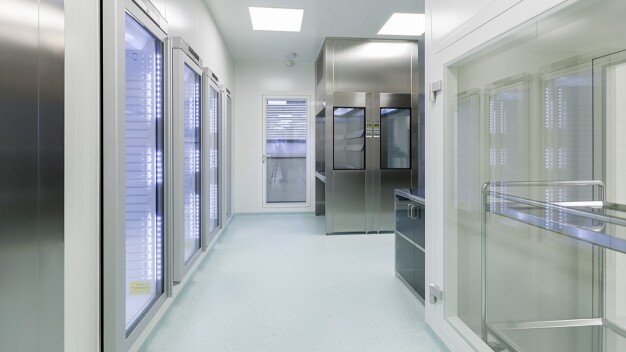
(Copyright: Jens Distelberg)
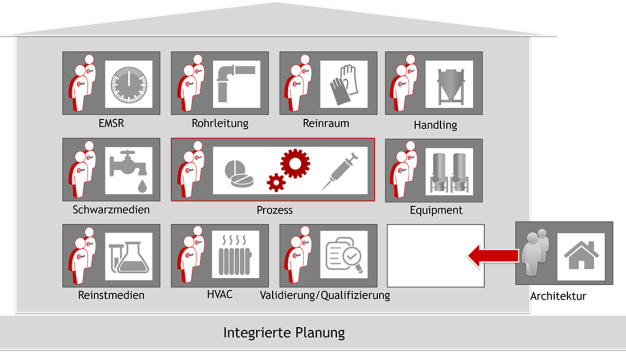
The cleanroom planning should be understood as part of the integrated planning from the process to the finished factory. (Copyright: Glatt)
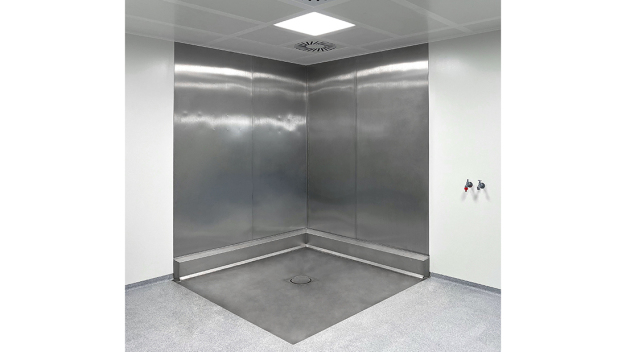
Fully welded and without silicone joints: The cleanroom wash station is completely maintenance-free. (Copyright: Glatt)
The first step for the smooth success of any cleanroom project is to define the technical specifications, URS (User Requirement Specifications), standard operating procedures, and other customer-specific documents as early as possible. Current GMP regulations and country-specific requirements must also be known so that engineering can consider all needs.
Once the requirement catalog is established, the real challenge begins: the coordinated interplay of different trades. Cross-disciplinary agreements with cleanroom experts at regular and tightly scheduled intervals are absolutely necessary. After all, all elements must meet strict requirements—from electrical installations to furniture and all installations that directly contact or penetrate walls, ceilings, or floors.
Uncoordinated procedures, on the other hand, can quickly lead to costly rework and re-planning, where the devil is in the details: for example, if non-cleanroom-compliant installations are carried out, they may need to be dismantled again. These can include small elements like sockets, monitors that are not flush-mounted, or process technology of various kinds. In the worst case, compromises must be made that are less suitable for cleanroom use. Cross-trade and interface-reduced planning, however, minimizes conflict potential with other trades and reduces time and costs.
Whether floor joint or wash station: all details are in focus
In the cleanroom, every installation must be well thought out. For example, surface: Good cleanability is just as important as resistance to disinfectants, cleaning agents, and process materials. This is reason enough to minimize the number of joints in the cleanroom. Considering this already during planning allows wall elements to be precisely planned and process equipment to be installed exactly.
By choosing the system wisely, for example, "wall against ceiling" or "ceiling against wall," the number of joints can be further reduced. Installations such as fully welded, surface- and floor-mounted wash stations without maintenance joints in the cleanroom or custom-made stainless steel furniture for perfect integration into the room and process conditions are prime examples of successful planning.
The choice of flooring material should also be deliberate. Whether PVC, terrazzo, or epoxy resin, each material has different properties. Therefore, the requirements of the specific project are decisive. For example, in wet areas, slip resistance plays a crucial role. Degree of wear or conductivity are additional criteria that influence the selection.
Which cleanroom class is to be realized, how many employees will pass through the personnel airlocks, and what the material flow plan between areas looks like are just some of the questions that must be defined in advance by the client with the executing project planner for smooth project execution. Close, cross-disciplinary planning is essential for this. At Glatt, all involved trades (HVAC, EMSR, process, black and clean media) are available in-house.
The right selection of wall elements is the first step. Among the many different cleanroom wall types, double-shell cleanroom elements (single-shell for exterior walls) or sandwich elements, so-called monoblock elements, are recommended for interior walls. Alternatively, for lower cleanroom classes (e.g., NC), drywall walls, such as those with a suitable two-component coating, can also be used. However, a higher level of dirt ingress during construction or renovation must be anticipated here.
Monoblock constructions with an insulating core and surface-finished metal deck layers firmly bonded on both sides are recommended. The deck layer mainly consists of galvanized steel sheets with PE coating. Wall elements can be manufactured up to six meters high without horizontal joints or crossbars, depending on the supplier. Cuts on site should generally be avoided due to better manufacturing tolerances at the factory.
Media and electrical lines are now standardly integrated into wall systems. To do this seamlessly, a wall thickness of at least 80 mm has become established. Doubling the wall thickness or even creating a separate technical area are also options. Horizontal and vertical cable and media channels with revision access, as well as conduit pipes, flush-mounted boxes, and other supply lines, can be integrated during planning and manufacturing. Retrofitting various media later remains limited.
Maintenance-free wash station – perfect for the cleanroom
Sometimes, elements need to be developed, constructed, and manufactured specifically. Cleanroom wash stations are a good example. They should be implemented as fully welded variants made of high-quality stainless steel and completely free of silicone joints. This ensures complete maintenance freedom. At the same time, the wash station is very easy to clean and resistant to all common disinfectants and cleaning agents used in the pharmaceutical sector. Flexibility is also demonstrated during installation: it can be integrated into almost all standard frameworks of the most common cleanroom manufacturers. The same applies to connection to existing ceiling systems. Media connections and conduits can also be integrated to accommodate, for example, hose fittings or water taps at the wash station. Additionally, the room can be traversed with heavy equipment. It is approved for high mobile loads and has a shock- and impact-resistant bumper. This is ensured by backfilling with concrete. Cleanroom wash stations can be designed with or without slopes – installation itself is quick.
Doors in the cleanroom: contaminants stay outside
Another important aspect of planning is doors or door systems. The most common variants are swing doors, sliding doors, and roller shutters. Single- or double-leaf swing doors are usually made of aluminum profile construction with a powder coating and should be flush-mounted into the partition wall. Fully glazed doors are not suitable if material transport is the priority (risk of injury in case of glass breakage). Cleanroom sliding doors now reach a high technical level, including overall tightness, but should only be used in particularly tight spaces, as they are more difficult to clean than, for example, swing doors. The cost of an automatic sliding door, which should be lockable, is also higher. Cleanroom-compatible roller shutters are more expensive than swing doors but are a real alternative in tight spaces and with frequent use: both the outer material (housing the mechanism) and the tightness of cleanroom-grade versions meet all requirements and operate reliably.
Maintain visibility with glazed elements
Glass elements serve communication and the well-being of employees at the workplace, allowing overview and natural light entry. Therefore, windows should be considered generously in the layout from the very first planning phase, with their exact location and size still adjustable. Integration into the cleanroom walls should be based on the grid to avoid many different wall sizes. Material pass-throughs can have different sizes and designs depending on their purpose and can be actively ventilated or passively designed. Their integration into the cleanroom walls should always be flush with the cleaner side and based on the grid.
Ensure smooth planning interfaces
An important and often critical point is the smooth execution of assembly processes after the complete engineering of a cleanroom project. Working with an experienced partner who has successfully implemented many small, medium, and large projects across various industries and cleanroom classes, and who can coordinate all trades on site without exception, greatly increases the chances of success. Glatt Engineering has already realized many cleanroom projects of all classes, from a few hundred square meters to several thousand square meters each. No two projects are the same. Thanks to the multitude of projects—from small renovations to large pharmaceutical facilities—the expert team can draw on extensive experience and proactively plan to avoid errors or deficiencies from the outset.
Originally published on process.vogel.de, Vogel Communications Group

Glatt Ingenieurtechnik GmbH
Nordstraße 12
99427 Weimar
Germany
Phone: +49 3643 471600
Fax: +49 3643 471271
email: jan.kirchhof@glatt.com
Internet: https://pharma-engineering.glatt.com/de/