

- Dienstleistung
- Vertaald met AI
Markus Hansel
Testdeeltje volgens VDA 19 - Bepaling van de gevoeligheid van componenten voor partikulaire verontreinigingen
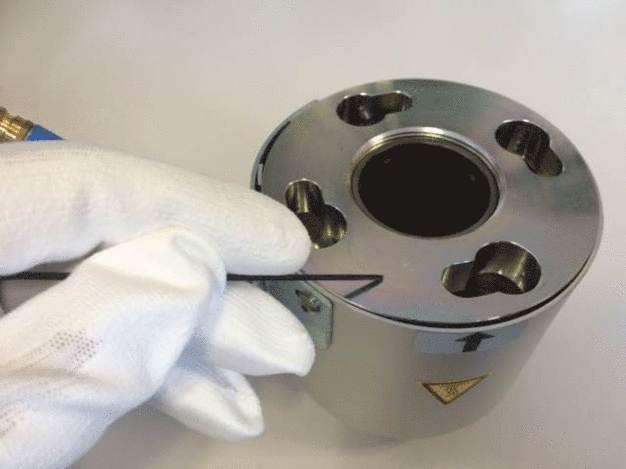
Gerichte Kontamination von Bauteilen mit Normpartikeln
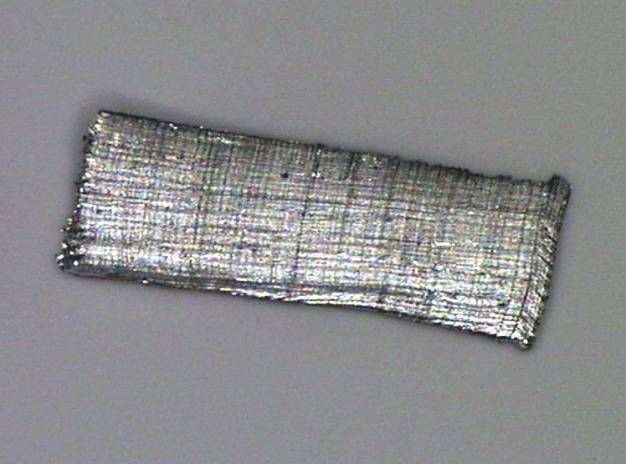
Normonderdelen van aluminium
Continuously more compact components, higher power densities, lower emission values, safety systems, driver assistance systems, lower fuel consumption are some of the buzzwords in the modern automotive sector. And all of this with decreasing manufacturing costs? An ambitious goal, which has nevertheless been impressively implemented and is being implemented by international automakers and their suppliers in recent years. In this context, technical cleanliness according to VDA 19 / ISO 16 232 is playing an increasingly prominent role.
The miniaturization of vehicle components, often required to achieve the above-mentioned goals, hints at this necessity. But how much dirt can a component tolerate? Which particle sizes ultimately lead to impaired function or even failure? While the answer to this question seems straightforward in the field of vehicle electronics—namely, that the length of an electrically conductive particle should not exceed the smallest conductor track spacing of an electronic component—the solution is often much more complex. For example, if a particle whose length exceeds the distance between two open conductor tracks causes a short circuit, then two particles, each with a length that is half the conductor track spacing, are equally capable of impairing the function of the electronic component. Similar considerations apply to the flow of media in fluid-conducting systems. If a particle aligned in the flow medium, based on its length, can pass through a constriction significantly smaller than its maximum extension, then the same particle, when oriented differently, could cause severe damage. And what happens when many particles, which are significantly smaller than a constriction in a hydraulic system, pass through it simultaneously? One of these particles could pass unhindered, while many particles together could cause damage in this example. These considerations clearly illustrate how complex the question of dirt tolerance in functionally relevant automotive components truly is. Developers and designers are often asked to specify cleanliness requirements for individual components of relevant assemblies. Often, proven reference values are adopted. In many cases, secondary considerations are made whether a particularly high cleanliness requirement is even necessary for the current project. Sometimes, the cleanliness requirements of a previous project are even increased, as a safety measure. The requirements created in this way not only drive suppliers to despair but also significantly increase the manufacturing costs of the parts. The potential for savings through the use of realistic cleanliness requirements is particularly large.
Determination of particulate limits through damage particle tests
But how can one determine at what amount of dirt, particle size, or particle dimension a damage potential arises against the component? For the particulate limit determination, the recently published second revised edition of Volume 1 of VDA 19, Chapter 2, provides very helpful information. These range from the evaluation of design measures, simulations, to comparisons with similar applications. A very significant and highly realistic approach is offered by the limit determination method described in the aforementioned VDA volume, using damage particle tests. In this method, a component is subjected to particles of increasing size and increasing quantity until it shows initial impairment of its function or until the particle load leads to complete failure of the part. The insights gained in this way, regarding the robustness of a component against particulate contamination, are extremely realistic. Today, users have access to particles for damage particle tests that correspond in size classes to those listed in VDA 19 / ISO 16 232. Thus, a VDA 19-compatible method is available to establish very realistic limit values and, consequently, meaningful cleanliness specifications. The company Marhan – Normpartikel has established itself in recent years as a manufacturer of these valuable particles. Here, users receive not only test particles in different sizes and materials but also comprehensive and expert advice on their versatile applications.
Targeted contamination of original components with standard particles
As a leading service provider for standard particle-related applications, Marhan also offers contamination of original components supplied by customers with standard particles. This service is of particular interest for testing technical cleanliness. It provides the user with a defined contaminated original of their components for the first time. This enables the inspector to determine suitable extraction parameters directly from the component in a very realistic manner. The determination of appropriate fluid quantities, ultrasound settings, temperatures, and times for extraction was previously only possible through a decay test according to VDA 19. Particles that adhere to unfavorable locations on a component may, under certain circumstances, remain attached even after the sixth extraction process during the standard decay curve determination. Consequently, these particles would not be detected during a cleanliness inspection. This potential error can be minimized or even eliminated by directly determining the extraction parameters from the component. Together with the extraction standard developed by Marhan – Normpartikel, the overarching goal is to increase the comparability of cleanliness test results, thus bringing us a significant step closer to more reliable standards.

BIDAG Technologies GmbH & Co. KG
Zum Bolzenbach 7
35236 Breidenbach
Duitsland
Telefoon: +49 6465 4380
Fax: +49 3222 3190149
E-mail: info@bidag.de
Internet: https://www.bidag.de