


- R+D & Community of Interest
- Translated with AI
The next industrial revolution comes from nature
Combining processes, principles, and materials from nature and their systematic application in engineering is a new trend in the manufacturing industry.
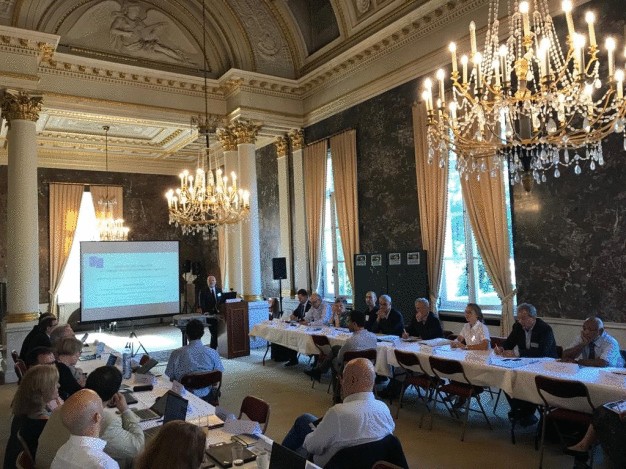
Maurizio Gattiglio, Co-Chair of the ManuFUTURE High Level Group and Deputy Chairman of Prima Electro.
Under the motto "The Future of Sustainable Value Creation Systems" the European Technology Platform ManuFUTURE and the Fraunhofer Society held a workshop on the Biological Transformation of Europe's manufacturing industry in Brussels. About 40 experts from industry, politics, and research discussed how materials, structures, and processes inspired by nature can sustainably shape manufacturing in the future. Simultaneously, the European Commission published an initial draft of the "Strategic Plan" for the upcoming research framework program "Horizon Europe," which also addresses bio-inspired and bio-integrated manufacturing processes as well as information-based technologies inspired by nature and biology.
The manufacturing industry, with 36 million direct and about twice as many indirect jobs, is an important pillar of the European economy. At the same time, industrial products are the third-largest contributors to greenhouse gas emissions and are causally involved in the depletion of natural resources, environmental pollution, and the loss of biological diversity. To meet the goals of the Paris Climate Agreement while maintaining and creating jobs in Europe, disruptive yet sustainable technologies are needed. "We must not lose time; we need to act now," said Professor Thomas Bauernhansl, head of the Fraunhofer Institute for Production Technology and Automation IPA, at the workshop on Biological Transformation in Brussels. "New bio-intelligent manufacturing concepts will help address the societal challenges we are increasingly facing." Bio-based innovations will play an important role in various industries in transitioning to a functioning circular economy. "Using bio-waste or renewable raw materials to produce chemicals, pharmaceuticals, packaging, or various consumer goods is just the beginning on the path to a climate-neutral circular economy, where bioeconomy already plays an important role today," explained Dr. Markus Wolperdinger, head of the Fraunhofer Institute for Interfacial Engineering and Biotechnology IGB.
The Biological Transformation
At the ManuFUTURE workshop in Brussels, Professor Bauernhansl and Dr. Wolperdinger presented the three stages of development of the Biological Transformation, which are the result of a broad scientific study with German companies: bio-inspired, bio-integrated, and bio-intelligent.
In the first step, bio-inspiration, biological principles and phenomena that have developed through evolution are transferred to value-adding systems: resulting in novel materials and structures (e.g., lightweight construction), new functionalities (e.g., biomechanics), as well as new organizational and cooperation solutions (e.g., swarm intelligence). The second step, the bio-integration phase, explained Maurizio Gattiglio, deputy chairman of ManuFUTURE, using the example of self-healing materials, where biological processes are integrated into manufacturing processes or products. The third stage is what researchers call bio-intelligence or the convergence of biology, IT, and engineering.
During the workshop, experts developed initial contributions for the Commission's strategic plan, described the potential of the Biological Transformation for Europe, and formulated recommendations for possible funding priorities and accompanying political measures. The discussions mainly focused on how biological transformation will impact the sustainability of industry and Europe's technological sovereignty.
The "Strategic Plan" for "Horizon Europe"
The ManuFUTURE workshop was conducted in preparation for the Strategic Plan for the upcoming research framework program "Horizon Europe." On June 28, 2019, the European Commission published a provisional version of this plan, which is now to be reviewed through an extensive and intensive consultation process with stakeholders. The plan aims to reflect current trends and challenges and will define the thematic pillars of "Horizon Europe" for the first four years, serving as a guide for developing work programs and calls for proposals. The biological transformation of manufacturing is an important part of this future vision.
The results of the workshop will now be summarized in a working paper and made available to the Commission in September 2019. In the fall, the topic of Biological Transformation will be a key focus at the "Research and Innovation Days" of the Directorate-General for Research and Innovation in Brussels (September 24-26, 2019) as well as at the "ManuFUTURE 2019 Conference – Sustainable Smart Manufacturing" in Helsinki (September 30 to October 1, 2019).

Fraunhofer-Institut für Produktionstechnik und Automatisierung IPA
Nobelstraße 12
70569 Stuttgart
Germany
Phone: +49 711 970 1667
email: joerg-dieter.walz@ipa.fraunhofer.de
Internet: http://www.ipa.fraunhofer.de