



- ANNEX 1
- Translated with AI
The new Annex 1 and the requirements for airflow and their visualization
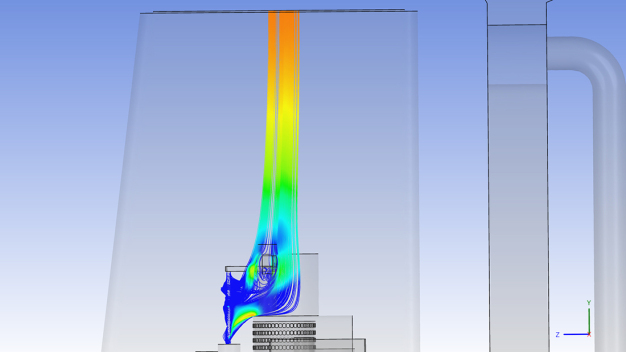
Figure 1: Disruption of a filling needle by primary air in an isolator. The left image shows the detection within the framework of a CFD simulation (design), and the right image shows the detection during flow visualization on the real system as part of qualification.
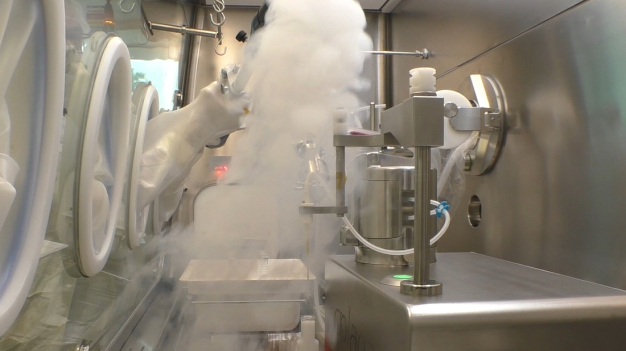
Figure 1: Disruption of a filling needle by primary air in an isolator. The left image shows the detection within the framework of a CFD simulation (design), and the right image shows the detection during flow visualization on the real system as part of qualification.
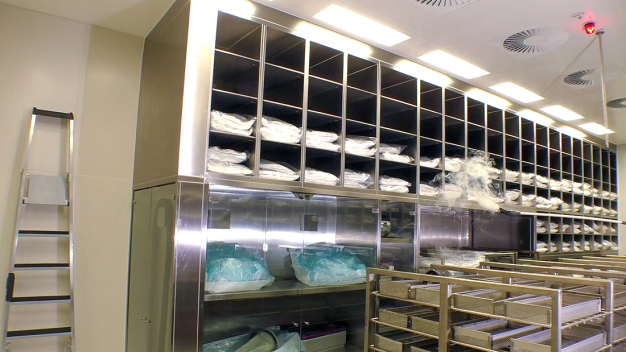
Figure 2: Example of a flow visualization in a turbulently ventilated cleanroom of class B. The inspection and evaluation were carried out here based on VDI 2083 Sheet 34.
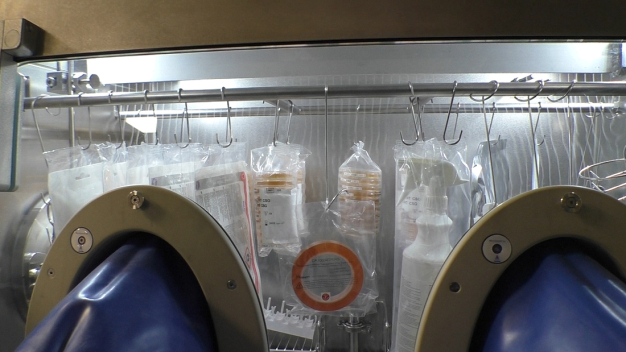
Figure 3: Visualization of the TAV flow in a closed isolator with a current filament lance.
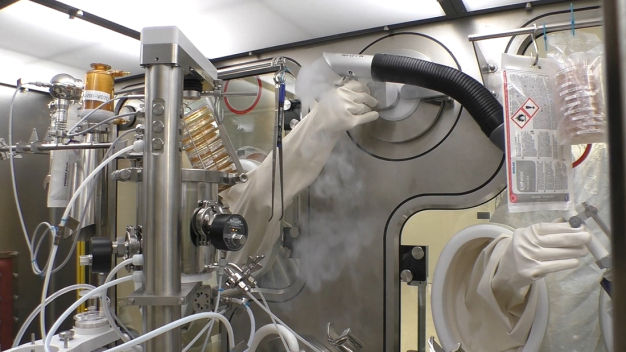
Figure 4: Glove intervention on an RTP (Rapid Transfer Port) of an isolator with flow visualization and fog application above the glove. Additionally, fog is introduced below the glove later in the process.
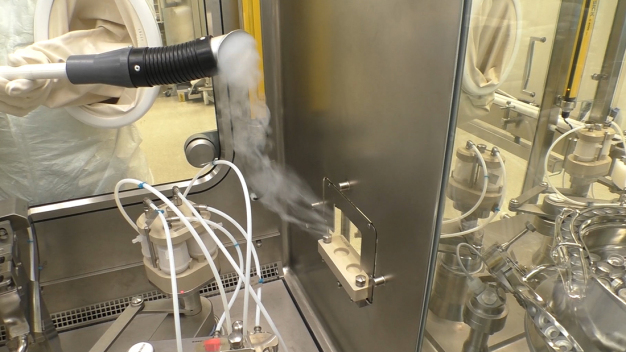
Figure 5: Visualization of the overpressure at the mousehole of an open isolator. Additionally, in the further course of the flow visualization, fog should be omitted on the downstream side of the mousehole and checked whether fog penetrates into the isolator.
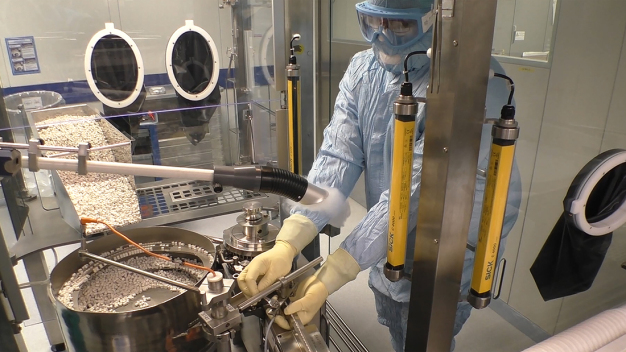
Figure 6: Visualization of a personnel intervention with an open door at a RABS. Fog task on the operator's clothing.

Michael Kuhn
In August 2022, the new and completely revised Annex 1 to the EU GMP Guide was published, featuring many new requirements for airflow and airflow visualization. These are discussed individually in this white paper.
The Annex 1 to the GMP Guide1 (hereinafter referred to as the new Annex 1) was published anew in August 2022. The old version from 2008 was comprehensively revised across all subject areas. This results in new requirements for cleanroom operators. Airflow visualization and air movement have gained much greater importance through the revision and are therefore more prominently featured during GMP inspections.
The increasing importance of airflow is also evident from the fact that the old version of Annex 1 briefly addressed the topic of airflow in three sections, whereas the new Annex 1 deals with the subject in eight sections, some in very detailed manner. The eight newly formulated sections are discussed individually below.
Section 4.4 of the new Annex 1: Requirements for Class A Area
In areas where the cleanroom class A must be maintained, the highest purity requirements in sterile pharmaceutical production apply. There, a directed clean air flow (first air protection, see Figure 1)² should surround the protected area. This is also referred to as TAV airflow³. This airflow pattern must be demonstrated throughout the entire A-area. This is done during qualification. Both "at rest" and "in operation" conditions are to be tested. In the old version of Annex 1 from 2008, the validation of laminar airflow was still mentioned. Fortunately, this terminology has been changed, as laminar airflow (without turbulence) practically does not occur and cannot be validated.
Quote from Annex 1, Section 4.4:
Class A: The critical zone for work processes with high risk (for example, aseptic process line, filling area, stoppers, open primary packaging, or for the production of aseptic connections under the protection of the supply air directly after the filter (first air)). Usually, such conditions are ensured by a directed airflow, such as through workstations with directed airflow within RABS or isolators. The maintenance of a directed airflow should be demonstrated and qualified for the entire Class A area. Direct interventions by personnel into the Class A area (for example, without protection by barriers and glove connections) should
be minimized through the design of the premises, equipment, process, and procedures.
Section 4.15 of the new Annex 1: General requirements for cleanrooms and clean zones
- Section 4.15 generally describes airflow visualization. New is, among other things, that this is fundamentally also applicable to cleanrooms (see example in Figure 2) and not only to TAV areas. The scope of visualization depends on the contamination risk. Examples of contamination sources are listed:
- Floor (where particles can settle)
- Operating personnel (e.g., cleanroom clothing of personnel)
- Equipment (e.g., moving parts that generate abrasion)
The following points are also addressed in Section 4.15:
- What should be visualized?
- What requirements must be met?
- How should visualization be carried out and documented?
- How to proceed in case of deviations?
Quote from Annex 1, Section 4.15:
The airflow within cleanrooms and zones should
be visualized to demonstrate that air does not flow from areas of lower cleanliness classes into areas of higher cleanliness classes and that air is not directed over less clean areas (e.g., over the floor) or over operating personnel or equipment that could carry contaminants into areas of higher cleanliness classes.
If unidirectional airflow is required, visualization studies should be conducted to demonstrate compliance (see Sections 4.4 and 4.19). When filled, sealed products are transferred through a small opening into an adjacent cleanroom of a lower cleanliness class, visualization studies of airflow should show that no air from lower cleanliness class cleanrooms enters the area of cleanliness class B. If it turns out that airflow poses a contamination risk for the cleanroom or critical zone, corrective measures, such as design improvements, should be implemented. Airflow studies should be performed both at rest and during operation (e.g., simulating personnel interventions). Video recordings of airflow should be kept. The results of airflow visualization studies should be documented and considered when establishing the plant's environmental monitoring.
Section 4.19 of the new Annex 1: Requirements for Isolators and RABS
The new Annex 1 supports the use of isolators and RABS5 to achieve optimal protection against contamination by operators. Additional requirements for both systems are described in Section 4.19, supplementing Section 4.15. For isolators, a distinction is made between open and closed isolators, as well as underpressure isolators. Open isolators (e.g., isolator with mousehole) and RABS require the highest airflow requirements. The critical area must be protected by first air and TAV airflow (for open isolators and RABS).
Quote from Annex 1, Section 4.19:
a. The design of open isolators should ensure conditions of cleanliness class A with first air protection in the critical zone and a unidirectional airflow that flows over and away from the exposed products during processing.
b. The design of closed isolators should ensure conditions of cleanliness class A with appropriate protection for exposed products during processing. The airflow in closed isolators, where simple work passages are carried out, does not necessarily have to be fully unidirectional. However, turbulent airflow should not increase the risk of contamination of the exposed product. If production lines are integrated into closed isolators, conditions of cleanliness class A with first air protection in the critical zone and unidirectional airflow over the exposed products during processing should be ensured.
The design of RABS should ensure conditions of cleanliness class A with unidirectional airflow and first air protection in the critical zone. A directed airflow should be maintained from the critical zone to the supporting background environment.
Section 4.20 of the new Annex 1 on Isolators and RABS:
Section 4.20 also discusses the impact of glove interventions on airflow within the critical zone (see also Figure 4). This should already be considered during the development of the Contamination Control Strategy (CCS).
Notes:
- Critical glove interventions can already be tested and optimized through CFD simulation during design
- Glove interventions should be considered similarly for RABS (no specific description in Annex 1)
In addition to glove interventions, the airflow conditions at the overflows should be visualized (see Figure 5).
Quote from Annex 1, Section 4.20 regarding Isolators:
a. When conducting the risk assessment for the CCS of an isolator, the following points should be considered among others: ... the effects of glove manipulations that could impair airflow above critical process points ...
b. Investigations of airflow patterns should be conducted at the connection points of open isolators to demonstrate that no air can enter.
When applying RABS technology, the influence of door openings on airflow conditions in the critical zone should also be analyzed. For this, fog should be released at the operator’s cleanroom clothing (see Figure 6) and in the critical zone. The fog must not flow from the person towards the critical zone. The critical zone must continue to be protected by first air. If multiple doors are opened simultaneously, this situation should also be visualized and assessed.
Quote from Annex 1, Section 4.20 regarding RABS:
The background environment for RABS used in aseptic processing should be at least of cleanliness class B, and airflow pattern investigations should be conducted to demonstrate that no air enters during interventions and through door openings (if doors are present).
Section 4.30 of the new Annex 1 on Air Velocity and Airflow
Air velocity is an extremely important factor influencing airflow conditions in a TAV area. Therefore, together with airflow visualization, measurements of air velocities must always be performed. The measured air velocities must fall within the specified velocity range. Generally, deviations from the velocity range of 0.36 … 0.54 m/s, as already defined in Annex 1 in the 2008 edition, are permitted if scientifically justified in the CCS. This allows for energy-efficient operation of TAV areas. STZ EURO recommends verifying the reduction of air velocity through CFD simulation already during design. For cleanroom operators also inspected by the FDA, it is advisable to clarify beforehand whether this approach is also accepted there.
Quote from Annex 1, Section 4.30:
The velocity of air supplied by unidirectional airflow systems should be clearly justified in the qualification report, including the measurement location. The air velocity should be designed, measured, and maintained so that an adequate unidirectional airflow ensures product protection and the protection of open components at the workstation (e.g., where high-risk work processes occur and where the product and/or components are exposed). Unidirectional airflow systems should provide a homogeneous air velocity in the range of 0.36–0.54 m/s (guideline value) at the workstation unless otherwise scientifically justified in the CCS. Visualization studies of airflow should correlate with the measurement of air velocity.
Section 7.18 of the new Annex 1 on Personnel:
The disruptive influences of personnel on airflow are discussed in particular detail in the new Annex 1.
Sections 4.20, 7.18, and 8.16 are dedicated extensively to this topic. When conducting airflow visualization, it is recommended to mark insufficiently performed personnel interventions in the video documentation as training material. Subsequently, the personnel intervention is repeated correctly and documented.
Planning critical personnel interventions can also be supported by CFD simulation during the design phase of the clean air technical system.
Quote from Annex 1, Section 7.18:
Activities in clean areas that are not relevant to production processes should be minimized, especially during aseptic work processes. Personnel should move slowly, controlled, and methodically to avoid excessive particle and organism release through excessive activity. Personnel performing aseptic tasks should always adhere to aseptic techniques to prevent changes in airflow that could introduce lower-quality air into the critical zone. Movement near the critical zone should be limited, and obstruction of unidirectional airflow (first air) should be avoided. The visualization of airflow studies should be considered as part of the training program.
Section 8.16 of the new Annex 1 (Planning of Personnel Interventions):
All impacts on airflow, critical surfaces, and products should be considered when planning interventions.
Quote from Annex 1, Section 8.16:
An approved list of permissible and qualified interventions, both needed and corrective, that may occur during production, should be available (see Section 9.34). Interventions should be carefully planned to ensure that the risk of contamination of the environment, process, and product is effectively minimized.
Section 9.4 of the new Annex 1 on Sampling Points
A final note on airflow visualization can be found in Section 9.4 of the new Annex 1. When determining sampling points for environmental monitoring, the results of airflow visualization should be considered. Additional brief notes on airflow and visualization are available for specific topics such as hot air sterilization, freeze-drying, and blow-fill-seal filling processes.
Quote from Annex 1, Section 9.4:
A program for environmental monitoring should be established and documented... Risk assessments should be conducted to establish this comprehensive environmental monitoring program... The risk assessment should include the determination of critical monitoring points... Other information such as airflow visualization studies should also be considered.
Summary
- Airflow conditions in clean areas and cleanrooms and their visualization are of significant importance in the new Annex 1 of 2022.
- The eight newly formulated sections in the new Annex 1 are discussed in this white paper. In the 2008 edition, airflow and visualization were only described in three sections.
- The VDI 2083 Part 3 (August 2022) comprehensively describes the topic of airflow visualization. There is a broad agreement with the new requirements of Annex 1. The guidance and acceptance criteria described in the VDI guideline can therefore be used for conducting and evaluating airflow visualization.
- Clean areas and cleanrooms can already be optimized during design using CFD simulation to meet the requirements of the new Annex 1. CFD simulation can be helpful for questions such as:
- Impact of door openings on airflow in the critical zone and overflows
- Impact of glove interventions in the critical zone
- Positioning of sampling probes
- Determining measurement locations for air velocity measurements, etc.7
Author
Dipl.-Ing. (FH) Michael Kuhn, together with Benjamin Pfändler, leads the Steinbeis Transfer Center for Energy, Environment, and Cleanroom Technology (STZ EURO) in Offenburg.
He has contributed as chairman to the guidelines VDI 2083 Part 19 (Cleanroom Tightness) and VDI 2083 Part 4.2 (Energy Efficiency). Most recently, he helped develop the new VDI 2083 Part 3. Until 2019, he was a lecturer for cleanroom technology and ventilation technology at the Offenburg University of Applied Sciences and the University of Northwestern Switzerland. He is also a publicly appointed and sworn expert for air and climate technology, especially cleanroom technology.
Note:
The quoted excerpts from the new Annex 1 were taken from the current GMP Advisor (GMP Verlag Peither AG).
Sources:
1 The Rules Governing Medicinal Products in the European Union, Volume 4, EU Guidelines for Good Manufacturing Practice for Medicinal Products for Human and Veterinary Use, Annex 1, Manufacture of Sterile Medicinal Products GMP = Good Manufacturing Practice
² First air refers to filtered air whose flow has not been interrupted before contact with the exposed product and product-contact surfaces, preventing contamination before reaching the critical zone.
³ TAV = Turbulence-Reduced Displacement Airflow
4 VDI 2083 Part 3:2022-08, Cleanroom Technology - Measurement Technology
5 RABS = Restricted Access Barrier System
6 CCS = Contamination Control Strategy
7 Additional examples can be found in the white paper "Flow Simulation" by STZ EURO at www.stz-euro.de/aktuelles/veroeffentlichungen/

STZ EURO Steinbeis-Transferzentrum
Energie-, Umwelt- und Reinraumtechnik Offenburg
Badstraße 24a
77652 Offenburg
Germany
Phone: +49 781 20354711
email: mkuhn@stz-euro.de
Internet: http://www.stz-euro.de