


- R+D & Community of Interest
- Translated with AI
The filmic-chemical surface cleanliness must become measurable
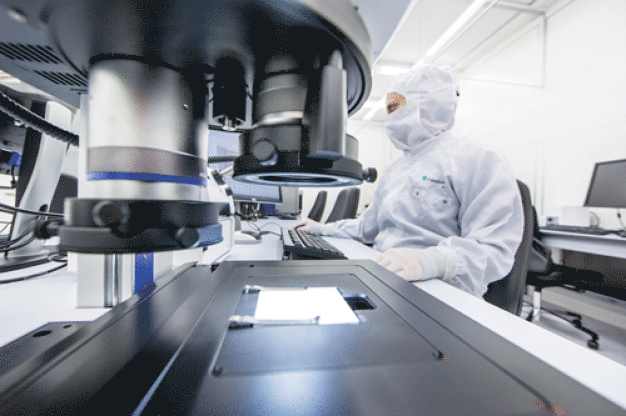
Microscopic particle analysis according to VDA Volume 19.1. (Source: Fraunhofer IPA)
In today's times, the surface and its cleanliness increasingly determine the quality of components: Both in gluing and coating processes, only very small amounts of film-chemical residues on the component surfaces can be tolerated. Since there are currently no uniform standards for how to test and evaluate this surface cleanliness, Fraunhofer IPA is now working with a consortium of industrial companies to develop a nationwide guideline in Germany.
Until now, the term "technical cleanliness" has mainly been limited to contaminants such as dust, fine chips, or fibers as compact particles. Currently, there is a significant expansion of the cleanliness topic, especially in the automotive and supplier industries. "More and more assembly involves gluing, welding, soldering, or coating components to improve surface properties," explains Dr. Markus Rochowicz, Group Leader of Purity Technology at Fraunhofer IPA. However, this only works if the component is not contaminated with fats and oils. "Even the smallest filmic contaminants can lead to serious errors in further processing of the parts," says the expert.
Lack of standards has economic consequences
Determining the cleanliness of components currently causes difficulties across the industry: "So far, it has not been defined what 'free from film-chemical contamination' means. There are neither standardized measurement methods nor limit values," explains Rochowicz. The lack of standards has economic consequences: "Companies want to purchase their components so clean that they can be processed directly. Suppliers have already had to reject cleanliness specifications because they could not prove the required cleanliness," Rochowicz states. Initiated by Mahle AG, a consortium of industrial companies has now commissioned Fraunhofer IPA to develop nationwide guidelines for testing surface cleanliness concerning film-chemical residues. The first meeting with the IPA scientists and the industry consortium will take place on October 20th.
Years of experience in purity technology and surface technology
The Stuttgart-based research institution has many years of experience in component cleanliness testing. "We already developed a German guideline for the technical cleanliness of vehicle components over ten years ago – VDI 19. Currently, we are working on the international counterpart ISO 16232," says Rochowicz. The IPA is also well-equipped for standardizing measurement procedures regarding surface cleanliness concerning film-chemical residues: "With our colleagues from coating systems and paint technology as well as electroplating, we possess the know-how to create such a guideline," Rochowicz is convinced. However, it will still take some time before publication. "Unlike particulate contamination, here testing methods still need to be developed in some cases. Only when results are available can we specify the methods and set limit values," explains the expert.

Fraunhofer-Institut für Produktionstechnik und Automatisierung IPA
Nobelstraße 12
70569 Stuttgart
Germany
Phone: +49 711 970 1667
email: joerg-dieter.walz@ipa.fraunhofer.de
Internet: http://www.ipa.fraunhofer.de