



- R+D & Community of Interest
- Translated with AI
Y. Holzapfel und G. Kreck
Technical cleanliness: Determination of particulate purity - from the automotive industry to medical technology
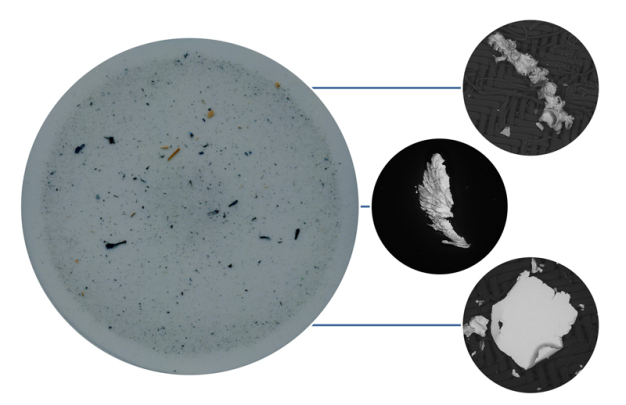
Image 1: Particles extracted from a filter membrane during testing of an automotive component (left) and individual, critical particles (right)
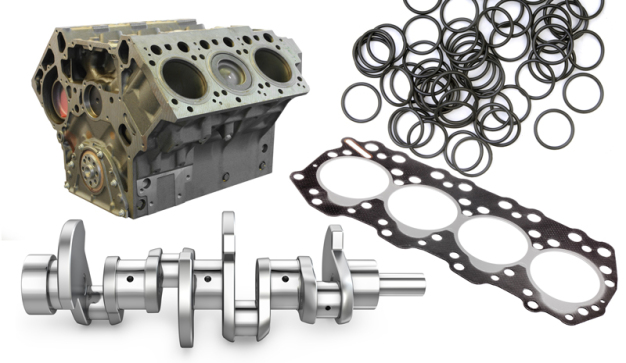
Image 2: Spectrum of different automotive components
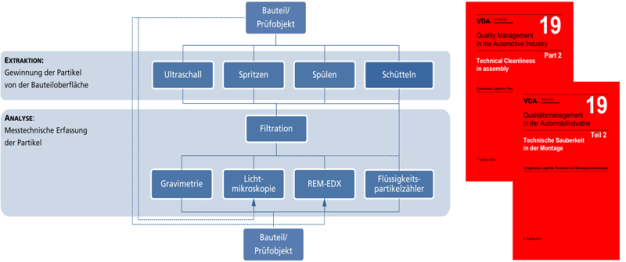
Image 3: Components of a cleanliness analysis (left) according to VDA 19 (right)
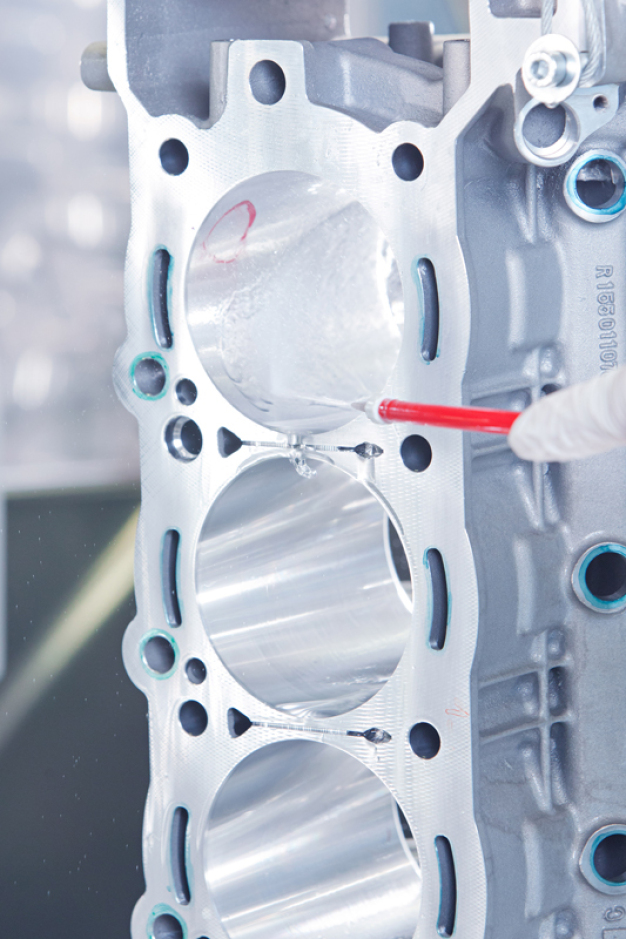
Image 4: Example of an extraction using a syringe
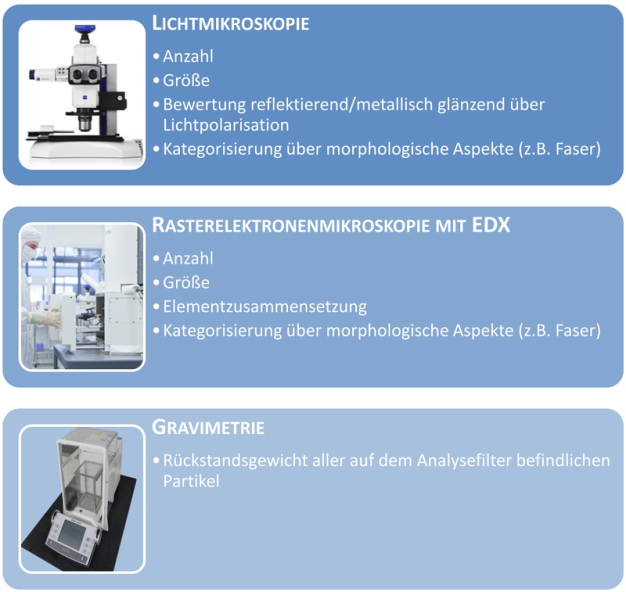
Image 5: Information content of different analysis methods
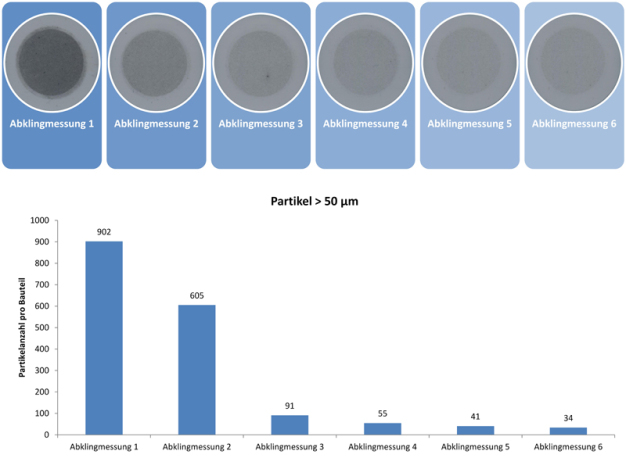
Figure 6: Analysis filter (top) and evaluation of a qualification study (bottom)
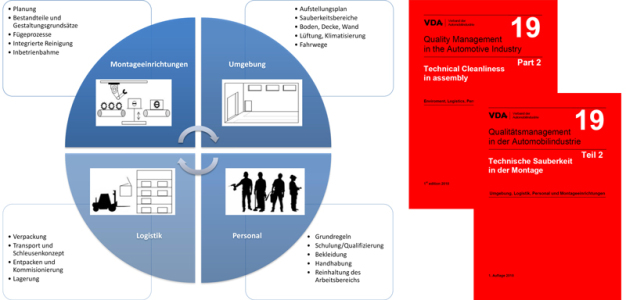
Figure 7: Factors influencing assembly cleanliness (left) according to VDA 19.2 (right)

Image 8: Principle of the tape lift method (left) and the collection of particles with sedimentation traps (right)
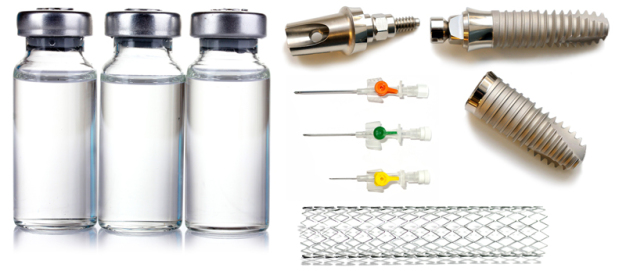
Image 9: Spectrum of different medical technology products
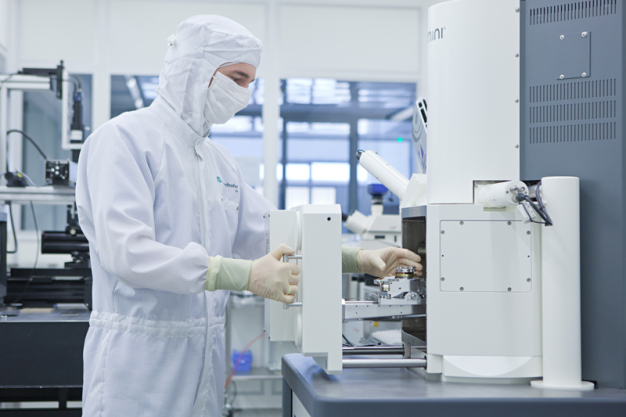
Image 10: Particle analysis under cleanroom conditions

Figure 11: Determination of the cleaning efficiency of cleaning procedures for subsequent comparison
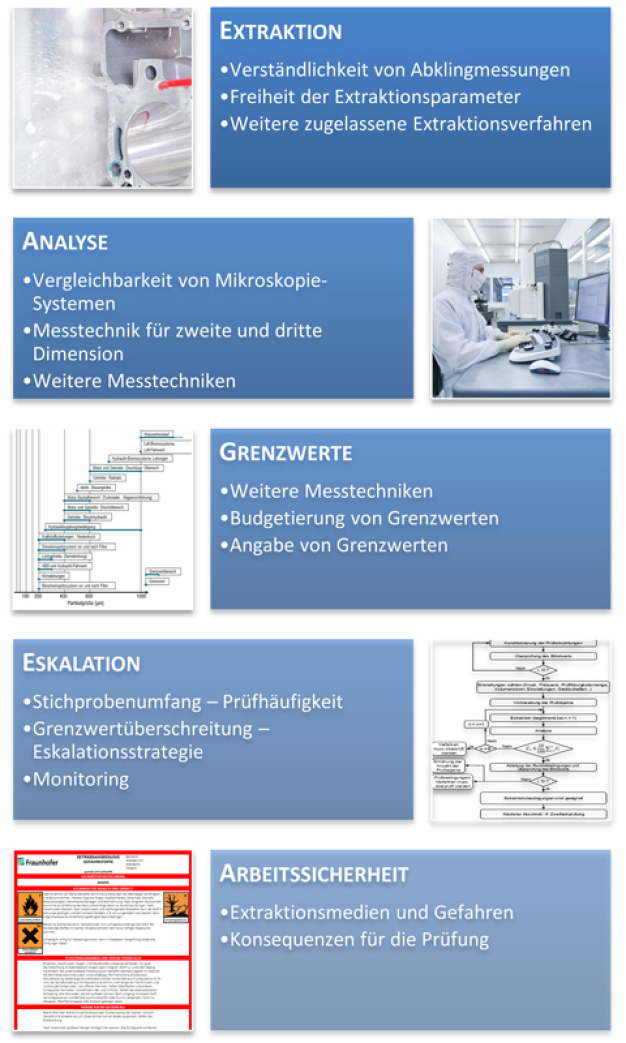
Image 12: Main topics of the revision of VDA 19
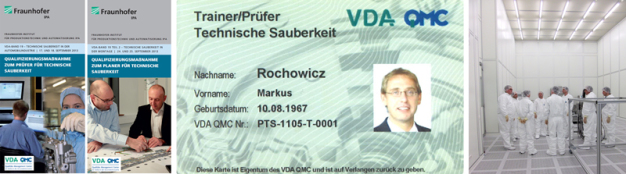
Image 13: Training program for inspectors and planners for technical cleanliness
1. Requirements for Particulate Purity
For integrated circuits manufactured in the semiconductor industry with feature sizes currently up to 22 nm, the high level of required particulate purity is immediately apparent. Particulate purity, meaning the absence of critical particles in the micrometer range, is also an important quality feature for numerous other products across various industries, ranging from the automotive industry, aerospace, to life sciences such as medical technology. The reasons for this are as diverse as the products themselves and include performance enhancement, miniaturization, reliability, and durability, as well as legal requirements and the protection of humans and health [1].
The key areas where particles become critical for a product and thus need regulation may vary from product to product, but there are overlapping questions such as:
• How many particulate contaminants of what size are present on the product?
• What kind of contaminants are they?
• Is it possible to identify the source of the particles?
• To what extent can the cleanliness condition be improved through cleaning techniques?
To clarify these questions, various methods for cleanliness analysis are available, which can generally be used universally.
2. Technical Cleanliness: Cleanliness Analysis in the Automotive Industry
About 15 years ago, the automotive industry faced increasing susceptibility to particulate contamination due to the development of more powerful components, such as common rail injection systems. Hard, metallic particles are particularly critical here (see Figure 1).
The condition describing the absence of function-critical contaminants on relevant functional surfaces is called "Technical Cleanliness" in the automotive industry. To demonstrate the technical cleanliness of components, a cleanliness analysis must be performed. The initially straightforward method of direct inspection to find potential "killer particles" is challenging due to the spectrum and complexity of various automotive components (see Figure 2).
Therefore, an adapted methodology is needed to reliably measure critical contaminants. Under the industry alliance "Technical Cleanliness (TecSa)", a solution to this issue was developed under the leadership of Fraunhofer IPA, involving participating industrial companies. The result was the guideline "VDA Volume 19 Testing of Technical Cleanliness - Particulate Contamination of Functionally Relevant Automotive Parts," which describes in detail the procedures and variants of a cleanliness analysis to determine particulate cleanliness [2]. Essentially, a cleanliness analysis can be divided into two steps (see Figure 3):
1. Extraction, where particles are removed from the relevant component surface using a liquid with different methods (syringes, ultrasound, rinsing, shaking) (see Figure 4), and
2. the actual analysis, which most often begins with filtration to transfer the particles extracted from the component onto an analysis filter. Different methods are available for analysis, such as gravimetry (determining the residual weight) and automated microscopic techniques (light microscopy and scanning electron microscopy combined with energy-dispersive X-ray spectroscopy EDX, see Figure 5).
In addition to the baseline value, which must also be demonstrated for many other analytical determinations, particular emphasis is placed on verifying the suitability of the chosen extraction parameters: Since there are no "standard contaminated components" (components with a uniform, known initial contamination state) on which results of cleanliness analyses with different parameters could be compared, a so-called qualification test or decay measurement is performed, in which the same component is repeatedly subjected to extraction. The goal is to clean 90% of the particle load within six consecutive extraction steps (see Figure 6):
• If this is achieved after the first decay measurement, the chosen parameters can be retained.
• If a decay only occurs after further extraction steps, the parameters are adjusted for subsequent routine tests, e.g., by increasing the extraction duration.
• If no decay is observed, a new decay measurement with presumably more suitable parameters or procedures must be conducted.
3. The Issue of Assembly Back Contamination
The observation that technically clean individual components do not guarantee a clean overall system highlights the need to identify factors influencing product cleanliness during assembly.
These influences were identified within the industry alliance "Assembly Cleanliness (MontSa)" and documented in the guideline "VDA Volume 19.2 Technical Cleanliness in Assembly - Environment, Logistics, Personnel, and Assembly Equipment" [3]. Here, factors such as environment, personnel, logistics, and assembly equipment are examined from the perspective of assembly cleanliness, with the goal of uncovering optimization potential in existing production from a cleanliness standpoint or designing a production process to be inherently cleanliness-appropriate (see Figure 7).
The fundamental principles are:
• "From inside out," meaning that in optimization, the focus should initially be on processes close to the product, and
• "As clean as necessary, not as clean as possible," meaning that moving production into a cleanroom often does not achieve the desired effect of a clean product, as some millimeter-sized, non-airborne assembly debris cannot be transported away by the airflow in the cleanroom.
Identifying particle sources in the assembly environment is therefore an important starting point for optimizations. Methods such as tape lift procedures for surface cleanliness assessment or environmental monitoring with particle fall collectors are used, which can determine sedimenting particles on adhesive pads in different areas of production. Particle fall collectors can also be used to assess the contamination potential of processes (see Figure 8).
For evaluation, the same analytical techniques used in component cleanliness analysis are employed (automated microscopic analysis with light and scanning electron microscopy). Identifying critical contamination sources allows for potential avoidance (e.g., through appropriate design of assembly equipment) or targeted removal (e.g., through integrated cleaning during assembly).
Complementary to this, suitable logistics concepts such as cleanliness-appropriate packaging or appropriate sluice systems are focused on minimizing particle generation and the transport of contaminants.
Another key aspect is personnel, who can significantly influence the cleanliness condition of the product, from the producer to the contaminant remover, in various ways.
4. Application of Methods for Life Science Products
Although the concept of purity has been deeply rooted in the life sciences industry, especially pharmaceuticals, for many decades and is firmly established in relevant national and international regulations and legal requirements, problems related to insufficient purity still occur.
This can be illustrated with medical technology products: Over the past ten years, approximately 250 recalls of medical devices by the "Food and Drug Administration (FDA)" have occurred, about 30% of which were due to contamination [4].
The explanation lies in the currently inadequate verification of particulate cleanliness. The main focus of cleanliness analysis for these products has traditionally been on sterilization verification, which is often mistakenly equated with particle-free conditions. However, since particulate contamination can pose a hazard to the human body—e.g., by exerting toxic or pyrogenic effects—a continuous monitoring and reliable verification of particulate cleanliness should logically be implemented. However, certain deficits are evident, starting with the limit values for particulate contaminants, which are partly derived from pharmacopoeia standards originally applicable to injection and infusion solutions and are now transferred to various medical devices, up to the lack of specific test methods for assessing cleanliness for most medical devices.
Procedures for determining particulate contamination are outlined in various standards, such as [5], [6], [7], [8]:
1. Measurement with liquid particle counters
2. Filtration and manual evaluation with a microscope
The critical step here is the extraction process: to obtain contaminants from the product, methods such as flushing for infusion devices or shaking for elastomeric parts in parenterals are described [6]. The application of this product-specific methodology across the broad spectrum of medical devices (see Figure 9) should not be done indiscriminately without verifying suitability. Only after appropriate validation of the procedure can such an adaptation be meaningfully applied. Validation can be performed in the form of a decay measurement, similar to the procedures described in VDA 19 for automotive components.
Automated systems and analytical techniques for further characterization of particles (e.g., REM-EDX for elemental composition) are also conceivable, especially in tracing the origin of contamination.
5. Cleaning Techniques as an Elimination Strategy
The use of cleaning techniques to remove contaminants is often necessary. Depending on the product and manufacturing process, cleaning at different points in the process can be beneficial, e.g.,
• on individual components that should or must have a certain basic cleanliness from the outset,
• integrated into assembly for directly removing contamination caused by assembly processes, or
• finally on the complete system.
The effectiveness of the cleaning process can be verified through a cleanliness analysis.
When comparing different cleaning methods, a evaluation matrix can be used, considering points such as:
• Investment and operating costs
• Compatibility with the product to be cleaned
• Environmental aspects
• Cleaning efficiency
For assessing the cleaning efficiency of various methods, working with test specimens that allow direct determination of contamination without extraction losses is advisable. These test specimens are contaminated with a tracer according to a defined protocol, followed by analysis using the different cleaning procedures under evaluation. Re-analyzing the amount of tracer remaining on the test specimen then allows for a quantitative calculation of the achieved cleaning efficiency (see Figure 11).
6. Summary and Future Activities
The life sciences industry, especially pharmaceuticals and medical technology, is in a challenging position where all procedures need to be validated. In particular, the methods for particulate cleanliness verification are often lacking suitable proof procedures, which can lead to significantly varying and incomparable results.
The applicability of the VDA 19 approach to purity-critical medical devices has already been demonstrated in several studies [10], [11]. To discuss these aspects and other purity-related questions in dialogue, Fraunhofer IPA is planning an event with a panel discussion scheduled for spring 2014, aiming to identify future research and standardization priorities together with industry.
This approach has already proven successful with the automotive industry: Through ongoing dialogue with relevant partners, VDA 19 is currently undergoing revision, conducted by an industry alliance involving 40 participating companies, to continue reflecting industry needs and requirements based on the state of the art and incorporating insights gained from previous work with VDA 19. This revision is carried out in several working groups, organized thematically (Extraction, Analysis, Limits, Escalation, see Figure 12).
7. Training
An important aspect is motivating personnel responsible for cleanliness-related tasks. Targeted training can raise awareness of various cleanliness issues. In cooperation with VDA QMC, the following training courses are offered:
7.1 Qualification Course for "Technical Cleanliness Inspector" (VDA 19)
Topics:
In the manufacturing of modern vehicles, technical cleanliness of components and assemblies is a key functional quality feature. The "VDA Volume 19 Testing of Technical Cleanliness – Particulate Contamination of Functionally Relevant Automotive Parts" is the first comprehensive standardization document addressing procedures and protocols for characterizing the cleanliness state of products in the automotive industry’s quality chain.
Objectives of the seminar:
In cooperation with VDA QMC, Fraunhofer IPA offers a unique training course for specialists in testing technical cleanliness. Participants will learn to independently interpret cleanliness analyses according to VDA 19, perform tests with state-of-the-art equipment, and document results in compliance with standards.
Target audience:
Employees involved in design, quality assurance, technical purchasing, and sales within the automotive and supplier industries, aerospace, hydraulics, and precision engineering, who perform cleanliness tests or are confronted with the quality parameter "Technical Cleanliness".
Next date:
November 20-21, 2013
7.2 Qualification Course for "Planner for Technical Cleanliness" (VDA 19.2)
Objective of the event:
Participants will be trained to derive and evaluate measures to prevent recontamination based on cleanliness specifications of parts or systems. The development of the guideline and training breaks down the extensive cleanliness planning or optimization process into manageable, discrete packages. By separately addressing influence factors such as environment, logistics, personnel, and assembly equipment, as well as methods for measuring cleanliness influences, participants will learn to systematically approach technical cleanliness in assembly and recognize unnecessary or excessive cleanliness measures to avoid misinvestments.
Target group:
The event is intended for individuals involved in planning and optimizing production regarding technical cleanliness in the automotive and supplier industries, especially assembly planners, process owners, logisticians, or building technicians. It is also suitable for designers, developers, quality officers, or responsible persons overseeing technical cleanliness in customer-supplier relationships. Due to similar cleanliness issues, the training is also relevant for aerospace, hydraulics, and precision engineering sectors.
Next date:
December 3-4, 2013
References
[1] L. Gail, U. Gommel, H.-P. Hortig: Cleanroom Technology, 3rd Edition, Springer, Berlin, Heidelberg, 2012.
[2] Verband der Automobilindustrie e. V. (VDA): Volume 19 Testing of Technical Cleanliness - Particulate Contamination of Functionally Relevant Automotive Parts, 2004.
[3] Verband der Automobilindustrie e. V. (VDA): Volume 19.2 Technical Cleanliness in Assembly - Environment, Logistics, Personnel, and Assembly Equipment, 2010.
[4] U.S. Food and Drug Administration: Recall of Medical Devices. URL: http://www.fda.gov/MedicalDevices/Safety/ListofRecalls/default.htm, accessed June 27, 2013.
[5] European Pharmacopoeia (Ph. Eur.): Methods of Pharmaceutical Technology, Chapter 2.9.19: Non-visible Particles, 7th Edition, 4th Supplement, 2013.
[6] ISO 8536-4: Infusion Sets for Medical Use – Part 4: Infusion Sets for Single Use in Gravity Infusion, 2013.
[7] ISO 1135-4: Transfusion Equipment for Medical Use – Part 4: Transfusion Equipment for Single Use, 2012.
[8] ISO 16671: Ophthalmic Implants - Solutions for Ophthalmic Surgery, 2004.
[9] DIN EN ISO 8871-3: Elastomer Parts for Parenterals and Devices for Pharmaceutical Use – Part 3: Determination of Leached Particles, 2004.
[10] EUMINAfab: Your gateway to micro nano fabrication. URL: http://www.euminafab.eu/, accessed June 27, 2013.
[11] G. Kreck and Y. Holzapfel: Cleanliness Analysis and Precision Cleaning of Purity-Critical Life Science Products. In: 15th VDI Conference "Cleanroom Technology", June 13, 2013.

Fraunhofer-Institut für Produktionstechnik und Automatisierung IPA
Nobelstraße 12
70569 Stuttgart
Germany
Phone: +49 711 970 1667
email: joerg-dieter.walz@ipa.fraunhofer.de
Internet: http://www.ipa.fraunhofer.de