


- Conference
- Translated with AI
PTS – GMP Conference – The Industry Meeting for the Pharmaceutical World
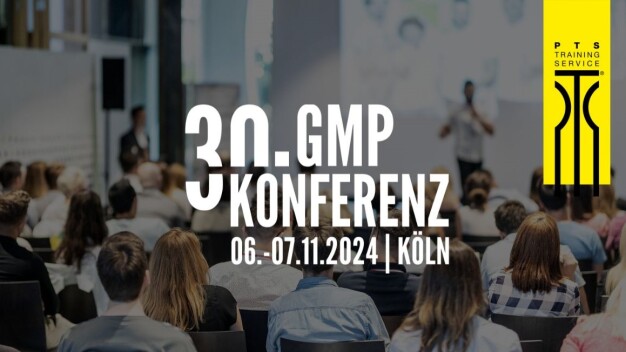
Reflection on the 29th GMP Conference and outlook on the 30th anniversary conference 2024.
In addition to the update on current innovations, there were lectures and discussion rounds on the use of artificial intelligence in the pharmaceutical sector, FDA requirements, measures for supply security, GAMP 5 Second Edition, implementation of Annex 1 and Annex 21, Pharma Law Review, as well as test preparations and highly active substances, remote certification, titanium dioxide, E-Validation, cloud solutions for data archiving, use of smartphones in companies, and the Business Secrets Act.
The 29th GMP Conference also took place in 2023 in a hybrid format, with a live broadcast from the Schlosshotel Bad Wilhelmshöhe in Kassel. The conference was well attended both on-site and online. Reinhard Schnettler, founder and managing director of PTS, opened the conference and introduced the program for the two days. Anna Diehl and Dr. Josef Landwehr moderated the content, which was again presented in varied formats. From keynote speeches to classic lectures, interviews, and live podcasts, to popular formats like Question & Answer sessions and round tables, everything was included. The interaction between in-person and online participants was always monitored and moderated by the PTS team.
Keynote: Can AI replace a QP?
The quite provocative question was posed at the very beginning of the conference by Dr. Jörg Stüben, Boehringer Ingelheim International GmbH. In times of chatGPT, AI avatars, and the use of artificial intelligence in everyday standard applications like Microsoft Office, it is only a matter of time before AI also becomes routine in the regulated pharmaceutical sector.
Currently, the answer to the question is "no," but there is a direct "but": No, according to the current state of development, AI cannot replace a (human) QP, but there is great potential for AI applications, such as in visual inspections and automated processes (document creation, in-process controls, process optimizations). Additionally, AI can support the QP in decision-making through trend analyses, document review, and highlighting similar past cases.
At present, the GMP regulations do not provide guidance on dealing with artificial intelligence, but there is much discussion in this area, so future adjustments are expected. To make the most of AI's benefits, risks associated with too much or too little control must be addressed and balanced. Nevertheless, Dr. Stüben rightly summarized in his closing remarks: "AI has come to stay."
Experiences from FDA inspections and alternative methods
Since the full implementation of the MRA between the USA and the EU at the end of 2019, mutual recognition of inspections for finished pharmaceuticals, active substances, and biotechnologically produced medicines has been in effect. However, as Katja Kotter from Vetter Pharma-Fertigung GmbH explained in her presentation, the FDA still conducts pre-approval inspections (as part of product authorization) in Europe.
As Ms. Kotter emphasized repeatedly, regular internal coordination on the status of preparations and measures is essential when preparing for an FDA inspection. This includes the Form 483, which contains observations and discussion points from the last inspection, as well as the "Pre-Requests" from the inspection team. It must also be clarified which FDA unit (ORA, CDER, CBER, or CDRH) will conduct the inspection, for how long, and under what scope.
In September and October 2023, two new FDA Draft Guidances on Remote Regulatory Assessments were also published. Remote assessments are still not considered inspections and primarily serve to evaluate compliance with applicable FDA requirements.
Supply security, prevention of supply shortages – what is being done?
Thomas Porstner from PHAGRO, the Federal Association of Pharmaceutical Wholesale, addressed the issue of supply security. The Pharmaceutical Supply Shortage Prevention and Supply Improvement Act (ALBVVG), which came into force in July 2023, was intended to provide relief.
However, Mr. Porstner sees a major hurdle in the incomplete exchange of information among all parties involved. He believes resilience and transparency of supply chains must be addressed, including the involvement of active ingredient manufacturers.
His conclusion: The trade in pharmaceuticals is an economic endeavor where business considerations play a significant role. Since the ALBVVG can only make minor adjustments, this intervention by politics or legislation can only achieve moderate success.
Use of smartphones and social media in companies
In a keynote speech, Dr. Ingo Schneider from Castringius Lawyers and Notaries explained the necessity of regulating the use of private smartphones in companies and the private use of work smartphones without exception.
Employees should also be made aware that their private statements and posts on social media could lead to damages claims by the employer if they have a damaging effect on business.
Question & Answer (Q&A) sessions
Following the keynote, Q&A sessions covered the following topics:
– Test preparations regulations and guidelines (Rico Schulze)
– Highly active substances and containment (Dr. Thomas Adam)
– FDA Quality Management Maturity (QMM) (Dr. Christian Gausepohl)
– E-Validation – Experiences and Lessons Learned (Dr. Thomas Menne)
ISPE GAMP5 – Second Edition – Enabling Innovation
Markus Roemer from comes compliance services presented the updates of the second edition of ISPE GAMP 5, published at the end of July 2022. The decision not to create a complete new version (GAMP 6), but rather a second edition of GAMP 5, was based on maintaining the fundamental structure and principles of GAMP 5.
Since the IT landscape has changed significantly since 2008, some adjustments and expansions were necessary in the second edition. These include aspects like Critical Thinking (Chapter 2), Agile Software Development (Chapter 3), and IT Service Management (Chapter 4). The increased use of cloud technologies, software tools, automation, and the growing importance of service providers were also addressed.
Major changes occurred in the appendices M (Management), D (Development), O (Operations), and S (Special Interest). New are the management appendices M11 (IT Infrastructure) and M12 (Critical Thinking), the development appendices D8 (Agile Software Development), D9 (Software Tools), D10 (Blockchain), and D11 (Artificial Intelligence/Machine Learning).
Current GMP innovations
In the popular interview format, GMP inspector Klaus Eichmüller from the Hessian State Office for Health and Care answered questions from Dr. Josef Landwehr of PTS Training Service.
The concept paper on the revision of Annex 11 describes 33 reasons for the update, as the 2011 document no longer reflects the state of the art in some areas. Over the 15 years since the last revision, a significant regulatory need has arisen, especially regarding the compatibility of GMP requirements with AI and machine learning, as already highlighted in the keynote speech.
The consultation period ended in January 2022, and a draft document is expected to be released for consultation in December 2024.
Mr. Eichmüller also shared some interesting experiences from inspections related to Annex 15 and urged companies to review cleaning validation from contract manufacturers and critically assess submitted reports if necessary.
News from Brussels and Berlin
Julia Rumsch from BPI, the Federal Association of the Pharmaceutical Industry, stepped in at short notice for the ill Mr. Brückner and presented the latest news on the revision of EU pharmaceutical legislation, which is needed after 20 years, partly due to technological developments and insights from the Covid-19 pandemic.
Key points of the legislative proposals:
– Shortening the basic document protection to 6 years with possible modulation
– Stricter measures for manufacturers regarding supply shortage management/reports
– Greater focus on environmental risk assessment
– Strengthening digital procedures
– Slimmer EMA structure
– Faster approval procedures / Variations / Rolling Review / Regulatory Sandboxes for new therapies
– Incentives for manufacturing priority antibiotics (so-called vouchers)
The legislative process on these points is planned to start in early 2024.
The EU Supply Chain Due Diligence Act could also be adopted during this legislative period. It is planned to include a matchmaking platform for exchange between member states on shortages and regulations, which should facilitate and accelerate medication exchange.
Under "News from Berlin," Ms. Rumsch provided an update on securPharm, showing that the submissions recorded in the system in 2023 already exceeded the targeted range. The alarm rate remained largely stable, reaching a plateau of about 3,500 alarms. A system is currently being developed to directly address and accurately evaluate an alarm triggered accidentally.
Regarding 3rd Party Audits, an expert panel under VDI is examining the implementation and will issue recommendations. The EU GMP guidelines or ISO documents currently do not adequately consider this.
Annex 1 – Live Podcast
A live podcast was again part of the GMP conference program in 2023. The topic of Annex 1 was discussed by Ruven Brandes, WDT, and Rico Schulze, Saxon State Ministry for Social Affairs and Civic Engagement. Annex 1 came into force on August 25, 2023, after a one-year transition period.
Since Annex 1 now applies not only to sterile medicines but also to non-sterile products, more manufacturers are affected than before. Contamination Control Strategy (CCS) was the main focus of the revision, so wherever contamination prevention is relevant, parts of Annex 1 should be applied and observed.
Other discussion points included Chapter 3 on the Pharmaceutical Quality System (PQS), mentioning two key terms: Risk Management, which forms the backbone of Annex 1, and Senior Management, a term requiring clarification regarding its exact definition.
Round Tables Round 1
The round tables were also conducted in a hybrid format, allowing online participants to be actively involved. Round 1 topics included:
– Implementation of Annex 21 (Rico Schulze)
– Remote certification and approval by the QP (Klaus Eichmüller)
– Deep Dive: Titanium Dioxide (Dr. Daniela Allhenn)
Pharma Law Review: Draft 2023 and possible consequences
Dr. Fatima Bicane from BAH, the Federal Association of Pharmaceutical Manufacturers, presented the long path leading to the draft and the six key objectives, which are:
– Shortages – Availability
– No single market – Access
– Budgets – Affordability
– Environmental Sustainability
– Competitive regulatory framework
– Combat AMR
The first three goals are summarized as the "Triple A Objective."
The implementation of the Triple A Objectives will lead to planned innovations in approval processes.
– Countries will have the option to opt-in, expressing their interest in placing a specific medicine on the market within their country. Within 30 days, the respective country must be involved, which could impact strategic planning for market entry in different countries.
– The approval in the draft also relies on a fourth pillar, requiring an ERA (Environmental Risk Assessment). Insufficient documentation in this area can result in rejection. Recalls and bans may also be triggered by environmental considerations.
– Approvals are intended to be valid indefinitely and no longer limited to five years. The so-called Sunset Clause, which led to approval expiry after non-market presence for three consecutive years, has been removed.
– When an approval is withdrawn by the holder, usually for economic reasons, it should be mandatory to transfer the approval to interested third parties under reasonable conditions ("on reasonable terms") so they can continue manufacturing and marketing.
Round Tables Round 2
The second round table discussed the following topics in depth:
– Implementation of Annex 1 (Rico Schulze)
– Current topics in GMP/GDP inspections (Klaus Eichmüller)
– Cloud solutions for data archiving (Markus Roemer)
Business secrets
In the final presentation, lawyer Dr. Ingo Schneider from Castringius Lawyers and Notaries explained what constitutes a business secret and what measures should be taken to protect it effectively.
Dr. Schneider highlighted the conditions that must be met simultaneously for information to be considered a business secret.
An important point for all attendees was the note that the use of formulations in contracts with employees, customers, or business partners that do not specify concrete content, persons, consequences, or measures—so-called "Catch-All Clauses"—are not effective measures for protecting secrets and are therefore not advisable.
Reflection and conclusion
An overall successful GMP conference was presented in an appealing environment. Besides the fundamental topics always in focus and the innovations from 2023, this year's program covered a broad spectrum of topics. An emphasis on international aspects was achieved through topics like FDA inspections and FDA Quality Management Maturity, as well as interpretations of European developments. Due to current events, attention was also directed toward forward-looking topics such as the use of artificial intelligence in the pharmaceutical sector.
As always, there was space for personal exchange, both in interactive sessions and during the evening program on Day 1. The balance between knowledge transfer and networking was well maintained. The next GMP conference will be the 30th anniversary event on November 6-7, 2024, in Cologne.
Steering Committee
For the design and coordination of the 29th GMP Conference, representatives from Albstadt-Sigmaringen University, the mentioned scientific societies, authorities, and industry are responsible.
This steering committee consists of the following members:
– Pharmaceutical Director Klaus Eichmüller, Hessian State Office for Health and Care
– Reinhard Schnettler, PTS Training Service, Arnsberg
– Dr. Christa Schröder, Albstadt-Sigmaringen University
– Rico Schulze, Saxon State Ministry for Social Affairs and Civic Engagement, Dresden
Conference topics:
– Experiences from FDA inspections
– Supply security, prevention of supply shortages
– Use of smartphones and social media in companies
– GAMP5 Second Edition: Enabling Innovation
– News from Berlin and Brussels
– PharmaReview: Draft 2023 and consequences
– Confidentiality and Know-How Protection
Program
Keynote: Can AI replace a QP?
Dr. Jörg Stüben, Boehringer Ingelheim International GmbH
Lecture: Experiences from FDA inspections
Katja Kotter, Vetter Pharma-Fertigung GmbH & Co. KG
Lecture: Supply security, prevention of supply shortages: What is being done?
Thomas Porstner, PHAGRO Federal Association of Pharmaceutical Wholesale
Impulses: Use of smartphones and social media in companies
Dr. Ingo Schneider, Castringius Lawyers and Notaries
Q&A sessions on the following topics:
Test preparations: Regulations and guidelines
Rico Schulze, Saxon State Ministry for Social Affairs and Civic Engagement
Highly active substances and containment
Dr. Thomas Adam, Bayer AG
FDA Quality Management Maturity (QMM)
Dr. Christian Gausepohl
E-Validation: Lessons Learned
Dr. Thomas Menne, Charles River Laboratories Germany GmbH
Lecture: GAMP5 Second Edition Update
Markus Roemer, comes compliance services
Interview: Current GMP innovations
Klaus Eichmüller, Hessian State Office for Health and Care
Lecture: News from Brussels and Berlin
Julia Rumsch, BPI Federal Association of the Pharmaceutical Industry
Live podcast: Annex 1
Ruven Brandes, WDT
Rico Schulze, Saxon State Ministry for Social Affairs and Civic Engagement
Round Tables on the following topics:
Implementation of Annex 21
Rico Schulze, Saxon State Ministry for Social Affairs and Civic Engagement
Remote certification and approval by the QP
Klaus Eichmüller, Hessian State Office for Health and Care
Deep Dive: Titanium Dioxide
Dr. Daniela Allhenn, BAH Federal Association of Pharmaceutical Manufacturers
Lecture: PharmaReview Draft 2023 & consequences
Dr. Fatima Bicane, BAH Federal Association of Pharmaceutical Manufacturers
Round Tables on the following topics:
Implementation of Annex 1
Rico Schulze, Saxon State Ministry for Social Affairs and Civic Engagement
Current topics in GMP/GDP inspections
Klaus Eichmüller, Hessian State Office for Health and Care
Cloud solutions for data archiving
Markus Roemer, comes compliance services
Lecture: Confidentiality and Know-How Protection
Dr. Ingo Schneider, Castringius Lawyers and Notaries
This year, we welcome you to the anniversary event, the 30th GMP Conference on November 6-7, 2024, in Cologne. We look forward to active discussions and exciting conversations.
More information about the 30th GMP Conference, including all program items and speakers, can be found at the following link: GMP Conference 2024 by PTS Training Service

PTS Training Service
Wir sind die Experten für Schulungen in den Bereichen Pharma, Medizinprodukte und Wirkstoffe.
Am Freigericht 8
59759 Arnsberg
Germany
Phone: +49 2932 51477
Fax: +49 2932 51674
email: info@pts.eu
Internet: http://www.pts.eu