


- Planning
- Translated with AI
Planning competence for laboratories of biosafety levels 3 and 4
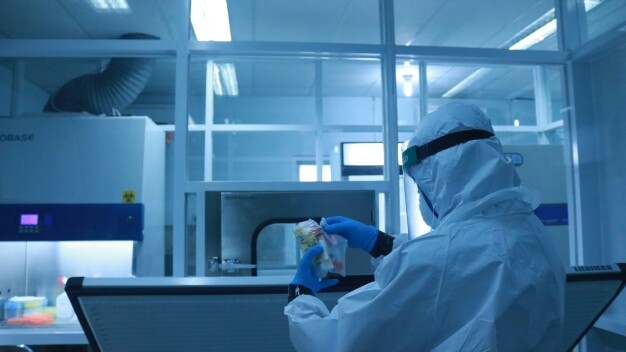
Decontamination: © Mufid Majnun, Unsplash
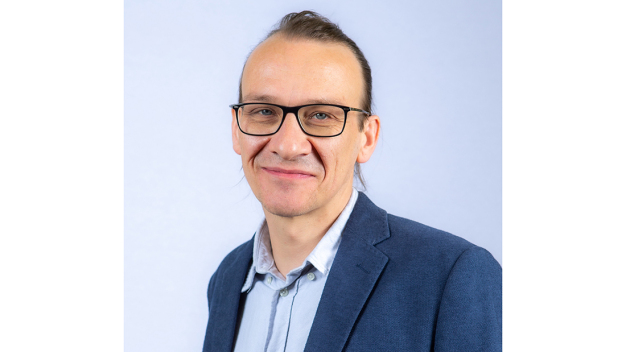
Georg Dallasera: © Lorenz Consult
Work in Biosafety Levels (BSL) 3 and 4 laboratories involves handling highly dangerous biological agents – including viruses, bacteria, prions, fungi, and parasites. These substances are classified into risk groups from 1 to 4 based on their danger. For the highest risk group, strict safety regulations are necessary, requiring specially secured infrastructure and precisely defined workflows. Lorenz Consult specializes in the planning of safety laboratories and demonstrates what is important for decontamination in BSL 3 and 4 laboratories.
Biosafety Level 3 & 4: Highest requirements for safety and planning
Safety laboratories are characterized throughout the entire process – from planning, operation, to decommissioning – by special requirements. These range from structural and technical measures to operational organizational considerations, as well as specific safety concepts and decontamination procedures, including waste management. Additionally, recurring assessments of existing safety measures are necessary and standard practice, often leading to appropriate adjustments as needed.
Decontamination concept as a prerequisite for approval
A central element of operating a BSL-3 or BSL-4 laboratory is a detailed and comprehensive decontamination concept. This concept always combines various methods, such as room decontamination for the laboratory area and surface decontamination at work surfaces. It always includes a procedural description and proof via indicators (bioindicators, measurement devices). Depending on the application and purpose, different decontamination methods are used. The goal is to prevent the spread of pathogens, protect the environment and personnel, avoid cross-contamination, and comply with legal requirements.
In practice, physical, chemical, and biological decontamination procedures are applied. Common examples include autoclaves based on thermal inactivation (physical decontamination), liquid surface decontamination, and gaseous room decontamination with formaldehyde or hydrogen peroxide (chemical decontamination). The process typically consists of preparation, conditioning, and decontamination phases – always aiming for the complete inactivation or elimination of all hazardous biological agents in the entire room. Therefore, criteria such as the efficacy and spectrum of activity of the decontamination agents, as well as compatibility and toxicity, are equally important and must be considered in chemical decontamination.
Such a decontamination concept defines a clear procedure to ensure safety in laboratory operations at all times. It includes the legal framework, process flow, risk assessment with proof, and associated documentation. These concepts are often tailored to specific circumstances and form a fundamental requirement for operating permits issued by authorities.
Legal regulations in Germany and Austria
The legal regulations for BSL-3 and 4 laboratories are outlined in Germany by the Infection Protection Act and the Biological Substances Ordinance. Additionally, standards such as TRBA or the Genetic Engineering Act apply. In Austria, the Occupational Safety Act, the Ordinance on Biological Agents, and relevant Austrian standards are applicable. The aim is to classify substances into risk groups legally, conduct hazard assessments, define protective measures, and ensure comprehensive documentation obligations.
Lorenz Consult: Expertise in planning, implementation, and control
"To ensure the safe operation of BSL-3 and 4 laboratories in the long term, a corresponding decontamination concept is indispensable," explains Ing. Georg Dallasera, general planner for cleanroom, hospital, industrial, and steel construction at Lorenz Consult. "Challenges arise from the specific requirements and the various conditions on site, leading to customized decontamination concepts. Additionally, various decontamination procedures such as surface, room decontamination, or autoclaves are used."
In practice, this means that risks must be assessed individually, and measures adapted accordingly. These can vary between planning, technical, or operational organizational solutions.
As an experienced planning company, Lorenz Consult supports its clients in developing and implementing customized, practical decontamination solutions – especially for laboratories with the highest safety standards. The goal is to create clear structures, reliably meet regulatory requirements, and ensure long-term operational safety.
Lorenz Consult Ziviltechniker GmbH
8010 Graz
Austria