


- 3D printing
- Translated with AI
Experiment of TU Berlin lands on the Moon
Project by TU Berlin and Laser Zentrum Hannover for 3D printing with moon dust concludes contract with space company
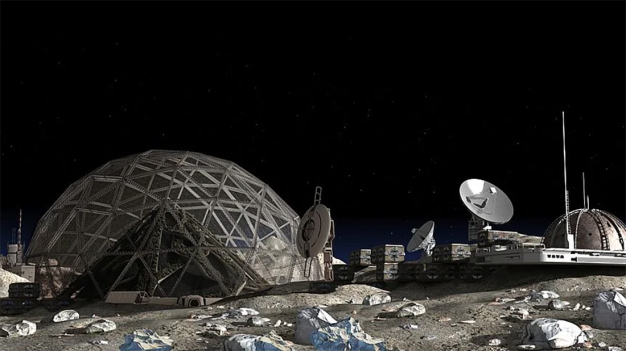
In the MOONRISE project, scientists are researching how we can futurely create streets or buildings from moon dust using laser-based 3D printing.
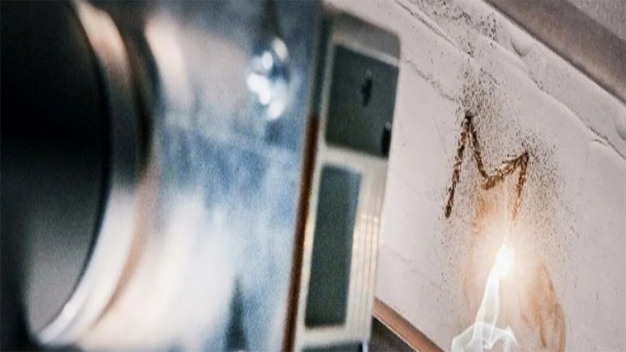
Melting artificial moon dust with a laser.
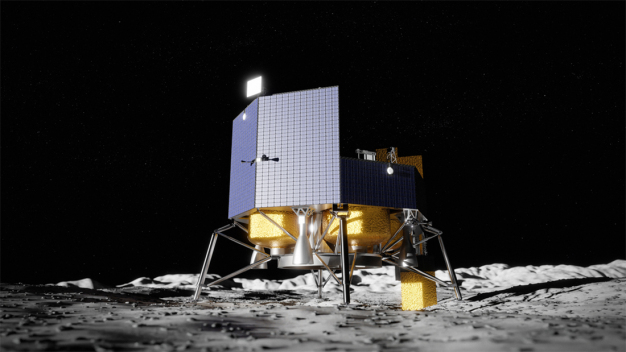
The "Griffin" lander from Astrobotic. A lander that transports the MOONRISE laser to the Moon could look similar.
The launch is expected to take place at the end of 2026. A system developed by TU Berlin and the Laser Zentrum Hannover e.V. (LZH) for laser melting of moon dust, known as regolith, will then be flown to the Moon for initial tests. The LZH, as the consortium leader of the project, has now signed a contract with the spaceflight company Astrobotic. The vision of the project "MOONRISE" is to be able to manufacture infrastructures on the Moon using the materials available there in the future. Producing landing sites, roads, or buildings from moon dust on-site would save enormous transportation costs, as transporting material from Earth to the Moon is very expensive, costing up to one million dollars per kilogram.
"I am pleased to announce our partnership with Astrobotic, an important player in space technology. Together, we can now literally take this innovative project to new heights," says Dr. Dietmar Kracht, CEO of the LZH. Astrobotic is a US-based lunar logistics company offering the transportation of payloads to the Moon for both commercial and scientific purposes. The company was awarded the contract through a procurement process for its proposal.
Artificial Intelligence (AI) assists with laser melting
The Astrobotic lander will be equipped—with other payloads from various clients—with a compact, robust laser developed at the LZH. This laser will melt the moon dust to create 2D structures on the lunar surface, serving as an initial test for the later planned 3D printing. A camera will record the process, enabling researchers on Earth to analyze it through an intelligent image processing system. "Artificial intelligence will not only help us find a suitable location on the lunar surface for laser melting but will also enable quality control of the printed structures during the experiment," says Benedict Grefen from the "Exploration and Propulsion" working group in the Department of Aerospace Engineering (RFT) at TU Berlin.
Construction kits with various compositions of moon dust
This also includes a regolith construction kit developed at TU Berlin, which allows for precise replication of the properties of potential landing sites. "The regolith simulator will then be adapted to the final landing site on the Moon so that the laser process can be optimized in the laboratory for the actual lunar mission," explains Grefen, who leads the project at TU Berlin. Simultaneously, training data for the AI are generated using an "Surface Analog Model." This model will also support decision-making during the mission. The goal is a "proof of concept" that laser melting on the Moon is feasible.
Funding amounting to 4.75 million euros
"The MOONRISE team is testing a key technology for future activities on the Moon, and we are grateful to have been selected in the competition for transporting their payloads. MOONRISE is a great example of the kind of new ideas, scientific demonstrations, and new landing sites that our landing transportation services can support to advance their own planned contributions to the emerging lunar economy," says Dan Hendrickson, Vice President of Business Development at Astrobotic.
The project is funded by the German Aerospace Center (DLR) through the Federal Ministry for Economic Affairs and Climate Action with 4.75 million euros. Project partners include the LZH and TU Berlin.
Technische Universität Berlin
10587 Berlin
Germany