- Translated with AI
Electricity and water consumption reduced by approximately 30 percent
Ecoclean successfully implements energy efficiency measures at automobile manufacturers
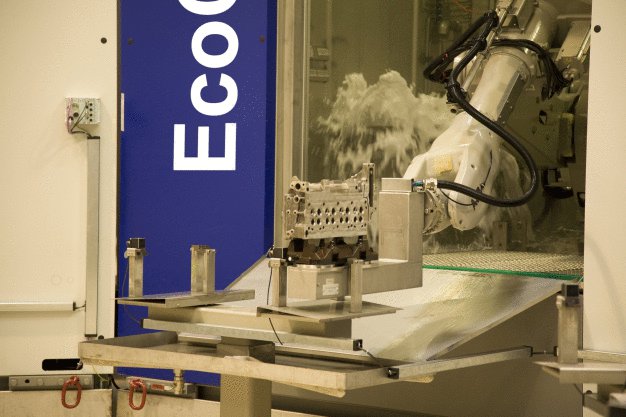
Through energy efficiency measures, the electricity and water consumption of an EcoCFlex Classic robot cell, operated for several years, was reduced by approximately 30 percent. (Photo: Ecoclean)
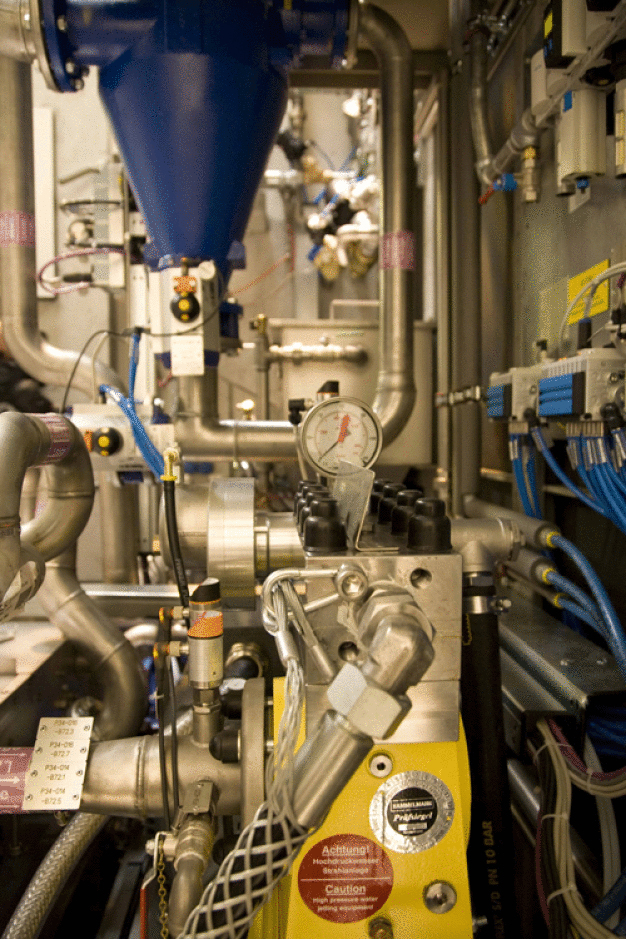
By integrating a frequency converter, the pressure boosting pump now operates on demand, consuming significantly less energy. (Photo: Ecoclean)
At the engine plant of the BMW Group in the Austrian town of Steyr, Ecoclean Monschau significantly increased the energy efficiency of a flexible robot cell EcoCFlex Classic that has been in operation for several years, in a reference project supported by the Technical University of Vienna: the electricity and water consumption were reduced by approximately 30 percent each. The energy efficiency measures are now to be implemented at a further 95 systems of this type in various plants across Europe and Asia.
The BMW Group has been using Ecoclean Monschau's EcoCFlex Classic robot cells for around twelve years in various plants to deburr and clean engine parts, such as cylinder heads, for a wide range of vehicle models. Of the first generation of these flexible cleaning systems, 30 machines are in operation at the Steyr engine plant. They still achieve demand-oriented cleaning results. However, the energy efficiency, which is precisely monitored by BMW Group, does not meet current standards. In particular, water consumption proved to be too high. Therefore, BMW Steyr approached the system manufacturer with the question of whether and how the systems could be optimized energetically.
Potential analysis revealed savings opportunities
Specifically for such tasks, Ecoclean developed a potential analysis. Service staff from the system manufacturer specifically examine factors such as water consumption, detergent dosing, power consumption of the electrical components installed in the system, and compressed air consumption. Flow measurements revealed that a lot of steam was being drawn out of the cleaning cell, which caused the high water consumption. The analysis also identified a significant potential for energy savings in the operation of the supply pumps.
Small measures, big impact: 30 percent savings
To reduce water consumption, modifications were made to the air control valves. Additionally, by changing the fan control, the airflow speeds within the system could be adjusted, significantly reducing the amount of steam expelled. The integration of a frequency converter into the pressure boosting pump allows it to be controlled according to demand, thereby consuming less energy.
Through these relatively small optimization measures, overall electricity consumption was reduced by around 30 percent. A reduction of a similar magnitude was achieved in water consumption, which also results in lower use of cleaning chemicals.
Reference project with independent verification
These measures were initially implemented at a system in the Austrian engine plant in Steyr. To objectively evaluate the results, TU Vienna served as an external auditor, accompanying the reference project with extensive measurements before and after the optimization. The independent proof of the successfully achieved increase in energy efficiency can also be used to apply for funding, depending on country-specific programs.
SBS Ecoclean Group
60325 Frankfurt am Main
Germany