



- Building technology
- Translated with AI
Anyone talking about a "fine dust filter" should also mean PM1 particles.
ISO 16890: Camfil sees the need to raise awareness of health risks caused by lung-penetrating dusts smaller than one micrometer (PM1).
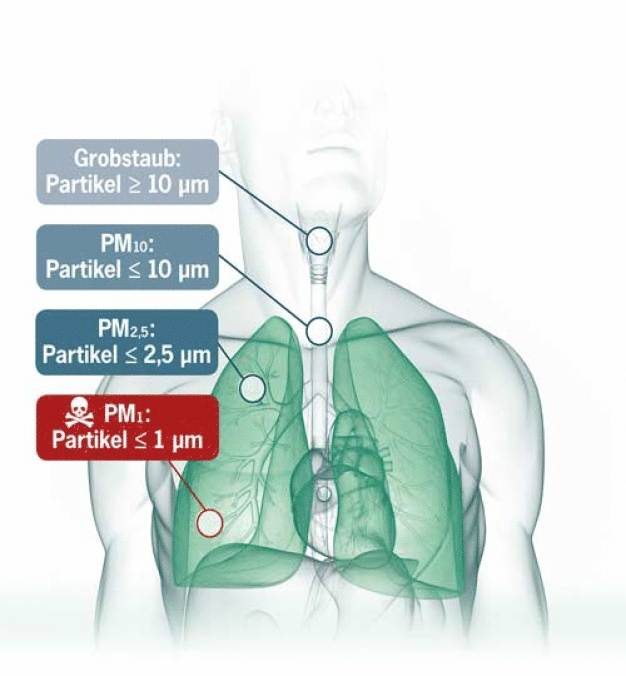
Recording of various particle sizes / excerpt (Image: Camfil)
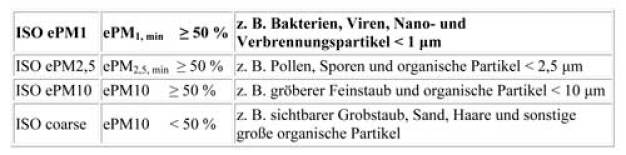
Table 1
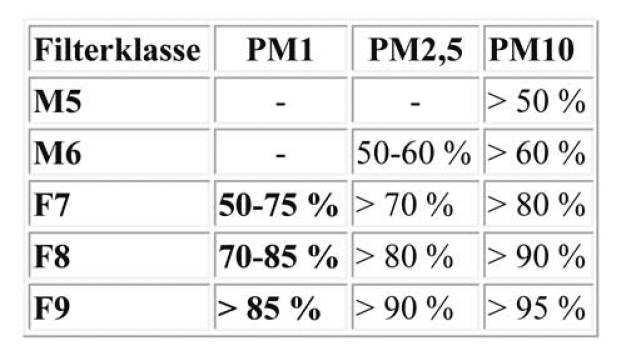
Table 2
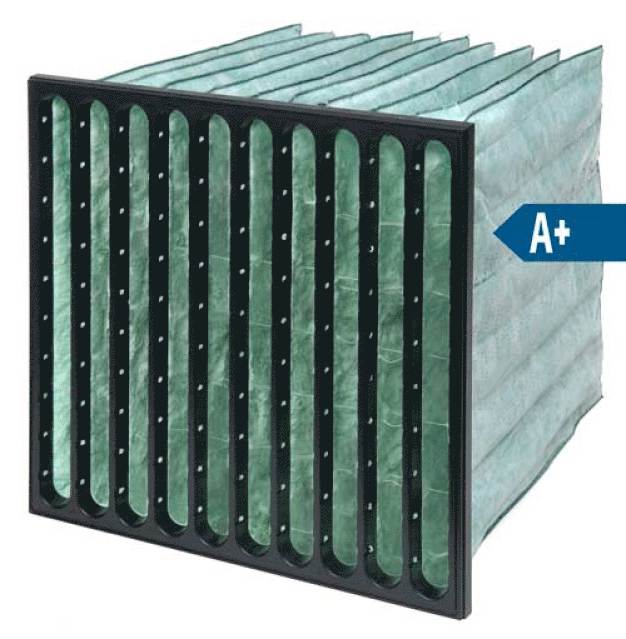
(Image: Camfil)

Tobias Zimmer (Image: Camfil)
At the end of 2016, the ISO 16890 standard for testing and evaluating air filters is expected to be introduced. After a transition period of approximately 18 months, the replacement of EN 779:2012 will take place. In the future, laboratory results will more accurately reflect the behavior of air filters in real HVAC systems. Building on publications from WHO and environmental authorities, the fine dust fractions ISO ePM1, ISO ePM2.5, ISO ePM10, as well as coarse dust with ISO coarse will replace the previous filter classes G1 to F9. Additionally, a product label will inform about the percentage removal efficiency of the filter for its highest fine dust group. These modifications will enable facility managers and users to plan more targeted measures regarding the health and hygienic aspects of their property. Camfil's experts see a high urgency and also a great opportunity in raising awareness among decision-makers about the fine dust hazard, especially in the PM1 range.
Office buildings, hospitals, schools, airports, event halls, department stores, ... – Operators of air handling systems will find it easier with the new testing standard than with EN 779:2012 to select tailored filter solutions that meet their health and hygiene requirements. This is due to the changed approach to filter testing: With the introduction of ISO 16890, expected from the end of 2016, the filtration performance regarding all particle sizes in outdoor air between 0.3 and ten micrometers will be determined, instead of only particles of 0.4 micrometers as before. This modification results in test outcomes that will be more significantly reflected in the later use of the filters. For this reason, the filtration efficiency of the filter will in future be assessed only without prior dust loading.
Four new filter groups
To precisely tailor the filter selection to the desired air quality, both a new classification into four groups and a mandatory disclosure of the respective percentage removal efficiency of the filter are introduced. For example, ePM1 60% indicates a removal efficiency (e = efficiency) of 60 percent for particles ≤ 1 micrometer (PM = Particulate Matter). A product can only be assigned to a group if it removes at least 50 percent of the respective particle size. All filters that remove less than 50 percent of PM10 are classified in the coarse dust segment ISO coarse.
Group classification according to ISO 16890
(see Table 1)
Translation aid
Camfil has developed a key that allows products from the former fine dust filter classes M5 to F9 to be translated into the new groups. "For example, a good F7 filter should correspond to the new ePM1 group; meaning it should remove at least 50 percent of all particles under one micrometer," explains Tobias Zimmer, Global Product Manager Comfort at Camfil.
(see Table 2)
This applies, for example, to the air filters of the previous class F7 from Camfil. They will easily meet the removal requirements of the ePM1 group in the future.
Filter selection: Well-intentioned is not always well-done
Building managers who today choose a fine dust filter of class F7 for the supply air and do not need to secure specific processes generally have one goal: to create good conditions regarding health and hygiene. Since the introduction of the new standard ISO 16890 fundamentally changes the selection process for suitable air filters, Camfil aims to sensitize decision-makers for a field that has been previously neglected: "Despite this claim for good indoor air quality, many responsible persons are not aware of how important it is to pay particular attention to the removal of PM1 particles, which are smaller than one micrometer," says Zimmer.
Fine dust is generally dangerous because the human body cannot mount natural defense mechanisms against it. It is inhaled through the respiratory system, and a significant portion of its PM1 particles can even reach the bloodstream via the lungs. The consequences are already fatal today. According to the International Energy Agency, 6.5 million people worldwide die prematurely each year due to air pollution in indoor and outdoor environments; around 600,000 of these are in the European Union. The most common causes of death are cardiovascular, cancer, and respiratory diseases. The impact on dementia has also been proven. The negative effects on health are accompanied by enormous costs for society and the economy.
PM1 air pollutants have proven to be the greatest cause of disease in this context. In urban outdoor air, they account for more than 90 percent of all fine dust particles present.
Regarding outdoor air quality, a number of emission-reducing measures and laws have already been implemented. However, since humans predominantly stay indoors (at least in European latitudes), it is evident that indoor air quality can significantly influence individual health. "The modification of the testing standard and related guidelines requires a fundamental rethink by all responsible parties. The topic of indoor air quality in general and PM1 particles in particular demands much greater attention. Since it affects nearly everyone who does not live in a desert, I very much hope for more responsible decisions in future regarding the filtration of supply air," adds Zimmer.
Camfil not only has more than 50 years of development experience in fine dust filter technology but also offers the most energy-efficient filters in this product range with Hi-Flo M7 50+, Opakfil ES, and Hi-Flo XLT7/670 50+ – high efficiencies against PM1 particles and long service life included.
1 www.iea.org -> publications -> Free publications -> WEO-2016 Special Report Energy and Air Pollution -> page 3.
2 www.euractiv.de – The data refers to the year 2012.

Camfil GmbH
Feldstr. 26 - 32
23858 Reinfeld
Germany
Phone: +49 4533 2020
Fax: +49 4533 202202
email: info.de@camfil.com
Internet: http://www.camfil.com