
- Translated with AI
Activate the added value of seals
"Getunte" seals are more powerful
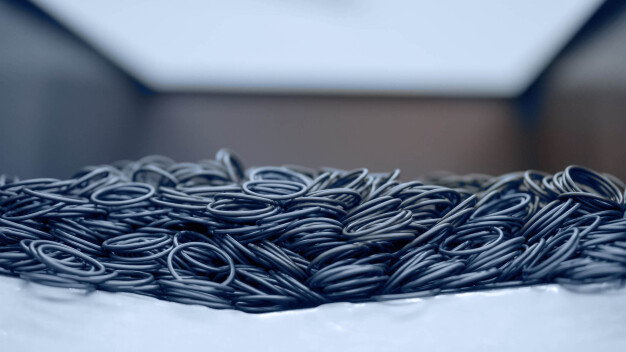
Seals, after manufacturing, cleaning, treating, or even coating them, significantly increase their performance capability.
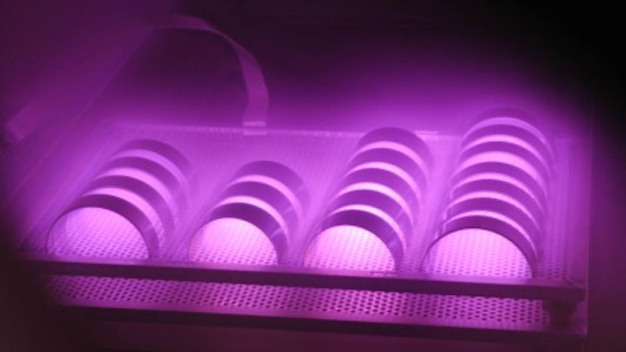
Only the plasma process ensures LABS compliance.
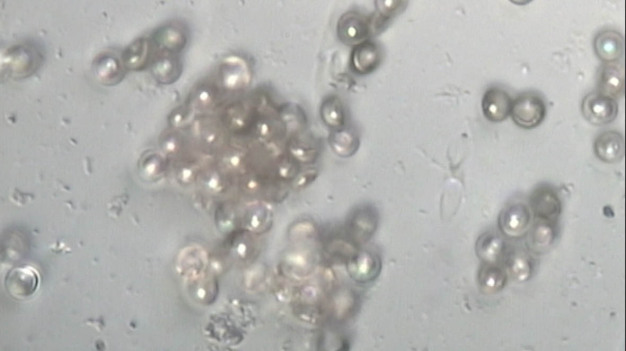
Where technical cleanliness or LABS-free conditions were sufficient before, customers have been increasingly asking for germ-free components since the beginning of the pandemic. Only the combination of professional, industrial cleaning with optimized plasma processes delivers the desired results - a germ reduction of 99.99999 percent.
Elastomer components from manufacturing naturally meet the required standards in shape, function, and size. Whether as an O-ring or molded seal, they guarantee high technical sealing for the intended application. The seals are tight, flexible, chemically resistant, and durable. However, in many demanding applications, sealing products are not used as they come from manufacturing. Competent service providers clean, treat, and coat the products before use. This significantly enhances their performance regarding their weak points. For example, friction values can be improved, and wear can be reduced by up to 99%. This longevity also contributes to sustainability.
Immediately after production, elastomer parts or seals are not clean. Residues of manufacturing aids such as oil, grease, and release or cooling agents adhere to them. The first step in post-processing is always a cleaning process. Until the 1990s, seals were used unwashed. Even in automotive systems, the technical systems are designed to withstand dirt particles. The same applies to common, solvent-rich automotive paints. They are easy to process, dry quickly, and at that time, minor contaminants in systems or on raw bodies were still acceptable. Separate cleaning processes for seals were then not only unnecessary but also undesirable due to additional costs.
Cleaning and post-treatment were previously unnecessary
However, this situation has now changed. New European directives and regulations demand lower emissions and more environmentally friendly production processes, especially affecting automakers. Engines are becoming more efficient, and with downsizing, components and tolerances shrink to minimal values. Conversely, power density increases, along with sensitivity to residual dirt. Simultaneously, water-based paints are gaining popularity. They promise low solvent emissions but are very susceptible to contamination by so-called paint wetting disrupting substances. With the demand for sufficiently clean components, the automotive industry is setting new standards and shaping the concepts of technical cleanliness and LABS-free standards.
LABS is an acronym for paint wetting disrupting substances. These substances prevent uniform wetting of the surface to be painted, causing funnel-shaped distortions and craters in the paint layer. Therefore, LABS conformity is increasingly required. Also, in pretreatment of adhesive surfaces, distortions are undesirable because they reduce adhesion. Since it is unknown which substances cause these disruptions, materials, components, and assemblies are tested for LABS conformity. While intensive cleaning can safely remove surface residues of manufacturing aids from metals and many plastics, surface cleaning alone is not sufficient for elastomers. Only plasma treatment achieves LABS conformity in this case.
Not only clean and pure, but also germ-free
Cleaned seals have been standard in application technology for some time. Cleaning has developed into a value-adding process, and seals are systematically cleaned. But where technical cleanliness or LABS-free standards previously sufficed, customers have increasingly demanded germ-free components since the beginning of the pandemic. Multi-stage cleaning processes, plasma, and specially designed process parameters now meet this requirement. This does not involve separate sterilization processes but rather adapting existing cleaning processes to additionally achieve germ-freeness.
Disinfected and sterilized components have so far mostly been reserved for pharmaceutical and medical technology. However, with the 2019 pandemic, the desire for germ-free seals has also arisen in other industrial sectors. Unlike in pharma and medical tech, industrial customers do not require cleanrooms or airlocks from their cleaning service providers, as such precautions would significantly increase costs. Users also value additional industrial cleanliness and therefore hope for comprehensive solutions. In such cases, combined processes are needed to connect germ-freeness with technical cleanliness, LABS-free standards, or other industrial cleanliness requirements.
Plasma technology takes it to the next level
In low-pressure plasma processes, oxygen is excited under vacuum by energy input. In this so-called microblasting, oxygen radicals (O) and ozone (O3) form. Reactive residues of manufacturing aids such as oil, grease, and release or cooling agents oxidize and are extracted as gases (CO, CO2, H2O, or dust). This not only removes remaining surface residues of manufacturing aids but also diffused, unbound mixture components like plasticizers from elastomers.
The specialists at OVE Plasmatec from Weil im Schönbuch have been highly regarded experts in technical cleanliness for decades. Their specialty is deep pore cleaning of elastomers. Besides wet cleaning methods, OVE has developed plasma cleaning into a highly effective process for producing LABS-conforming surfaces. Since they first transferred this technology to elastomers in the 1990s, they are considered pioneers with the most experience in the industry.
Once the seals are cleaned, they generally meet the required applications. Depending on the demands, the desired results can be achieved with the appropriate cleaning level. A reliable service provider also places great importance on shipping, customer-specific labeling, or just-in-time deliveries.
Coating expertise puts you in the Champions League
Service providers reach the Champions League when they can offer not only high-quality cleaning stages but also additional coatings. Coatings can deliberately alter specific functions of seals. For example, they can reduce friction values, making assembly easier and increasing performance in dynamic applications. They can reduce wear, thereby extending service life. Latest coatings can even make seals conductive and dissipate electrostatic charges. Static charging of components is highly undesirable and can lead to unpleasant or even damaging effects.
A newly developed, water-based sliding coating, OVE40SL from OVE Plasmatec, demonstrates top performance in all three areas. It reduces friction values on elastomers by 75% and simultaneously increases wear resistance. Measurements showed that wear could be reduced by up to 99%. Since the coating is also conductive, it helps prevent electrostatic buildup. This facilitates handling of seals and enables safe separation and feeding in automated assembly processes.
A booster for many products
Cleaning, treating, or even coating elastomer components, especially seals, after manufacturing significantly enhances their performance. While cleaning processes are now routine and standard in many applications, there is currently increasing demand for germ-free components. Like a tuning for seals, an additional coating provides C-functionality and, through this added value, acts as a booster for many products and applications.
_______________________________
Technical info on Static Charging
How static charging occurs
Whether and how strongly elastomers charge depends on their material structure and conductivity. Elastomers are generally non-conductive or only slightly conductive. A detailed look at the causes and processes of static charging helps understand how and why materials charge and why the observable effects in elastomer seals vary greatly.
To better understand static charging and the effectiveness of individual remedies, it makes sense to examine the affected components at the atomic level. Every object, regardless of its material, consists of a combination of atoms. These contain, besides charge-neutral neutrons, positively charged protons in the nucleus and negatively charged, freely moving electrons in their shells. Under normal conditions, the number of protons and electrons is equal. Thus, the charges of these particles balance out within an atom, making the atom, and thus the entire component, appear electrically neutral.
If two objects are rubbed against each other or separated, individual electrons can be released from the shell and transferred to atoms in the neighboring object. This happens in practice, for example, when seals are removed from their packaging or separated in vibration feeders. The seals rub against the bag or the vibration stop. The electrons thus begin to move from atom to atom due to contact. One of the rubbing partners becomes negatively charged due to excess electrons, and the other becomes positively charged due to a lack of electrons. In non-conductive materials, such as various polymers, electrons cannot move freely. In this case, friction or separation causes a simple displacement of the previously balanced charges within the component without electron transfer. The component becomes positively charged on one side and negatively on the other. Whether charges are only displaced or electrons also move between atoms depends heavily on the material's composition and can vary accordingly. Not all elastomer materials charge equally, and the negative effects are only visible in some seals.
Technical info on Sterilization with Plasma
How plasma fights viruses and germs
When a process gas is energized and ionized in a vacuum, it transitions into a highly reactive plasma state. In this so-called fourth aggregate state, the gas is no longer just composed of molecules. Instead, it is a mixture of different particles, including free electrons and ions, radicals, and photons. The latter can appear as UV radiation. These highly reactive components of low-pressure plasma initiate various processes on the surfaces of treated seals. Some of these explain the cleaning and sterilizing effects of plasma:
– Due to their high kinetic energy, the electrons and ions of the plasma act like projectiles. They mechanically remove germs from surfaces and also destroy bonds in the cell membranes of existing viruses.
– Essentially, the reactive components of the plasma damage organic molecules of living organisms, killing bacteria.
– Ultraviolet radiation not only destroys bacteria but also affects viruses. Since viruses lack their own metabolism and rely on other living cells to reproduce, UV radiation inactivates viruses, effectively destroying them.
– The applied fine vacuum and slightly elevated surface temperatures during the process additionally dry out the organisms of pathogens.
Technical info on the Definition of Sterilization and Disinfection
Cleaned, disinfected, or sterilized?
For those without medical or pharmaceutical expertise, it is often difficult to distinguish between cleaning, disinfecting, and sterilizing. Ultimately, all cleaning methods depend on how many of the existing germs are removed and, importantly, whether they are simultaneously killed or inactivated. According to the Commission for Hospital Hygiene and Infection Prevention (KRINKO), simple washing removes about 50 to 80 percent of disturbing germs but does not kill any pathogens. Disinfected items have about 84 to 99.9 percent of pathogenic germs reduced and inactivated or killed. This represents a defined reduction in the number of pathogenic microorganisms. While they no longer pose an infection risk, disinfected surfaces are not germ-free but only germ-reduced. Sterilization procedures, on the other hand, kill all pathogenic agents and microorganisms completely. No viable germs remain on the surfaces.
OVE Plasmatec GmbH
71093 Weil im Schönbuch
Germany