



- Science
- Translated with AI
With high-performance computing and machine learning towards the new generation of carbon-free combustion chamber systems
TU-Prof. Dr. Abdulla Ghani receives a prestigious ERC Starting Grant with funding of 1.5 million euros for his research
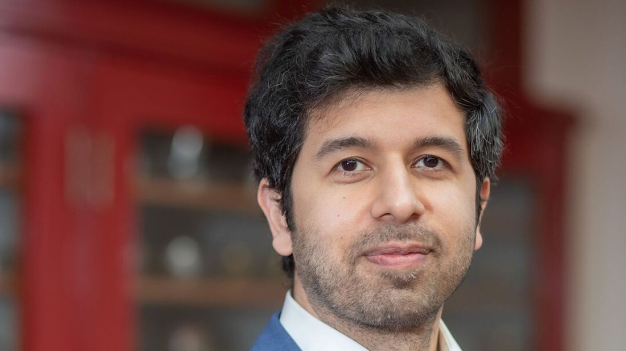
Awarded the ERC Starting Grant: Prof. Dr. Abdulla Ghani.
Over 80 percent of the energy consumed worldwide is generated through combustion processes. According to current knowledge, this value will change little in the medium term. Combustion processes, which occur in industrial blast furnaces, household burners, carrier rockets, gas turbines, and engines, have a negative impact on the climate, and there is a need for action. The goal is to reduce fuel consumption as much as possible so that combustion processes become more efficient, cleaner, and quieter. Unsteady phenomena occur during these processes, resulting from the undesired interaction between acoustics, combustion, and flow. These events often lead to costly total failures of prototypes during the design phase. Research and industry are working to fundamentally understand these processes in order to develop the technology of tomorrow.
The interdisciplinary project "Taming Combustion Instabilities by Design Principles (TACOS)", for which Prof. Dr. Abdulla Ghani was awarded the ERC-Starting Grant from the European Research Council (ERC), aims to eliminate these unsteady phenomena. "In the project, I combine concepts from theoretical physics with high-resolution numerical flow simulations of combustion processes, which require supercomputers for their calculations. The data generated here are analyzed using machine learning methods to gain additional knowledge," explains Prof. Dr. Abdulla Ghani, who heads the "Data Analysis and Modeling of Turbulent Flows" department at TU Berlin. His research focuses on overcoming current technological barriers so that carbon-free fuels such as hydrogen and ammonia can be used efficiently. "This way, my research can make a significant contribution to the energy transition," says Prof. Dr. Abdulla Ghani. The project is funded over five years with 1.5 million euros.
With the "Starting Grants," the ERC supports outstanding early-career researchers worldwide in establishing or expanding an independent research group in the field of basic research.
About the person:
Prof. Dr. Abdulla Ghani studied aerospace engineering at TU Berlin with a focus on aerodynamics. From 2012 to 2015, he completed his doctorate at the Centre Européen de Recherche et de Formation Avancée en Calcul Scientifique (CERFACS) in Toulouse, France. This was followed by several years of research stays as a postdoctoral researcher at the Institute of Fluid Mechanics in Toulouse and at TU Munich. Since 2020, he has been leading the "Data Analysis and Modeling of Turbulent Flows" department as a junior professor at TU Berlin. Prof. Dr. Abdulla Ghani collaborates with internationally leading research teams from the USA, England, Norway, and France, and cooperates with local industry partners such as Siemens Energy and Rolls Royce Germany.
Technische Universität Berlin
10587 Berlin
Germany