



- Translated with AI
The CleanRoomNet hosted its 4th Cleanroom Technology Forum with the theme: "Fight against Germs".
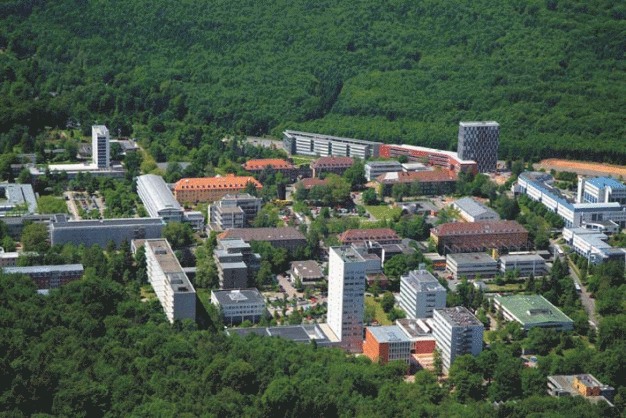
Campus SB. Aerial view
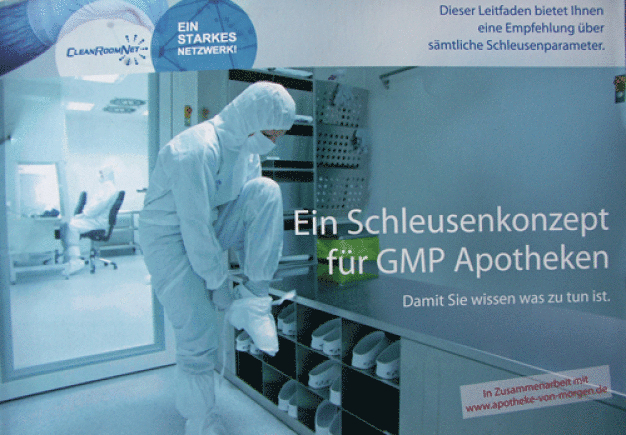
Lock Concept
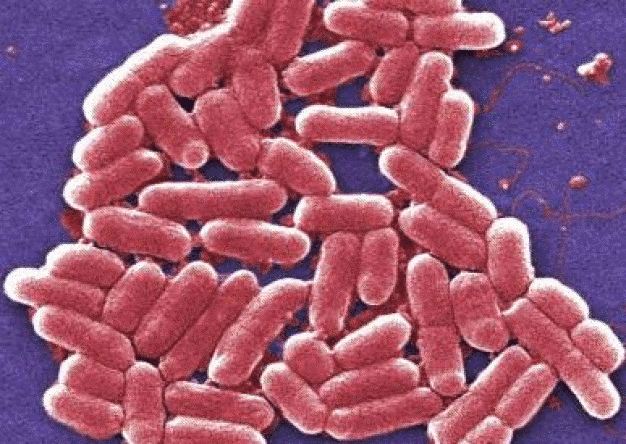
Bacteria Escherichia coli
The 4th Technology Forum Cleanroom, held at Saarland University, also marked the anniversary event of the CleanRoomNet network—eleven years of networking. One of the purest technologies in this industry was the occasion for the organizers of the event held on March 1, 2016, to address what is currently considered the most sensitive topic: "Fighting Germs".
Complex topics require expertise from various industries
With saar.is, saarland.innovation & Standort e.V., as well as KWT Saarland University, Center for Knowledge and Technology Transfer, three institutions with specialized expertise contributed to shaping the event day.
The healthcare industry in Saarland is a dynamic environment, driven in part by the networking of companies within the clusters "Healthcare" and Medical Technology. These are supported by saar.is, saarland.innovation & Standort e.V. (Chamber of Industry and Commerce), and formed the foundation of the Cleanroom Forum.
At this event, the organizers of the now traditional Cleanroom Forum aimed to showcase possibilities and technologies that are indispensable in cleanroom technology, especially in the pharmaceutical industry and medical device manufacturing.
The enthusiasm of the participants can be summarized in a few sentences: The forum participants were cleanroom managers from Saarland companies, who produce and distribute their own portfolios under clean or controlled conditions. Additionally, staff from various clinics and a large portion of pharmacy students from Saarland University, studying in Saarbrücken, participated. The topic "Fighting Germs" was also addressed—a highly current issue that interested not only the forum participants.
Due to the heterogeneous composition of the forum attendees, a team of experts with the know-how of the "CleanRoomNet" network was formed, working in perfect harmony.
Program
Paul Jochem (founding member of CleanRoomNet) first reviewed the last eleven years of the network. When listing the events organized by the network, two events focused on component cleanliness in automotive manufacturing and industry were also included.
Component cleanliness has now established itself as an essential process step in manufacturing. Here, in addition to the defined particulate and film residual dirt requirements, economic and ecological aspects must also be considered.
It all began with a joint exhibition at Cleanroom Europe (Cleanroom Trade Fair) in Frankfurt. The most important trade fairs representing the network's technology are the Cleanroom Lounges in Karlsruhe, which have been held in Stuttgart for a few years, as well as the Cleanzone in Frankfurt, a unique professional congress for cleanroom technology. The parts2clean Stuttgart trade fair is the international leading trade fair for industrial parts and surface cleaning. More than 250 exhibitors from 14 countries present effective solutions for cleaning, as well as for inspecting cleaned surfaces and monitoring cleaning and rinsing processes as an indispensable part of a quality- and cost-optimized cleaning process.
Furthermore, the brochure "Daran gedacht?" ("Thought of?") was compiled, serving as a guide for planning a cleanroom. This flyer contains important questions that should be asked in advance when planning a cleanroom.
The second brochure presents a lock system concept for GMP pharmacies (world premiere). This guide offers users recommendations on all lock parameters, such as:
- Construction variants according to ApoBetrO
- Variant A in B clothing concept
- Variant A in B lock process for core personnel
- Variant A in B lock process for service personnel
- Variant A in B mobilization
- Construction variants for monitoring
- Variant A in B cleanroom cleaning
This guide is not only for GMP pharmacists but can also be used by other cleanroom users.
Over the past eleven years, there have also been:
- 3 Saar Cleanroom Forums
- 4 Cleanroom Technology Forums, two of which addressed component cleanliness in vehicle manufacturing and industry
- 14 "Pharmacy of Tomorrow" symposia held at the Central Pharmacy in Steinbach in the Taunus region
Now to the event: The first agenda item was under the motto:
Electrochemical Decontamination of Conductive Surfaces
From basic ideas to new approaches
Prof. Dr. Claus Jacob, Saarbrücken University
Microbial biofilms on surfaces can lead to aesthetic, technical, and hygienic problems. Especially in hygienically sensitive areas, they should be consistently removed and prevented from forming. Conductive surfaces offer many possibilities to efficiently destroy biofilms residing on them using very low voltages and currents. Besides simple electrostatic repulsion of bacteria through a usually negative charge of the surface, electrochemical methods are primarily used, which, for example, achieve effective bacterial killing through direct oxidation or by locally and ideally temporarily generating aggressive molecular species that kill bacteria. The most well-known method is certainly anodic oxidation of chloride-containing solutions on the surface, leading to the formation of chlorine and hypochlorite. Hypochlorite is also present in chlorine bleaches and has a strong bactericidal effect.
However, since anodic reactions and the formation of aggressive, reactive chlorine compounds often cause damage (corrosion) to the affected surface and pose a burden to users and the environment, cathodic methods are increasingly being investigated. By choosing appropriate surfaces, microbial biofilms and other deposits can be effectively destroyed both physically, through the generated hydrogen gas, and chemically, via reactive oxygen species produced by the reduction of oxygen in the solution. With this topic, Prof. Dr. Claus Jacob hit the zeitgeist.
Topic Block 2: Challenges in Coating Processes
Functional coatings on visually demanding substrates, such as high-gloss plastic surfaces
Dr. Alexander Kurz, Nanogate AG
In his presentation on surface coatings, Dr. Kurz first emphasized coating technologies and their importance. He explained the advantages and disadvantages of coatings for individual projects. The list of projects already addressed was completed with his explanations. He also discussed the differences between hybrid paints ("nanolacquers") and conventional paints in direct comparison. A key part of his presentation focused on coating technologies and processes. What should not be overlooked are the defect classification images. All his descriptions are based on activities that are only possible when carried out under cleanroom conditions.
Topic Block 3: Phenomena (Our Invisible Enemies) in the Cleanroom
Paul Jochem, ReinraumTechnik-Jochem,
In Topic Block 3, Mr. Jochem discussed the difficulties in teaching people about phenomena (sensory experiences that are not visible, audible, olfactory, tactile, perceivable, and tastable but still present) during cleanroom training. The sense of touch is fundamental for our physical and mental well-being. Touch promotes our individual learning ability, supports, and fosters the development of the entire nervous system. Through the sense of touch, we receive information about our environment, surface texture (smooth, rough), consistency (sticky, hard), temperature (hot, cold), shapes (round, angular), sizes (large, small), and proportions. Grasping is how we "comprehend". The full development of the sense of touch through various forms of tactile experiences forms the basis for the development of all types of intelligence.
Our skin contains millions of sensors that respond to external stimuli. They inform the brain whether something feels cold or hot, smooth or rough, hard or soft. Most sensors are located on the hands and mouth.
For healthy development, it is essential that all senses function well. Of particular importance is a healthy interplay of all bodily senses (sensory integration). Sensory integration refers to organizing sensory impressions to process them consciously. The stimuli constantly acting on us, providing information about our body condition and environment, must be recognized, understood, differentiated, interpreted, and compared with already stored information by the brain.
This highlights our problem. When transmitting that most contamination in the cleanroom is caused by humans, only the sense of hearing is sensitized during the training of the learning material. The learner must believe that they are the source of contamination in the cleanroom. Since airborne particles in the micro-range (not visible to the naked eye) are used for qualification, sensory integration is not fully exploited. How can the brain process when the concept: "What I do not see, touch, feel..." is also absent? Because what does belief mean: Belief is an assumption—the conviction—of a fact. So, the concept of phenomena in the cleanroom is not entirely far-fetched.
Topic Block 4: "Development of New Antibiotics"
Necessity, challenges, and prospects for success
Prof. Dr. Rolf Müller, Helmholtz Institute Saarbrücken.
An increasing number of bacteria are developing resistance to antibiotics. This trend becomes particularly dangerous with a pathogen type that already has few medications available. Scientists at the Helmholtz Institute are searching for active substances to combat this threat. Prof. Dr. Rolf Müller asks the question: What is the most successful organism on Earth? No, it is not humans. It is, without a doubt, bacteria. Bacteria have been living on our planet for two billion years, and they are expected to still exist in two billion years. All our environmental conditions cannot harm bacteria. A human consists of ten trillion cells—but ten times as many bacteria live on and inside us.
Fortunately, over 99% of all known species are harmless or, for example, beneficial as part of the gut flora. Only a dozen species pose a threat to us. Keeping them in check is the task of antibiotics. However, due to continuous use over time, the medication introduced 70 years ago is losing effectiveness. Many bacteria are becoming resistant—and the serious part is that it affects pathogens that are already difficult to combat.
Many people have heard of multi-resistant germs—"MRSA". According to Prof. Martin Krönke, Chairman of the German Center for Infection Research, most of today’s antibiotics come from the 1950s and 60s. Until the 1990s, there were hardly any new developments in this sector. The ongoing use over long periods gave pathogens decades to develop resistance. Now, their mutated offspring are fighting back. Prof. Krönke adds: "For certain infections, we can almost only pray." This should concern us. Only since the 21st century has attention been paid again to the problem, as it was believed that a defeated enemy had reappeared. A huge problem for our children and grandchildren, because developing new antibiotics takes a lot of time. It takes just over ten years from a promising substance in the lab, through animal testing and clinical trials, to a new drug.
For example: The incredible mutation capacity of bacteria, which can undergo as many mutations in a day as a human theoretically in 2,000 years. This is due to their ability for explosive reproduction, which defies our imagination. Here's a purely hypothetical number game: a typical gut bacterium of the Escherichia coli type can double every 20 minutes under optimal conditions. If such a bacterium were to divide unchecked, its daughter cells would reach a volume of one liter after 17 hours and swell to the size of the Earth after two days. Since they lack nutrients and cannot move, this is not possible in practice. Also, the pathogens are in constant battle with their enemies.
This is where the Helmholtz Institute in Saarbrücken comes into play. Their main focus was to search specifically for natural substances against multi-resistant germs. Since the biggest enemies of bacteria are other bacteria, so-called predatory bacteria play a key role in HIPS research. An important role is played by mycobacteria, tiny rod-shaped unicellular organisms, a few thousandths of a millimeter in size, that feed on other microbes and utilize natural antibiotics. The HIPS researchers aim to isolate these bacteria and develop medications from them.
Among these substances, Prof. Dr. Rolf Müller’s team has now discovered a new group of active substances called cystobactamides. They are effective in the laboratory against germs that pose the greatest threat.
Researchers distinguish between two groups of bacteria: gram-positive and gram-negative germs. "With MRSA germs, which belong to the gram-positive group, we are basically targeting the wrong enemy," explained Rolf Müller. "Because there are reserve medications for MRSA. The more dangerous are the gram-negative germs. There are already pathogens against which no drugs work anymore. Gram-negative bacteria have a double cell membrane that protects them like a tank armor. The number of active substances that can penetrate this armor has always been relatively low."
The greatest attention is paid here to cystobactamides, as their active substances can crack the cell membranes of multi-resistant and gram-negative germs.
However, these substances have only been tested in the laboratory so far. It will still take some time of testing and trials before they might become suitable medications. But the current approach offers hope.
But even then, it cannot be called a victory against bacteria. Prof. Rolf Müller advocates for more responsibility in handling antibacterial agents.
ReinraumTechnik-Jochem
66538 Neunkirchen
Germany



