


- Buildings & Rooms
- Translated with AI
Requirements for Technical Cleanliness in Production Facilities
Cleanroom builder presents cost-effective alternative to the cleanroom
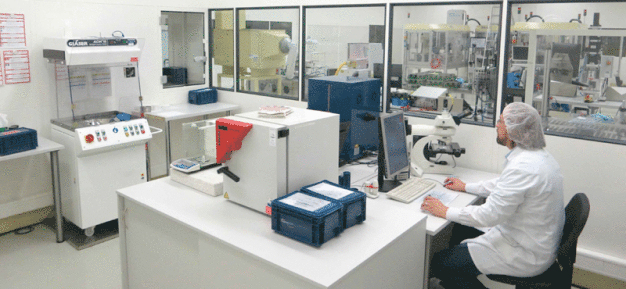
Cleanliness Laboratory
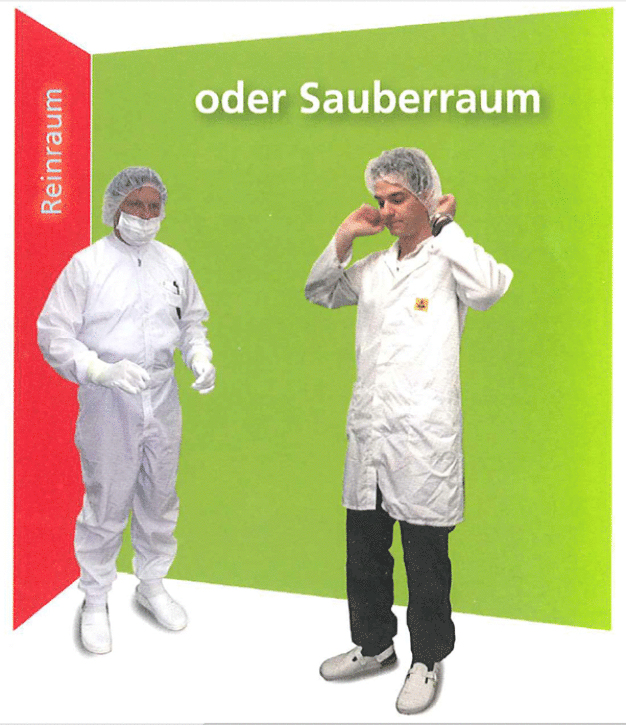
Cleanroom or clean space
In the automotive industry as well as in other sectors such as semiconductor manufacturing or micromechanical assembly, the requirements for technical cleanliness are constantly increasing. Although compliance must be legally guaranteed, it is not always necessary or sensible to set up an expensive cleanroom with elaborate ventilation and filtration technology according to DIN EN ISO 14644-1. Depending on the specific demands of the customers—such as regarding the maximum permissible size of dirt particles—a cleanroom, meaning a controlled environment with consistent, defined conditions according to VDA 19, is often completely sufficient. At this year's Motek, the experts from Nerling Systemräume GmbH will present the different concepts of clean and sterile rooms in detail, explaining which room type is the most economical solution for which requirements and how to avoid over-dimensioning.
"A key difference between a cleanroom and a sterile room is that, according to DIN EN ISO 14644-1, particles in the air up to a maximum size of 5 µm are considered in a cleanroom, whereas in a sterile room, according to VDA 19, particles on the components up to 600 µm are considered," explains Ralf Nerling, authorized signatory of Nerling Group and member of the "Revision of VDA 19" committee at Fraunhofer-IPA in Stuttgart. Which room type is sensible for manufacturing largely depends on the products, manufacturing processes, and environmental conditions—i.e., which particles are present and which of them, depending on their type, size, and quantity, could cause disturbances.
Determining cleanliness
Therefore, it is advisable to first determine the current state of cleanliness within the company—considering all manufacturing methods, process flows, and the relevant environment. A proven method in practice for detecting the types of particles present in production facilities is to set up air particle counters and particle traps, which can be analyzed in specialized cleanliness laboratories by certified service providers. "This allows even simple potential improvements to be identified," explains Nerling. "Only when it is clarified where the contamination comes from and how it reaches the product can it be decided whether a cleanroom is truly necessary or if a clean environment, i.e., a controlled environment with consistent, defined conditions in summer and winter, is sufficient." For this purpose, an economical concept should be developed that covers the areas of room, climate, production facilities, part cleaning and storage, and possibly even distribution up to the customer's assembly line.
Although the basic structure of clean and sterile rooms is similar, they differ significantly in the dimensioning of ventilation and filtration technology. In a cleanroom, up to 30 air changes per hour are performed, whereas in a sterile room, at least 10. "This results in significant savings in operating costs for the sterile room compared to the cleanroom," explains Nerling. "Additionally, material and personnel airlocks can operate with only slight overpressure, unlike in a cleanroom, allowing the use of hall ventilation systems."
Clean rooms often more purposefully
In technical cleanliness, cleanrooms are primarily used in facilities for determining cleanliness, such as cleanliness laboratories, and in surface technology. In production environments, cleanrooms are usually sufficient. "Typical requirements in the automotive supplier industry might include proof of cleanliness according to VDA 19, maximum particle sizes of around 300 µm, and particle quantities of <12 mg per part, or the execution of specific testing procedures. Certain particle types, such as metallic and abrasive dirt particles, may also be prohibited," explains Nerling. "Investing in an expensive cleanroom would not be sensible in this case."
At Motek 2015 in Stuttgart, Nerling will present the various concepts of clean and sterile rooms in Hall 8 at Stand 8430/8530 and will inform about which room type is best suited for which requirements.

Nerling Systemräume GmbH
Benzstraße 54
71272 Renningen
Germany
Phone: +49 7159 16340
Fax: +49 7159 163430
email: ralf.nerling@nerling.de
Internet: http://www.nerling.de