




- R+D & Community of Interest
- Translated with AI
Personalized Medicine: Fully in the Green Zone
» Border: Patient safety before saving the last three watts
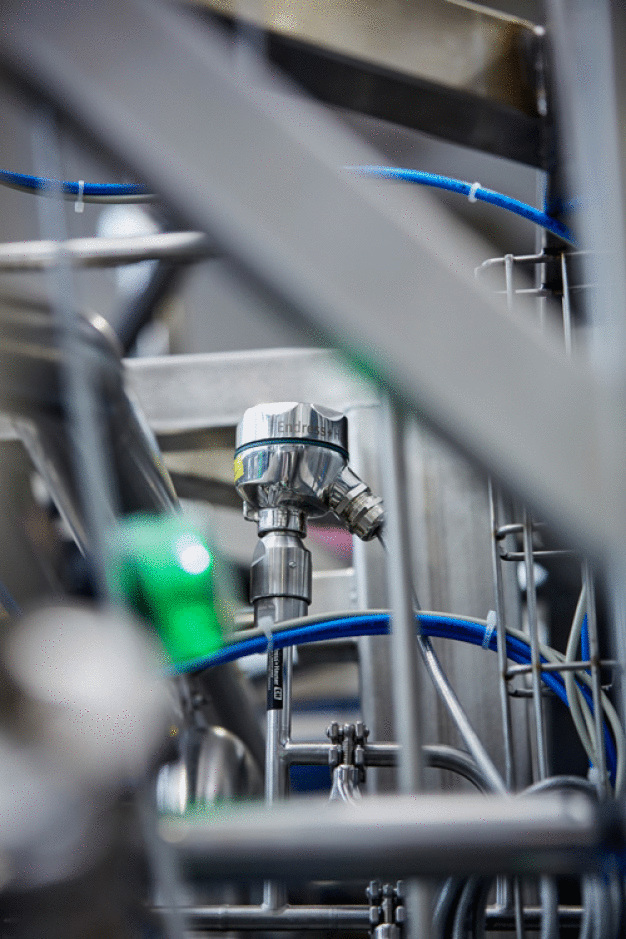
Fig. 1: Sterilization with pure steam (SIP) is monitored at many points in the systems with temperature sensors – here a model with QuickNeck quick-release for easier calibration. (Image: Endress+Hauser)
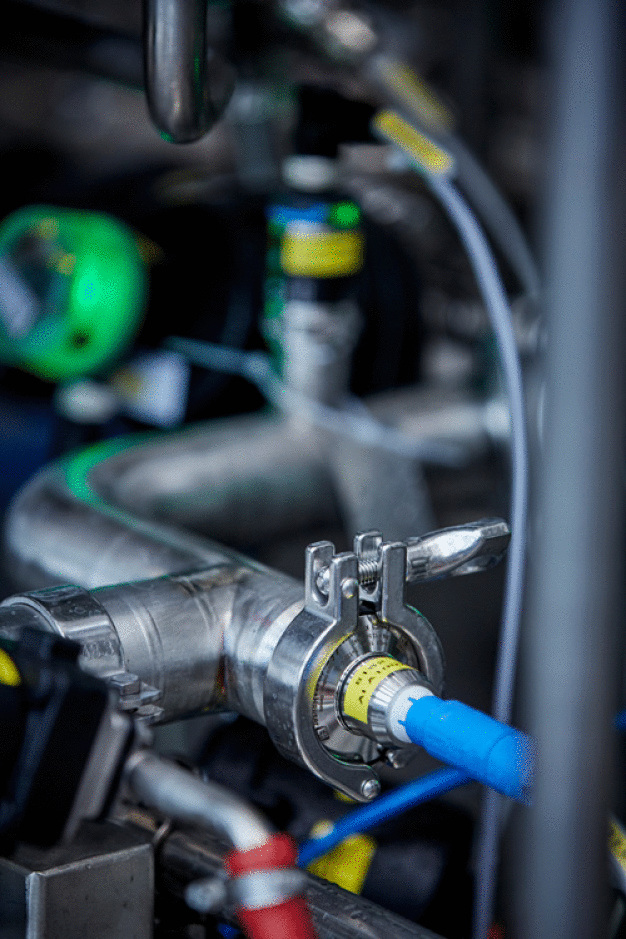
Fig. 2: After the cleaning cycle (CIP), the system is rinsed with ultrapure water ("final rinse"). This process is monitored using conductive conductivity measurements, here with a digital interface. (Image: Endress+Hauser)
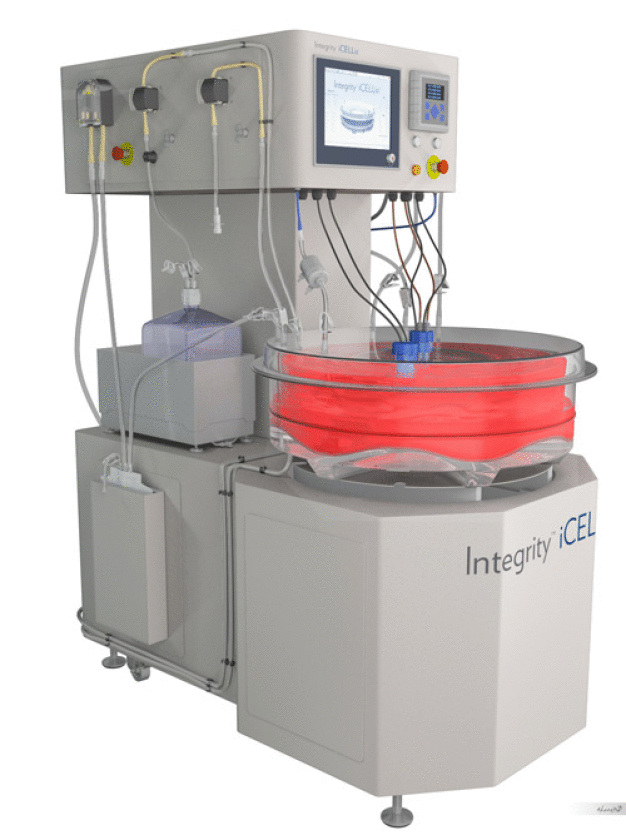
Fig. 3: A complete fixed-bed bioreactor in single-use design: The system is suitable for the production of human and veterinary vaccines, viral vectors, and recombinant proteins. It is also available in a "nano version" for smaller-scale applications. (Image: Pall)
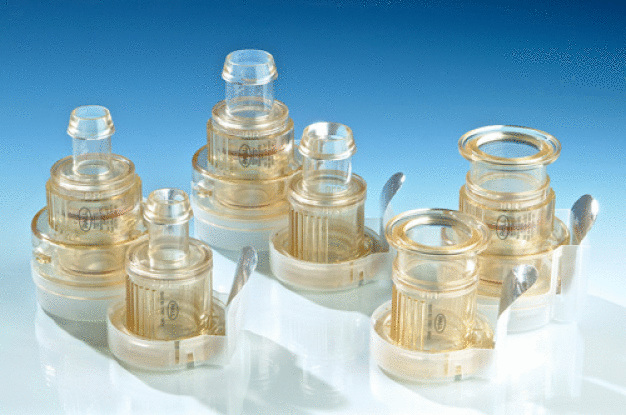
Fig. 4: The interfaces matter: Single-use sterile connectors for the sterile transfer of liquids. (Image: Pall)
Personalized medicine is aimed at extremely precise production – in the extreme case, a "lot size 1" medication for a specific patient. From an environmental perspective, this is "almost nothing." And yet, on the way there, it requires all the achievements of modern pharmaceutical industry: for example, containment, robotics, big data. How sustainable can that be?
Many insiders generally see the biotechnology industry as a "green sector" and typically evaluate it as follows: "Initially, active substances were practically synthesized chemically for 60 to 90 years. The chemical industry was a environmental risk in the past. Today, bacteria or cell cultures can assemble active substances from natural building blocks, and these are then biodegradable again. Compared to other industries, the entire biotech sector has a low impact on the environment. The biggest 'sinners' today are to be found in other industries."
Until now, the focus has mainly been on size and achieving efficiency gains through economies of scale, thus also aiming to protect the environment. In the healthcare sector, the realization is gaining ground that a certain medication does not heal every patient equally well. The therapy must be tailored individually. Only in this way can, for example, rare diseases ("orphan diseases") be treated. The high-revenue blockbuster drugs may become less common in the future. Personalized or even individualized medicine may overall be more expensive, but it could enable more people to live longer and better lives.
With personalized medicine and the highly effective ingredients involved, modern containment is closely linked: the manufacturing area should be completely enclosed and isolated to protect both the product itself and the staff.
Small quantities, high purity, and high effectiveness
Especially in the production of personalized active substances within containment, various current trends, such as increased use of robots, could lead to particularly noticeable advantages. Because here, production occurs on a small scale and with high purity. This increasingly requires robots, as humans could no longer work meaningfully in miniature environments of just a few micrometers.
From the contamination protection perspective, robots are likely to become indispensable, especially in oncology, where highly potent substances, called HPAPI ("highly potent active pharmaceutical ingredient"), must be handled. For example, in the production of antibody-drug conjugates used in cancer immunotherapy, a workplace limit value (OEL, Occupational Exposure Limit) of 0.1 μg/m3 over 8 hours is a practical, not uncommon value.1 Today, the extremes are already two orders of magnitude lower.
In the future, it will increasingly make sense to integrate necessary purification steps directly into the manufacturing process. This can include purification through preparative chromatography. Advanced systems achieve high flow rates (e.g., 5000 ml/min) and offer numerous extras, such as custom fume hoods for fraction collectors or certifications for use in environments with flammable gases or dust (ATEX) or in GMP processes.
Especially when multiple steps follow one another, the interfaces are crucial. If the system must be opened, for example, to transfer from biotechnological production to purification and concentration of the active substance, then CIP/SIP cleaning procedures, single-use modules, or a combination of both are preferred.
Conclusion: inherently environmentally friendly
When drawing an environmental balance, the savings in raw materials, reduction of waste, and a low-energy production due to miniaturization and reduced quantities will likely outweigh the increased technological effort. Resources are conserved, and costs are limited. For large companies with strong assets in personalized medicine as well as small startups, this promises attractive market potentials with comparatively low environmental impact – a "green pharmacy."
However, there is a clear limit, as industry experts emphasize: it is crucial that products in the healthcare sector remain safe for patients. No compromises can be made here, as we cannot endanger people just to save a few watts in production.
Literature
1. Minakem opens new high containment facility for production of the highest class of HPAPI. https://minakem.com/news/minakem-opens-new-high-containment-facility-for-production-of-the-highest-class-of-hpapi (Accessed March 2, 2019)

ILMAC
MCH Messe Schweiz (Basel) AG
Messe Basel
4005 Basel
Switzerland
Phone: +41 58 206 3106
email: anne.klipfel@ilmac.ch
Internet: http://www.ilmac.ch



