


- Service
- Translated with AI
Numerous participants in the 1st round-robin test to determine the recovery rate of test particles according to VDA 19
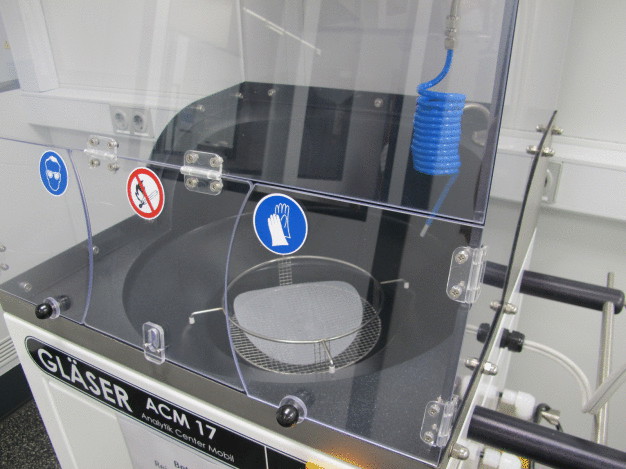
Extraction
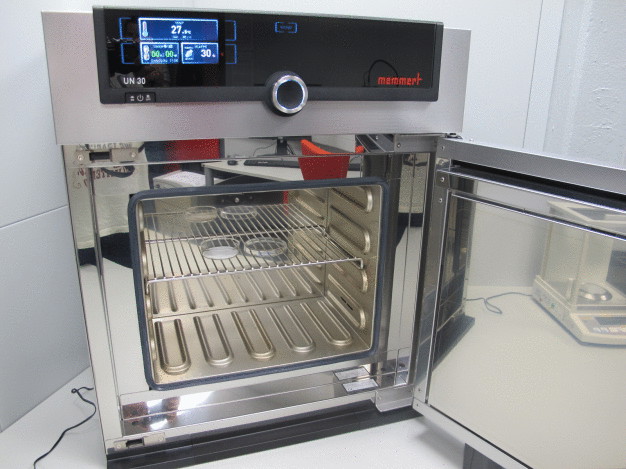
Drying
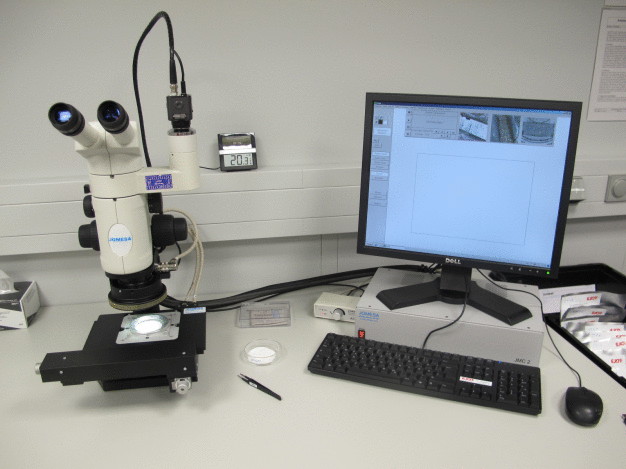
Microscopic analysis
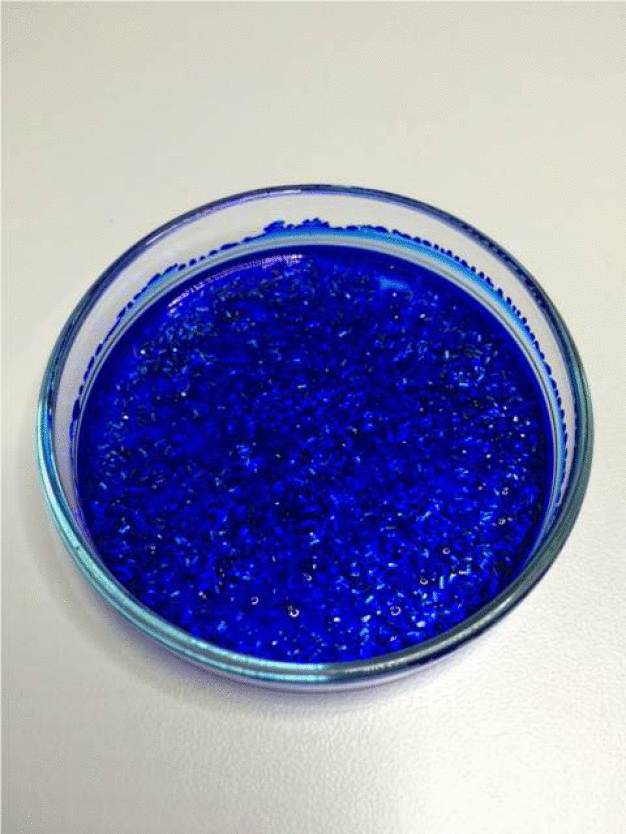
Test particle colored
With partly surprising results, more than 70 companies from various sectors of the automotive industry participated in the first round-robin test to determine the recovery rate of test particles. Among them were well-known OEMs, Tier 1 and Tier 2 suppliers, as well as many laboratories offering cleanliness examinations as a service.
From September to November 2016, the company Marhan – Normpartikel offered the first round-robin test to determine the recovery rate of test particles. The specially developed standard for cleanliness examinations, "ParticleMaster," created by Marhan for determining the recovery rate of test particles, was used with great success for this round-robin test.
The standard consists of a glass slide that is deliberately contaminated with test particles. The test particles are fixed onto the slide in such a way that they can detach during a cleanliness examination extraction process and be incorporated into the process flow of cleanliness testing—extraction – drying – filter handling – microscopy. The number and size distribution of the standard particles on the slide are microscopically determined, and the result protocol, called the pre-specified analysis, is attached to the contaminated slide. It is part of the standard and provides information about the exact number of particles and their size distribution on the slide. This way, an object with a known level of contamination is created.
Initially, the pre-specified analysis was kept confidential during the round-robin test so that participants did not know how many particles they needed to find in which size class. This allowed for an objective evaluation. At the end of the test, each participant received their personal recovery rate along with a participation certificate. The certificate can serve as proof of the overall cleanliness testing capability for potential customers, auditors, or during accreditation. Furthermore, each participant received the recovery rates of the other participants in anonymized form. Marhan places great importance on discretion. Even the employees of Marhan – Normpartikel are unable to link a test result to the respective company. Sophisticated evaluation rules ensure that only the respective participant can combine their result with their own company.
The results were partly very surprising. While VDA 19 Part 1 requires a recovery rate of 100% when using specifically manufactured test particles, not all participants achieved this. This clearly indicates that there is potential for optimization in the cleanliness testing process. The possible reasons for deviations from the 100% rate are diverse. Improper filter handling, recirculating air in drying ovens, insufficient rinsing volumes, or even defective extraction equipment are just examples. Many participants who did not recover all particles were already able to assist Marhan staff in optimizing the cleanliness examination. Process flows could be improved, and errors in plant technology identified and eliminated.
In summary, the round-robin test highlighted a need for action that would not have been recognized without the determination of the recovery rate of test particles, which is unfortunately only optional according to VDA 19 Part 1. Therefore, Marhan recommends regular application of this method. This ensures that all process flows meet the specified standards and that the testing equipment is in perfect condition. To better approach the overarching goal of increasing comparability of cleanliness examinations, it is advantageous to apply the method across the board at regular intervals. The increasing number of users of the standard "ParticleMaster" or the more affordable equivalent "ParticleStandard" from Marhan – Normpartikel demonstrates that the importance of regularly determining the recovery rate of test particles is becoming increasingly clear to more users. It would be desirable for the number of participants in the round-robin test to increase significantly again next year, which is planned again for the period from September to November 2017.

BIDAG Technologies GmbH & Co. KG
Zum Bolzenbach 7
35236 Breidenbach
Germany
Phone: +49 6465 4380
Fax: +49 3222 3190149
email: info@bidag.de
Internet: https://www.bidag.de