

- Light
- Translated with AI
More automation, less overview?
Light remains the simplest language of industry. But nowadays, it can do much more than just indicate machine statuses.
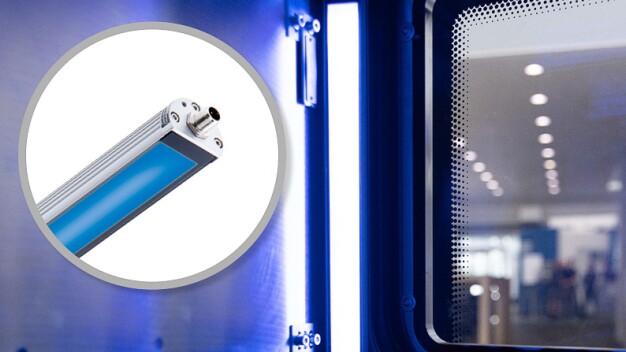
Illumination and communication: In the GMP300 metal 3D printing system from GROB, the TUBELED_40 II RGB-W from LED2WORK handles not only the chamber lighting but also the visual signaling of process statuses.
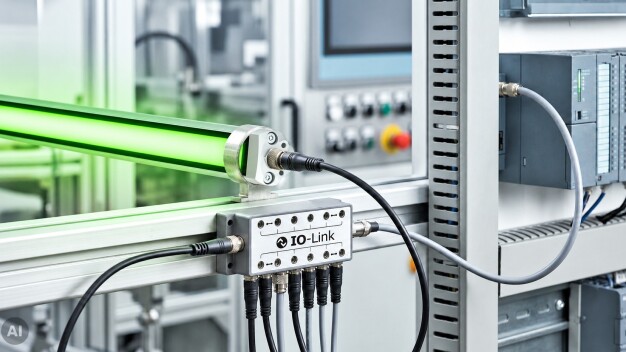
From signal transmitter to networked component of the machine: IO-Link allows light and color states to be linked with machine and process information.
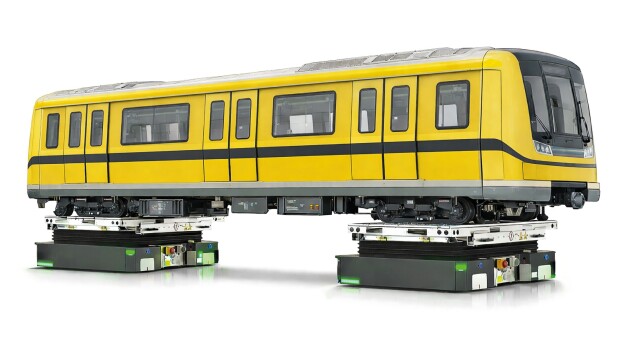
When autonomous systems and humans share the same production areas, light becomes an immediate means of orientation: In heavy-duty AGVs, LED2WORK signaling makes movement and vehicle statuses visible.
Light is one of the oldest and simplest languages of industry. Red warns, green signals: everything is okay. But as machines become more autonomous and production processes more complex, this language is also evolving. Modern lighting solutions no longer just indicate a state. They visualize processes and movements, combine work lighting with signaling, and can even be integrated into machine communication.
"The more complex production becomes, the simpler the information must be for humans," says Jan Schiga, Managing Director of LED2WORK GmbH. "The strength of light lies in our intuitive perception. Modern signaling now combines this simple visual language with the digital world of the machine. Because intelligent light can now also 'speak' with the machine."
When a luminaire takes on two tasks
How this already works today is demonstrated by an application at GROB. In the metal 3D printing system GMP300, the TUBELED_40 II RGB-W from LED2WORK performs two tasks at once: it ensures reliable illumination of the build chamber and can simultaneously signal process states via its RGB function. Seeing what is happening in the process and recognizing the status reported by the system are thus brought together immediately.
The principle has long since gone beyond traditional tool or production machines. In driverless transport systems, light also takes on communicative tasks. A German manufacturer of heavy-duty AGVs uses LED2WORK signaling, for example, to make movement and vehicle states immediately visible to people in the vicinity. Especially when humans and autonomous systems share the same production areas, quick visual orientation becomes more important.
From signal to networked component of the machine
The real technological step, however, goes even further. Digital interfaces like IO-Link allow these lighting solutions to be directly integrated into control and automation systems. The TUBELED_25 RGB-W IO-Link from LED2WORK can, for example, be parameterized and diagnosed; light and color states can be linked with machine and process information.
This means communication is no longer unidirectional. From a signal that humans see, it becomes a connected component of the automation architecture.
"An intelligent factory is only truly intelligent if humans don't have to ask what is happening at the moment," says Schiga. "Light can bridge this gap: it understands the language of the machine and translates relevant information into a form that humans can immediately grasp."
The traditional signal light is by no means outdated. On the contrary: its greatest advantage remains: humans understand light immediately. The new possibilities behind it are what’s changing. Light can illuminate, signal, make process information visible, and connect with the machine control.
Thus, the simple signal indicator is increasingly developing into a visual interface between humans, machines, and processes.
LED2WORK GmbH
75179 Pforzheim
Germany