


- Translated with AI
Interview with PARTEC Congress Director Prof. J. P. K. Seville: "The fascinating thing about particle technology is the diversity of fields it touches."
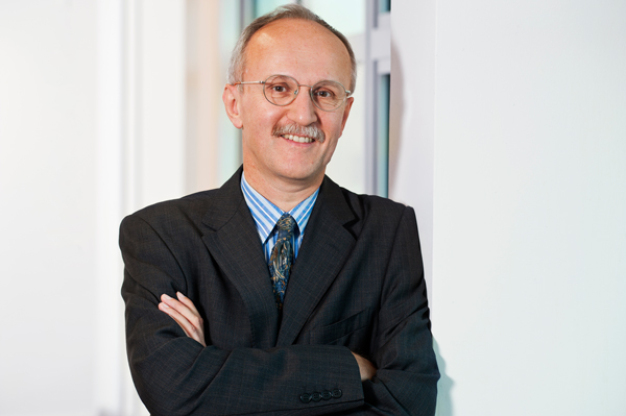
web_JPKS-Photo
23–25 April 2013: International Congress for Particle Technology in Nuremberg
Now complete congress program online at www.partec.info/program
Small things are the big theme from April 23 to 25, 2013, at the Nuremberg Exhibition Center. PARTEC, one of the largest international congresses on particle technology, takes place parallel to POWTECH, the world's leading trade fair for mechanical process engineering, and TechnoPharm, the international trade fair for life science process technologies. About 500 particle experts from around the world are expected at this triennial event. Approximately 180 lectures and 190 posters from industry, science, and research focus on the development of revolutionary raw materials for the chemical, pharmaceutical, food, and building materials industries. The congress language is English. The full program is now available online at: www.partec.info/program In advance of PARTEC, the congress director Prof. Jonathan P. K. Seville from the University of Surrey, UK, discusses the fascination of particle technology, the highlights of PARTEC, and the significance of lecture breaks over beer and sausages.
How does particle technology change our daily lives?
Prof. Jonathan P. K. Seville: A very large part of the products we deal with daily are either sold in particle form—pharmaceutical products, detergents, food, building materials—or require the use of particles in their production, e.g., as catalysts or components of electronic parts and sensors. Furthermore, we constantly encounter particles in our natural or human-made environment: as aerosols in the air we breathe, and as soil substances in the earth we cultivate and build on. Every day, we observe exciting developments in particle products. Just think of more effective drug formulations, better "instant" foods, smarter electronics. This field is rich in innovations.
What is the relationship between particle science and nanoscience?
Prof. Seville: Both particle researchers and molecular scientists are fascinated by the same thing: the interesting size range between large molecules and small particles—the "nanoscale"—where unusual properties occur. Naturally, chemists and engineers view this area from different perspectives and therefore have differing opinions on what they see. However, this tension is productive and leads to new approaches and products.
What is the significance of the PARTEC congress for science and industry?
Prof. Seville: PARTEC attracts a very broad mix of participants from both research and industry. All come together in one place—in the midst of this huge exhibition with particle-related plant technology, which reminds researchers how large and important this field is! Traditionally, the conference also offers plenty of breaks and poster presentations—of course, with beer and sausages—to give participants opportunities for interaction. It is arguably the best conference I know for meeting people. Young researchers are especially welcome and usually participate in large numbers; this makes the conference very lively. Undoubtedly, this conference is Europe's number 1 for particle technology—but it also attracts many participants from other parts of the world.
What are the highlights of this year's PARTEC program?
Prof. Seville: Naturally, there will be some very interesting presentations and posters on nanoscale particles and their fascinating properties: on the processes for their production (a very current challenge) and on possible methods to incorporate them into products. These involve state-of-the-art technical procedures that rely on highly sophisticated instrumentation. Equally impressive, in my opinion, are the advances made in modeling particle systems: nanoscale physics is integrated into models that can reproduce their collective behavior.
One of the fascinating properties of particle technology is the wide range of areas it touches. There will be lecture sessions covering various topics: the production of particles through many different methods, the measurement of particle properties, the physics of interactions between multiple particles, the interaction of particles with liquids, particle flow, agglomeration and size reduction of particles, as well as the production and testing of products. Continuous and intensive research is ongoing at universities and in industry on these and other topics.
At PARTEC, we especially want to show how fundamental research can lead to real results in industry and innovative products: Several sessions are dedicated to relevant examples.
What topics are currently hot in the particle technology community?
Prof. Seville: Academics love to debate! These discussions are a good thing. Science advances by building and overturning theories. And there is no shortage of discussion topics. For example, the optimal method for introducing cohesion into discrete element models or the practicality of supercritical processes in particle production are debated. We want people to express their opinions and ideas!
You have taken over the PARTEC leadership from Prof. Wolfgang Peukert. Are you planning any changes for the congress?
Prof. Seville: I was very pleased when I was offered to lead this year's PARTEC, as this conference has always been one of my favorite technology events. The fundamental format works very well, and we haven't changed it. When selecting topics, we were guided by the participants, resulting in a very broad and interesting program for everyone. The range of contributions has become even more international, reflecting the global nature of research and industry in this field. But above all, the event will be as entertaining and informative as ever!
About Prof. Jonathan P. K. Seville
PARTEC is held under the leadership of the renowned particle expert Prof. Jonathan P. K. Seville. He is Dean of the Faculty of Engineering and Physical Sciences at the University of Surrey, UK, a member of the Royal Academy of Engineering and the Institution of Chemical Engineers, and initiated the first British research center for formulation engineering (awarded the Queen's Anniversary Prize in 2011).
About PARTEC
Every three years, the PARTEC congress brings together particle technology experts, renowned scientists, and engineers from around the world. The congress is organized by NürnbergMesse. The official sponsor is the VDI Society for Process Engineering and Chemical Engineering (GVC). The event is supported by AIChE, APV, and many other associations and organizations. In 2013, VDI-GVC will award the Friedrich-Löffler Prize for the first time, a triennial award that promotes young experts from research and industry.
NürnbergMesse GmbH
90471 Nürnberg
Germany